Nature is often weirder than fiction. If you’ve played The Last of Us or watched the show, you know the Cordyceps fungus. It’s the stuff of nightmares. It turns hosts into mindless biological puppets. But a recently documented spider in the Amazon rainforest has flipped the script. It isn't a victim of the fungus. It's an impostor. This spider has evolved to look exactly like a corpse sprouting lethal fungal stalks. It’s a brilliant, albeit gross, survival strategy that shows just how high the stakes are in the jungle.
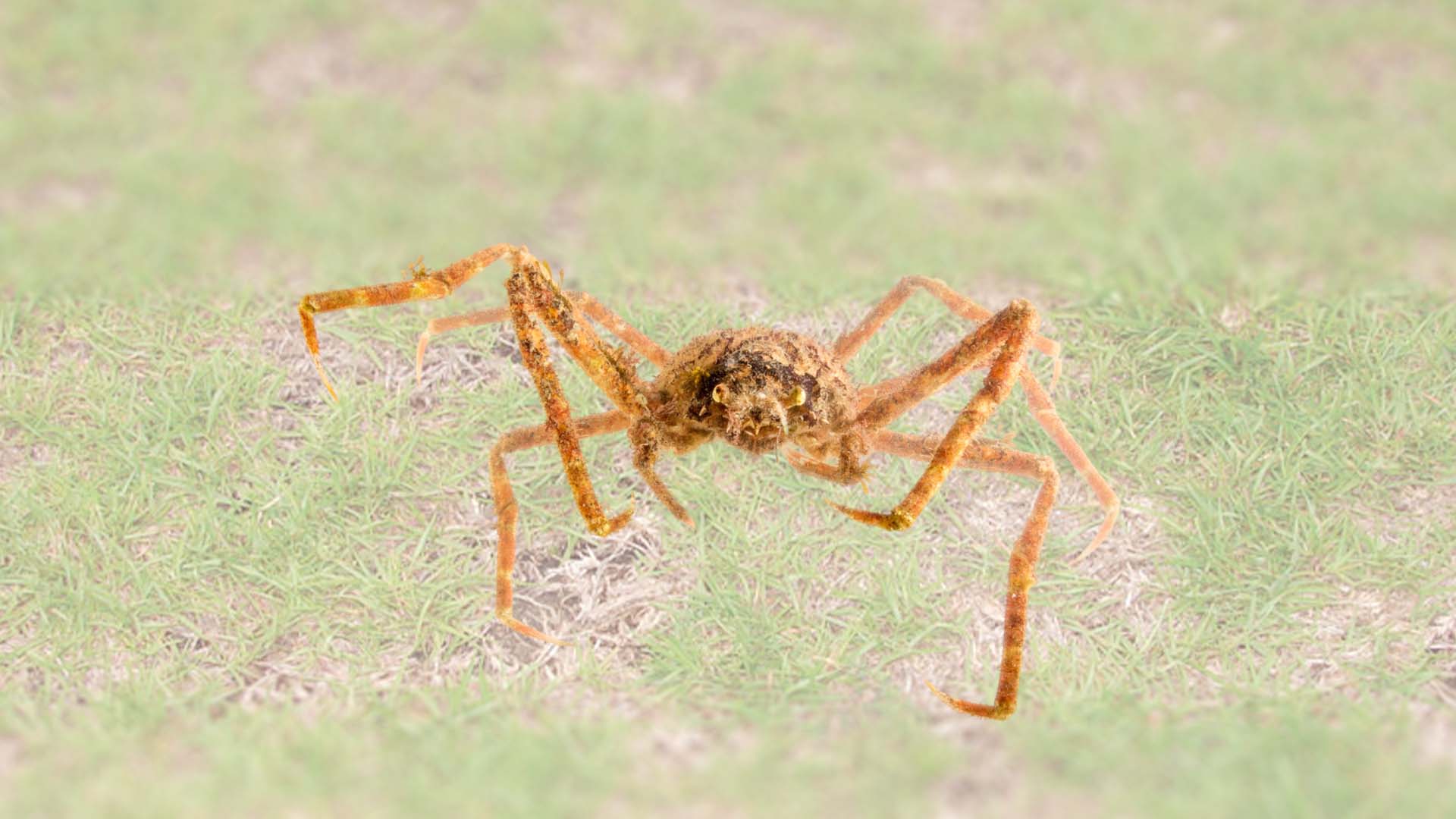
Researchers recently spotted this orb-weaver spider, likely from the genus Cyclosa, in the Peruvian Amazon. When you first look at it, you don't see a living creature. You see a dead shriveled husk covered in white, fuzzy growth. It looks like it’s being eaten from the inside out by a parasitic fungus. That’s the point. Most predators in the rainforest, especially birds and larger wasps, stay far away from "zombie" insects. They don't want to catch whatever killed the host. By looking like a biohazard, this spider buys itself safety.
Why Mimicry is the Ultimate Jungle Insurance Policy
In the Amazon, if you're small, you're usually on the menu. Evolution doesn't care about being pretty. It cares about what works. This spider uses what scientists call "protective mimicry." It isn't trying to look like a leaf or a twig. It’s trying to look like something so disgusting that nothing will touch it.
Think about it from a bird's perspective. You see a plump spider. That's lunch. But you see a spider carcass exploding with white fungal spores? That’s a death sentence. Many fungi in the Ophiocordyceps family are host-specific, but predators haven't survived millions of years by taking chances on "maybe." This spider exploits that hard-wired fear. It’s basically wearing a "Do Not Touch: Infectious Material" suit.
This isn't the first time we've seen Cyclosa spiders get creative. Some species build "trash decoys" in their webs. They use bits of dead leaves, insect remains, and silk to create a fake version of themselves. The decoy sits in the middle of the web while the real spider hides nearby. If a bird strikes, it hits the garbage instead of the spider. This fungus-mimic takes it a step further. It doesn't just build a decoy. It is the decoy.
The Science of Looking Dead
The detail in this mimicry is staggering. The spider uses its own body positioning and specialized silk to mimic the "fruiting bodies" of the fungus. These are the stalks that normally erupt from a dead insect's head or joints to spread spores.
- Coloration: The spider’s abdomen often sports pale, mottled colors that resemble fungal growth.
- Posturing: It tucks its legs in a way that breaks up the classic "spider" silhouette.
- Silk Accents: It may incorporate extra silk to mimic the fuzzy mycelium that coats a fungus-ridden corpse.
Biologists from the San Diego Zoo and other institutions have noted that this level of mimicry is incredibly rare. We’ve seen spiders look like bird droppings. We’ve seen them look like ants. But looking like a specific stage of a parasitic infection is a masterclass in niche evolution. It’s highly specific. It’s effective. Honestly, it’s a bit genius.
The Last of Us Connection is More Than Just Hype
While the media loves a good pop-culture tie-in, the link between this spider and The Last of Us is actually grounded in real biology. The show popularized the horror of Cordyceps, but that horror is a daily reality in the Amazon.
The fungus Ophiocordyceps unilateralis is the most famous version. It hijacks an ant's brain, forces it to climb a plant, and then kills it. The fungus then grows a stalk out of the ant's head to rain spores down on the colony below. It’s a brutal, efficient cycle. Because this fungus is so prevalent in tropical environments, it has created a massive selective pressure on other animals. If looking like a Cordyceps victim keeps you alive, then the spiders that look the most "infected" are the ones that survive to reproduce.
This is a perfect example of an evolutionary arms race. The fungus evolves to kill insects. The insects evolve to fear the fungus. Then, a third party—the spider—evolves to look like the fungus to exploit that fear. Nature doesn't waste anything, not even a terrifying reputation.
Why We Are Just Now Finding This
You might wonder how a spider this cool stayed hidden for so long. The truth is the Amazon is massive and we've barely scratched the surface. Most of these spiders are tiny. They live in the understory where light is dim and everything is covered in decay. If you're a field biologist walking through the jungle, you're going to see thousands of dead bugs. You’ll see plenty of actual fungal infections. You probably won't poke every single one to see if it moves.
This discovery highlights the importance of biodiversity surveys. We're losing rainforest at an alarming rate. With every acre cleared, we likely lose species that have developed tricks we can’t even imagine. This spider isn't just a cool trivia fact. It’s a reminder that we don't know nearly as much about our planet as we think we do.
What This Means for Evolutionary Biology
The existence of this spider forces us to look closer at "crypsis"—the ability of an animal to avoid observation. Usually, we think of crypsis as blending into the background. But this is "masquerade." The spider is perfectly visible. It just misidentifies itself.
It also raises questions about the spider's behavior. Does it stay still all day? How does it hunt without breaking the illusion? Most Cyclosa spiders are nocturnal hunters. They spend the day acting like a piece of debris and then repair their webs and eat at night when their visual predators are asleep. It’s a high-stakes double life.
Spotting One in the Wild
If you're ever trekking through the Peruvian or Ecuadorian Amazon, don't just look for the colorful macaws or the jaguars. Look at the leaves. Look at the "dead" stuff.
- Check the center of small, circular webs.
- Look for anything that looks like a fuzzy white ant or beetle.
- Watch for a slight twitch. Even the best mimics have to breathe.
Most people walk right past these wonders because they're "gross." But in the world of biology, gross is often a synonym for successful. This spider has managed to survive by being the one thing nobody wants to eat.
If you want to dive deeper into how mimicry works, start looking into "Batesian" vs "Müllerian" mimicry. This spider is a classic Batesian mimic—a harmless organism pretending to be dangerous (or in this case, toxic/infected). It’s a cheap way to get high-level protection without having to actually produce venom or toxins yourself.
Next time you see a spider in your garden, don't just brush it away. Look at its shape. Look at its web. You might be looking at a tiny architect with a few million years of survival strategy baked into its DNA. Nature doesn't do things by accident. Everything has a purpose, even looking like a zombie.
Keep your eyes on the small stuff. The big animals get the headlines, but the real innovations are happening on the underside of a leaf in the middle of nowhere. Go out and find a local trail or a botanical garden. Practice looking for what isn't obvious. You'll start seeing patterns you never noticed before.


