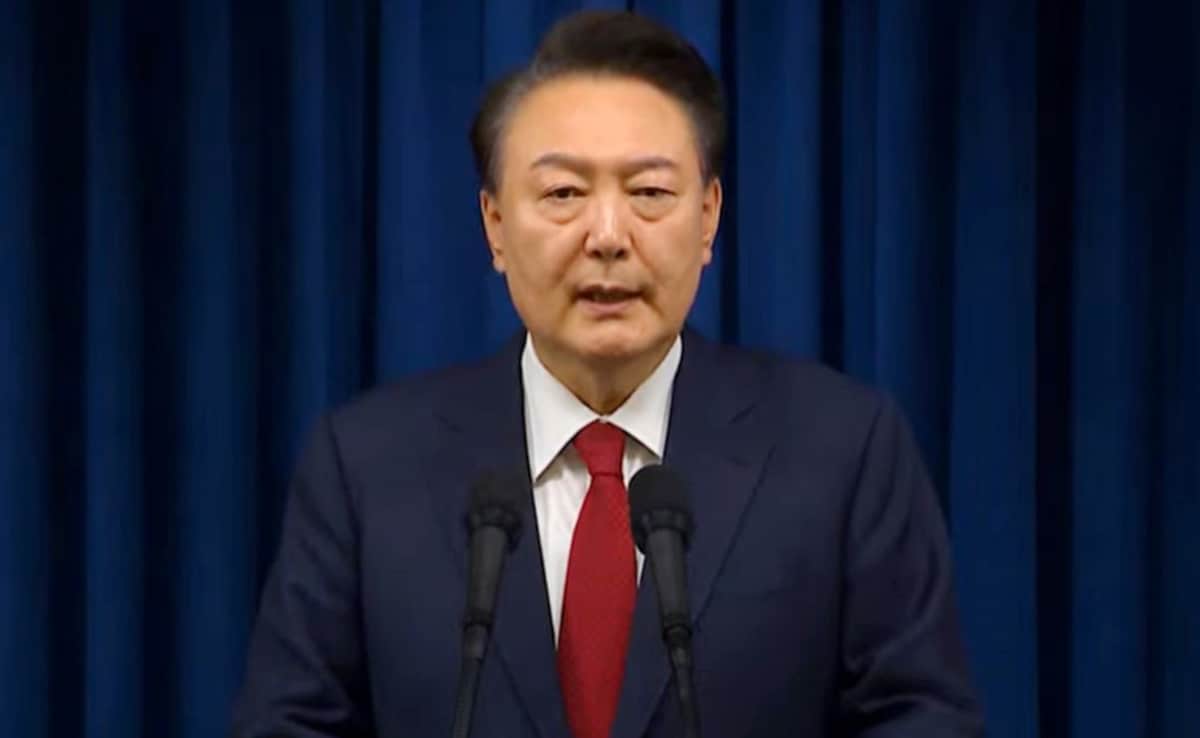
The global media loves a "fall from grace" narrative. When a former South Korean president gets slapped with another seven years on top of a de facto life sentence, the headlines read like a victory for the rule of law. They paint a picture of a robust democracy finally holding its highest office accountable.
They are wrong.
What we are witnessing in Seoul isn't the triumph of blind justice. It is a recurring, systemic ritual of political exorcism. Every five years, South Korea elects a new leader; every decade or so, it tries to bury the old one in a cell. If you think these rolling sentences for corruption and abuse of power are cleaning up the Blue House, you’re missing the underlying mechanics of how power actually functions in the peninsula.
The Cycle of Reciprocal Retribution
The competitor's coverage treats these legal battles as isolated criminal cases. This is a shallow reading of history. In South Korea, the presidency is a winner-take-all throne with massive, centralized power. When the opposition takes over, the prosecution—which has historically been an extension of executive will—begins the inevitable "cleaning of the house."
We call it justice. Insiders know it as the "Gwanghwamun Guillotine."
Consider the math. Since the transition to democracy in the late 1980s, nearly every living former president has been investigated, charged, or jailed. This isn't a statistical anomaly of bad apples. It’s a design flaw. When your legal system becomes the primary tool for the successor to delegitimize the predecessor, the courtroom stops being a place of law and starts being a theater of revenge.
The Chaebol Co-Dependency Myth
The "lazy consensus" argues that jailing a president for taking bribes from conglomerates (Chaebols) will finally break the back of corporate corruption.
It won't.
I have watched these cycles play out for decades. The relationship between the Blue House and groups like Samsung or Lotte isn't a simple matter of "bad people doing bad things." It is a structural necessity of the South Korean economic model. The state needs the Chaebols to drive export-led growth; the Chaebols need state favor to navigate a thicket of regulations and land deals.
When a president goes to jail for "collusion," the media cheers. But look at the data. The underlying economic structures don't change. The next president enters office, realizes they need GDP growth to stay popular, and immediately sits down with the same CEOs. The only thing that changes is the name of the person signing the checks and the name of the person who will eventually go to prison for it.
Jailing the executive without dismantling the centralized economic power of the presidency is like treating a stage-four tumor with a band-aid. It feels like you’re doing something, but the rot continues underneath.
The Seven Year Stacking Fallacy
The latest legal maneuver—adding seven years to an already insurmountable sentence—is the height of performative prosecution. Why add seven years to a life sentence?
- To block pardons: It creates a legal mountain so high that a future sympathetic leader would face massive political blowback for attempting a pardon.
- To signal purity: It allows the current administration to claim they are "tougher" on corruption than the last.
- To distract: It keeps the public focused on the sins of the past rather than the stagnation of the present.
In any other developed nation, stacking decades onto a 60 or 70-year-old former head of state would be viewed as "cruel and unusual" or politically motivated. In South Korea, it's just Tuesday. This isn't a "strong" legal system. A strong legal system prevents the crime from happening in the first place through checks, balances, and transparency. A weak system waits until the person is out of power and then pounces with the benefit of hindsight.
The Truth About Public Sentiment
The public hunger for these trials is real, but it’s fueled by a sense of profound economic inequality. The average person in Seoul is struggling with skyrocketing housing prices and a brutal job market. Seeing a former president in a jumpsuit provides a temporary hit of dopamine. It’s a pressure valve.
But here is the bitter pill: No amount of presidential jail time will lower your rent in Gangnam. No amount of "additional years" for a former leader will fix the demographic collapse or the crushing competition of the "Hell Joseon" reality. The prosecution of former leaders is a distraction from the fact that the government has no idea how to fix the structural issues of the 21st century.
The Cost of the "Prosecution Republic"
We are seeing the rise of what critics call the "Prosecution Republic." When the path to the presidency runs directly through the prosecutor’s office, the entire incentive structure of government shifts. Policy becomes secondary to "investigative merit."
I’ve seen how this freezes civil service. Bureaucrats become terrified of making any decision that could be interpreted as "favoritism" five years down the line when the winds change. Innovation dies in the cradle because everyone is busy building a paper trail to stay out of a future deposition.
The "nuance" the mainstream media misses is that these trials are making South Korea less stable, not more. They ensure that every election is a high-stakes war of survival. If losing an election means you and your entire staff might end up in Uiwang Detention Center, you will do anything—legal or otherwise—to stay in power.
A Path Out of the Ritual
If South Korea actually wanted to end this cycle, it would do the one thing the political class refuses to discuss: Strip the presidency of its imperial powers.
- Decentralize the Prosecution: Make the state’s investigative arm truly independent of the executive branch.
- Constitutional Reform: Move toward a parliamentary system or a split-power model that reduces the "all-or-nothing" stakes of the Blue House.
- Audit, Don't Execute: Shift the focus from post-term criminalization to real-time, transparent auditing of presidential funds.
But don't hold your breath. The current system is too useful for the people in power. It allows them to point at the "corrupt" predecessor while ignoring the mirrors in their own hallways.
The next time you see a headline about a former president getting another decade in jail, don’t applaud. Realize you’re watching a political system that has failed to evolve. You’re watching a country that would rather punish its past than secure its future.
Stop asking if the sentence is long enough. Start asking why the system keeps producing "criminals" at the highest level of government. The answer isn't that South Koreans are uniquely corrupt; it's that the office of the presidency is a trap designed to create martyrs for the next administration's approval ratings.
The cell doors are closing, but the cycle is just warming up.