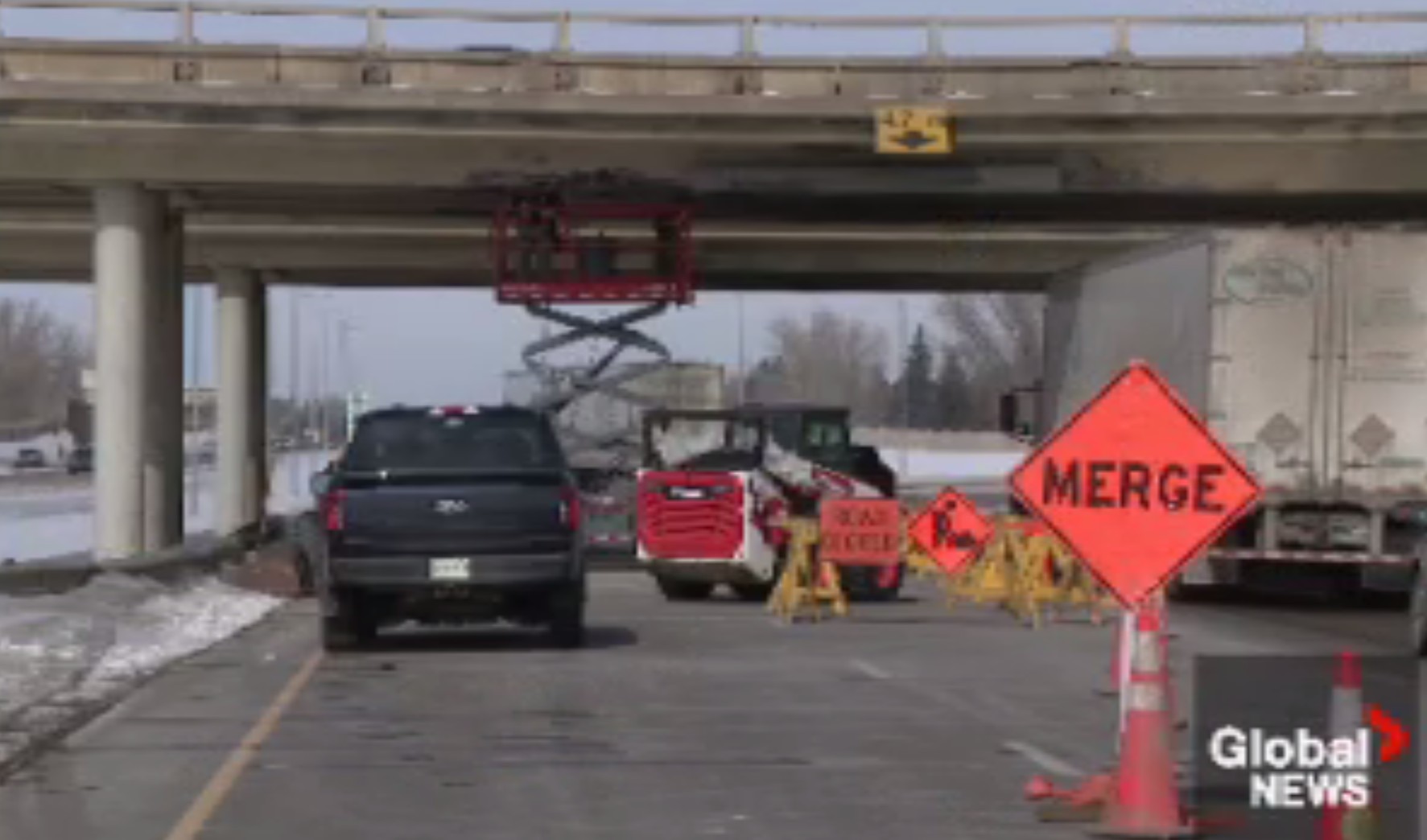
The sound is unlike anything else in the world. It isn’t the sharp crack of a fender bender or the wet thud of a ditch-slide. It is a tectonic groan. It’s the sound of seventy thousand pounds of momentum meeting six hundred tons of reinforced concrete that refuses to budge. When a semi-truck hits an overpass, the air itself seems to vibrate with the sheer impossibility of the physics.
In Saskatchewan, this sound is becoming a rhythm.
Four times in less than thirty days, the province’s infrastructure has been shaken by the same avoidable mistake. We are watching a slow-motion collision between modern logistics and human error, and the wreckage is more than just twisted metal and spilled cargo. It is a fracture in the reliability of the roads we take for granted.
The Anatomy of an Impact
Picture a driver named Elias. He is hypothetical, but his morning is a composite of a dozen real reports. He’s been behind the wheel since 4:00 AM. The cab of his truck is his home, a vibrating cocoon of coffee smells and satellite radio. Behind him, he’s hauling a piece of industrial equipment—perhaps a vertical drill or a pre-fab housing unit—that sits just a few inches higher than the standard load.
He’s driven this stretch of the Trans-Canada Highway a hundred times. That familiarity is the trap. He isn’t thinking about the vertical clearance of the bridge coming up near Regina. He’s thinking about his delivery window, his fuel levels, and the heavy prairie wind buffeting his trailer.
Then comes the bridge.
The yellow sign flashes past, a warning of $4.5$ meters. If his load is $4.6$ meters, the math is over. There is no "almost" in structural engineering. The top of the load strikes the first girder with the force of a small explosion. The truck doesn’t stop immediately; the engine screams as it tries to push through the obstruction, peeling the roof of the trailer back like a sardine can.
In that moment, Elias isn’t just a driver with a bad day. He is the catalyst for a logistical nightmare that ripples across the entire province.
The Invisible Toll
When we read the headline about the fourth strike in a month, we usually look at the photo of the mangled truck and move on. We think about the traffic jam. But the true cost is buried beneath the asphalt.
Every time a bridge is struck, the structural integrity of a vital artery is called into question. Engineers have to rush to the site. They aren't just looking for scratches; they are looking for hairline fractures in the tensioning cables that hold the entire span together. If those cables are compromised, the bridge is a ghost. It might look solid, but its soul is gone.
Consider the ripple effect on a Tuesday afternoon.
- The Commuter: A nurse trying to get to a shift change at the General Hospital is stuck behind a three-kilometer line of idling cars.
- The Farmer: A grain truck needing to move a haul before the rain starts is forced onto a gravel detour that adds ninety minutes to the trip.
- The Taxpayer: The repair bill for a significant overpass strike can easily climb into the hundreds of thousands of dollars.
Four strikes in a month isn't a fluke. It’s a symptom. It suggests that the systems we rely on to keep our "over-height" loads in check are fraying at the edges.
The Psychology of the Gap
Why is this happening now? We have GPS. We have laser-measuring tools. We have massive yellow signs with flashing lights.
The problem is often "automation complacency." We trust our screens more than our eyes. A digital route planner might tell a driver the path is clear, failing to account for a recent repaving project that added two inches of asphalt to the road, effectively lowering the bridge. Or perhaps the driver, pressured by the relentless "just-in-time" delivery culture of 2026, skips the manual measurement of their load to save ten minutes.
It’s a gamble against geometry.
Saskatchewan’s flat horizon creates an illusion of infinite space. When you can see for twenty kilometers in every direction, the idea of a physical ceiling feels foreign. But those concrete spans are the ceilings of our world. They are the fixed points in a moving society. When we treat them as suggestions rather than absolute limits, we invite the chaos of the four-strike month.
The Weight of Responsibility
There is a growing tension between the trucking industry and the public. Truckers are the lifeblood of the Canadian economy—without them, the shelves are empty and the lights go out. They deserve our respect. But the frequency of these incidents is eroding the social contract.
The government has begun to push back. Fines are increasing. Licenses are being suspended. There is talk of mandatory "bridge-strike" insurance premiums that would penalize companies with poor safety records. Yet, money is a poor deterrent for a mistake that happens in a split second of inattention.
The solution isn't just better signs. It's a return to the "walk-around."
In the old days of trucking, a driver would walk around their rig with a physical measuring stick. They would feel the height. They would know, with the certainty of their own hands, exactly how tall they stood. Today, we've traded that tactile connection for a sensor that might be covered in mud or a software update that hasn't quite synced.
A Concrete Reality
The fourth strike happened on a clear day. No blizzard. No black ice. Just a road, a bridge, and a load that was too tall for the hole it was trying to fit through.
We tend to view our infrastructure as permanent, indestructible landmarks. We forget that they are held together by math and the silent agreement that we will respect their boundaries. When a truck hits a bridge, it’s a violent reminder that our modern world is actually quite fragile.
As the sun sets over the Highway 1 overpass, the orange glow hits the new scars on the concrete. The gouges are deep, exposing the rebar underneath like broken ribs. Traffic flows beneath it again, drivers glancing up nervously, wondering if the next truck in the rearview mirror has done the math.
We are all passing under those spans, trusting that the person ahead of us took the time to measure. We are trusting that they didn't just guess. Because when the groan of shifting steel starts, it's already too late to check the height.
The bridge always wins.


