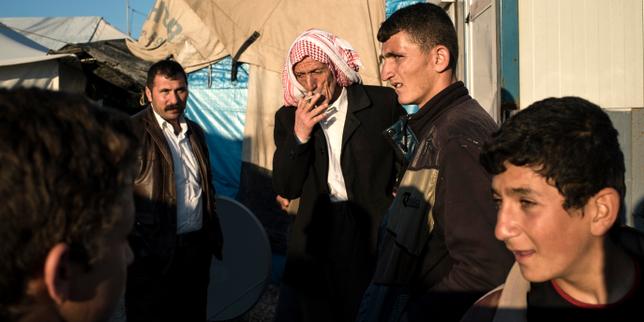
Twelve years after the genocide that saw thousands slaughtered and enslaved by ISIS, the Yazidi people are facing a second, quieter extinction in the very mountains that once offered them sanctuary. The world watched the horrors of 2014 in high-definition, yet today, the reconstruction of Sinjar has stalled into a cynical geopolitical stalemate. More than 200,000 Yazidis remain trapped in squalid displacement camps in the Kurdistan Region of Iraq, unable to return to a home that lacks electricity, clean water, and, most crucially, security. The fundamental reason Sinjar remains a ruin is not a lack of international funds, but a deliberate power struggle between local militias, regional governments, and foreign powers who view the Yazidi ancestral land as nothing more than a strategic corridor.
While media coverage often focuses on the trauma of survivors, it frequently misses the mechanical failure of the state. Reconstruction is not just about rebuilding houses; it is about the restoration of a viable life. Currently, the Sinjar District is a patchwork of competing authorities. You have the Iraqi federal government, the Kurdistan Regional Government (KRG), the Sinjar Resistance Units (YBŞ), and various iterations of the Popular Mobilization Forces (PMF). When everyone claims to be in charge, no one is responsible for the broken pipes or the collapsed schools.
A Geography of Abandonment
The Sinjar Mountains rise out of the Nineveh plains like a jagged spine. For the Yazidis, this is holy ground. For the rest of the world’s power brokers, it is a land bridge connecting Iran to Syria. This geographic reality is the primary curse of the Yazidi people.
To understand why the "reconstruction" is a myth, one must look at the 2020 Sinjar Agreement. Orchestrated by Baghdad and Erbil with UN support, the deal promised to clear out "illegal militias" and establish a local police force. It looked excellent on paper. In reality, it has been a total failure. The local Yazidis, who formed their own defense units after being abandoned by both the Iraqi army and Kurdish Peshmerga in 2014, refuse to leave. They do not trust the "official" forces who fled when the black flags of ISIS appeared on the horizon.
This creates a deadlock. International NGOs are hesitant to invest millions into infrastructure that might be blown up in the next skirmish between Turkey and the PKK-affiliated groups in the mountains. Consequently, the rubble stays where it fell in 2017.
The Economy of Displacement
There is a dark irony in the humanitarian industry surrounding the Yazidis. A decade of displacement has created a localized "camp economy." Billions of dollars have flowed into the maintenance of Internally Displaced Persons (IDP) camps. While these funds provide life-saving bread and blankets, they also create a perverse incentive for the status quo.
Moving 200,000 people back to Sinjar would require a massive shift in resource allocation. It would mean building hospitals and paved roads in a volatile "grey zone." It is much safer, politically and logistically, to keep the Yazidis in tents under the watchful eye of the KRG.
But the camps are rotting. Fire outbreaks in the nylon tents are frequent. Mental health is in a state of freefall. Suicide rates among young Yazidis in the camps have spiked, a tragic testament to a generation that has grown up with no memory of home and no hope for a future. They are a people paused in time.
The Missing Men and the Stigma of Return
Reconstruction is as much about the social fabric as it is about concrete and rebar. In Yazidi culture, the disappearance of thousands of men has left a massive hole in the community's traditional structure. There are still over 2,700 women and children missing. Every few months, another mass grave is exhumed, and the agonizing process of DNA identification begins.
When a woman escapes or is bought back from the remnants of the "caliphate," she often returns to a community that struggles to integrate the children born of rape. The Yazidi Supreme Spiritual Council has made strides in welcoming back the survivors, but the internal trauma remains deep. A village is not a village if its inhabitants are afraid of their own shadows.
Sovereignty as a Weapon
The skies over Sinjar are rarely quiet. Turkish drone strikes targeting Kurdish militants are a regular occurrence. These strikes often hit civilian areas or local Yazidi security outposts, further destabilizing the region.
Iraq’s central government in Baghdad remains too weak or too disinterested to assert true sovereignty over the area. They view Sinjar as a distant headache. Meanwhile, Iran-backed militias have solidified their presence in the south of the district, securing the highway routes to the Syrian border.
In this environment, "reconstruction" is a buzzword used at donor conferences in Brussels or New York. On the ground, it is a ghost. The few families who have returned do so out of sheer desperation or a fierce, defiant love for their land. They live without consistent power, often hauling water from miles away, and watching their children play in the ruins of the local pharmacy or primary school.
The Failure of the International Justice System
We talk about "Never Again," yet the legal mechanisms to hold perpetrators accountable are moving at a glacial pace. While a few high-profile trials have occurred in Germany under universal jurisdiction, the rank-and-file ISIS fighters who carried out the massacres often blend back into the population or sit in overcrowded prisons in Northeast Syria.
The lack of a formal tribunal within Iraq specifically for the Yazidi genocide means there is no local sense of closure. Justice is an abstract concept imported from Europe, not something felt in the markets of Sinjar City. Without justice, there is no trust. Without trust, there is no investment.
Concrete Steps Beyond the Rhetoric
If the international community actually wanted to fix Sinjar, the approach would need to change radically.
- Security Decoupling: The security of Sinjar must be decoupled from the wider Turkey-PKK conflict. This requires a level of diplomatic pressure on Ankara and Baghdad that currently does not exist.
- Direct Local Funding: Aid must bypass the bureaucratic bottlenecks of Baghdad and Erbil. Funneling resources directly to local Yazidi-led administrative councils is the only way to ensure the money isn't siphoned off by regional political parties.
- Infrastructure First: You cannot ask families to leave the relative safety of a camp for a desert with no water. The "stabilization" efforts must prioritize the electrical grid and water treatment plants over symbolic gestures.
The Yazidis are often portrayed as eternal victims, a nomadic people of sorrow. This narrative is a convenient excuse for inaction. It suggests that their pain is inevitable. It isn't. The current state of Sinjar is a policy choice made by men in suits in distant capitals.
The mountain remains. The shrines are being slowly rebuilt by hand, stone by stone, by returning families who refuse to let their culture be erased. But they are doing it alone. The "year of pain" described by survivors isn't a metaphorical state of mind; it is a literal count of days spent waiting for a world that promised protection to finally show up.
The tragedy of the Yazidis is not just what happened in 2014. It is what has been allowed to happen every day since. If the current trajectory holds, the Yazidi homeland will become a museum of a vanished culture, a series of empty villages and guarded checkpoints, while the survivors scatter to Europe and North America, their connection to the Sinjar soil severed not by a sword, but by a decade of calculated neglect.
Stop looking at the photos of the ruins and start looking at the maps of the militia outposts. That is where the reconstruction is being strangled.



