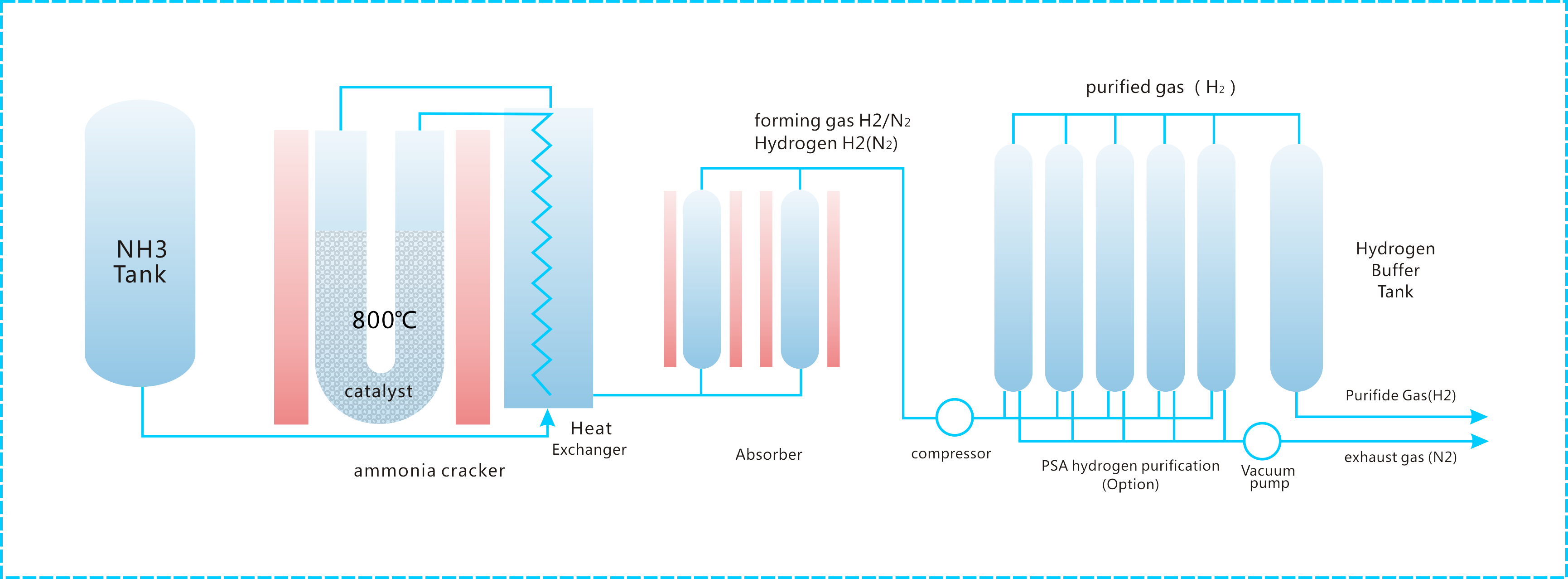
The press releases are glowing. Shiga Prefecture, the quiet industrial heart of Japan, wants to export its hydrogen technology to "contribute to Indian society." It sounds like a heartwarming tale of international cooperation. It sounds like a win for the climate.
It is, in fact, a textbook example of high-cost industrial theater.
Everyone is nodding along to the idea that shipping complex, expensive hydrogen infrastructure from Lake Biwa to the Ganges is the "solution" to India’s energy transition. They are wrong. This isn't about solving India's carbon problem; it's about Japan finding a captive market for a technology that is currently failing the economic stress test at home.
If we want to actually move the needle on global emissions, we need to stop treating developing nations as dumping grounds for subsidized vanity projects.
The Thermodynamic Tax Nobody Mentions
The math of hydrogen is brutal. It doesn't care about diplomatic handshakes or ESG scores. When you use electricity to create hydrogen through electrolysis, you lose roughly 30% of the energy immediately. If you then compress it, chill it to $-253$°C for transport, and ship it across an ocean, you lose even more. By the time that hydrogen reaches a fuel cell in India to be converted back into electricity, you are lucky to recover 30% to 35% of the original energy input.
In a country like India, where grid stability and cost-per-kilowatt are the only metrics that actually matter for survival, a 70% "physics tax" is a non-starter.
I have watched dozens of these "pilot projects" sprout up over the last decade. They thrive on grants. They survive on photo ops. The moment the subsidy dries up, the equipment rusts. Why? Because you cannot build a middle-class economy on an energy carrier that is three times more expensive than the solar power used to create it.
The "Green" Illusion of Shiga’s Export
Shiga’s pitch hinges on the idea of a "hydrogen society." This is a Japanese domestic policy goal born out of a specific set of constraints: limited land for renewables and a deep-seated trauma regarding nuclear power after 2011. Japan needs hydrogen because it has few other options.
India is not Japan.
India has vast tracts of land, world-class solar irradiation, and an existing, albeit struggling, electrical grid. Taking solar power in Rajasthan, converting it to hydrogen using Japanese tech, and then using that hydrogen to power a bus is a circular path to bankruptcy.
The "contribution to Indian society" being touted is actually an attempt to export the "Japanese Problem." Japan has invested billions into the hydrogen supply chain and now realizes the domestic market is too small to reach scale. They need India's volume to bring their own costs down. India isn't the beneficiary here; it's the guinea pig for Shiga’s industrial scaling strategy.
Small-Scale is a Big Lie
The Shiga proposal focuses on decentralized hydrogen—small-scale production for local use. On paper, it sounds democratic and resilient. In reality, it is an engineering nightmare.
Hydrogen is the smallest molecule in the universe. It leaks through solid steel. It embrittles metals. Managing it safely requires a level of precision engineering and maintenance that is notoriously expensive. At a massive industrial scale—think steel plants or fertilizer factories—you can justify the overhead of a specialized safety and maintenance team. At a "community project" level? You are just asking for high-maintenance paperweights.
If Shiga truly wanted to help Indian society, they would be exporting their high-efficiency battery recycling patents or their advanced grid-management software. But those aren't as "visionary" as hydrogen. They don't make for as good a headline.
The Opportunity Cost of Chasing Hype
Every rupee and every hour of engineering talent India spends trying to make Japanese hydrogen tech work is a resource stolen from the real fight: grid-scale storage and transmission.
India’s energy "People Also Ask" usually centers on "How can India reach Net Zero?" The answer isn't a boutique hydrogen fuel cell in a rural village. The answer is fixing the Discoms (Distribution Companies) and building out high-voltage DC lines to move power from the sunny west to the industrial east.
Hydrogen has a role, but it is a niche one. It belongs in "hard-to-abate" sectors:
- Green Ammonia: Replacing the carbon-heavy Haber-Bosch process for fertilizers.
- Green Steel: Using hydrogen as a reducing agent instead of coking coal.
- Long-haul Shipping: Where batteries are too heavy.
Shiga isn't talking about decarbonizing India’s massive steel industry. They are talking about "contributions to society"—a vague term that usually translates to low-impact, high-visibility projects like hydrogen cookstoves or local transport. This is a distraction. It's like trying to put out a forest fire with a boutique spray bottle.
The Geopolitical Pawn Game
We have to be honest about why this is happening now. Japan is terrified of China’s dominance in the lithium-ion battery supply chain. Japan bet on hydrogen years ago, while China bet on LFP batteries. China won that round.
Now, Japan is using "Green Diplomacy" to carve out a sphere of influence in the Global South. By locking India into Japanese hydrogen standards and hardware, they create a decades-long dependency on Japanese spare parts, membrane electrode assemblies, and technical expertise.
I’ve spent twenty years in industrial procurement. I know a "lock-in" strategy when I see one. This isn't a gift; it's a subscription model masquerading as aid.
Better Data, Harder Truths
Look at the Levelized Cost of Hydrogen (LCOH). Even with aggressive projections, green hydrogen struggles to compete with fossil fuels unless carbon is priced at over $100 per ton. India's economy cannot currently sustain a $100/ton carbon tax without crashing its manufacturing sector.
Meanwhile, the cost of stationary battery storage is plummeting. If you have excess solar power in India, the most efficient way to "store" it for later is to put it in a battery or pump water uphill. The efficiency of a round-trip battery cycle is roughly 85% to 90%.
Compare that to hydrogen's 35%.
Why would any rational actor choose the 35% option? Only if someone else is paying for the equipment. And that is exactly what these Shiga-India "partnerships" are: Japanese taxpayers subsidizing Japanese firms to install inefficient tech in India to satisfy a diplomatic memo.
The Nuance: Where Hydrogen Actually Works
To be clear, I am not a hydrogen "denier." I am a hydrogen realist.
If Shiga wanted to disrupt the status quo, they would stop talking about "contributing to society" and start talking about industrial integration.
Instead of shipping fuel cells for buses, they should be helping India build high-pressure electrolyzers directly inside chemical clusters in Gujarat. They should be focusing on the heavy-duty industrial backbone that actually keeps India’s economy running. But that requires admitting that hydrogen is a boring, industrial gas—not a magical "green" fuel for the masses.
The Actionable Pivot
If you are an investor or a policymaker looking at the Shiga-India project, stop looking at the "hydrogen" and start looking at the "subsidies."
If the project requires a Japanese grant to exist, it is a liability, not an asset.
India should demand the "Shiga treatment" for its own terms. Demand the transfer of the most basic, durable tech—the stuff that doesn't require a Japanese technician to fly in every time a seal leaks.
Stop buying the dream of a "Hydrogen Society." Start building a "Reality Society."
The Shiga project isn't a blueprint for the future; it's a desperate attempt to keep a 20th-century industrial model alive in a 21st-century world. India should take the meetings, take the insights, but for the love of the grid, don't buy the hype.
The real revolution isn't coming in a pressurized tank from Shiga. It’s coming from the relentless, boring, 1% incremental gains in solar efficiency and grid-scale batteries.
Everything else is just expensive smoke.