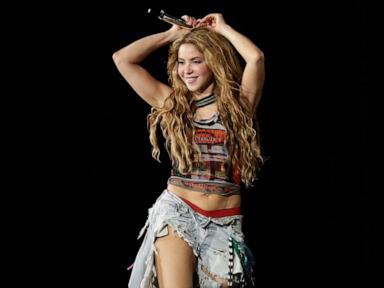
The music industry is addicted to the "global smash" formula, and the 2026 FIFA World Cup is the latest victim. News of Shakira teasing 'Dai Dai' with Burna Boy has the internet doing backflips, but if you look at the mechanics of cultural relevance, this isn't a masterstroke. It is a desperate attempt to manufacture a viral moment by smashing two mismatched demographics together.
FIFA and the major labels are playing a game of numbers, not soul. They see Shakira’s 90 million monthly listeners and Burna Boy’s undisputed reign over the Afrobeats surge and assume 1+1 equals 3. It doesn't. In the world of high-stakes sports anthems, 1+1 often equals a muddy, generic mess that pleases no one and evaporates from the charts before the quarter-finals.
The Myth of the Universal Anthem
The "lazy consensus" suggests that a World Cup song needs to be a linguistic salad—a bit of Spanish, a dash of English, a sprinkle of West African slang—to unite the world. This is a fallacy. The most enduring football songs aren't the ones designed by committee to hit every continent’s KPI. They are the ones that capture a specific, raw emotion.
Think about 'Waka Waka' from 2010. It worked not because it was "global," but because it leaned into the specific energy of the first African World Cup. It had a heartbeat. Since then, we have seen a steady decline into over-produced, sterile tracks that feel like they were written by an algorithm trying to maximize Spotify placements.
'Dai Dai' sounds like a corporate strategy, not a song. We are witnessing the "Marvelization" of music. You take a legacy superhero (Shakira) and pair her with the hot new star from another franchise (Burna Boy) to ensure the opening weekend numbers look good. But where is the grit? Where is the actual connection to the sport?
Why the Afrobeats Pivot is Five Years Late
The industry loves to "discover" a genre right as it reaches its saturation point. Label executives are patting themselves on the back for bringing Burna Boy into the FIFA fold, ignoring that he has been the gold standard of global performance for years.
By the time a genre is tapped for the official World Cup anthem, it has usually been stripped of the very edge that made it popular. We saw it with EDM. We saw it with Reggaeton. Now, Afrobeats is being forced into the "World Cup Template."
The template requires:
- A four-on-the-floor beat that doesn't offend anyone.
- A chorus so simple a toddler could hum it in a stadium.
- Lyrics about "strength," "unity," and "the dream."
Burna Boy’s best work is polyrhythmic, complex, and deeply rooted in the political and social textures of Nigeria. Shakira’s best work is sharp, quirky, and vocally unpredictable. To make 'Dai Dai' work for a global broadcast, you have to sand down those edges. You end up with a smooth, round, boring pebble.
The Shakira Fatigue Factor
I have watched marketing departments burn millions of dollars trying to recreate the lightning in a bottle that was 2010. Shakira is the undisputed queen of the World Cup, but there is a fine line between a tradition and a crutch.
By constantly returning to the same well, FIFA is admitting they have no idea how to talk to the next generation of fans. The 2026 World Cup is being hosted in North America—a market currently dominated by regional Mexican music, hyper-niche TikTok subgenres, and a massive resurgence in indie-sleaze aesthetics.
Plugging in Shakira for the fourth or fifth time (depending on how you count her various appearances) feels like a safe, boardroom-approved choice. It’s the "nobody ever got fired for buying IBM" of music curation. It lacks the risk-taking that actually defines cultural shifts. If you want to capture the energy of 2026, you don't look at who won 2010.
Burna Boy is Being Underutilized
If you are going to use the Giant of Africa, let him be a giant. Most of these collaborations result in the featured artist getting a 16-bar verse that feels like an afterthought. It’s "inclusion" as a marketing gimmick.
Real collaboration requires a shared sonic DNA. Burna Boy and Shakira exist in different rhythmic universes. One is syncopated and grounded; the other is melodic and ethereal. Forcing them onto a track called 'Dai Dai'—which already sounds like a placeholder name for a generic hook—is a disservice to both artists' legacies.
The Data Behind the Disappointment
Let’s look at the "People Also Ask" obsession with "Who has the most World Cup hits?" People point to Shakira and Ricky Martin. But look at the charts from the last two tournaments. Can you name the official song from Qatar 2022 without Googling it? Can you name the 2018 anthem?
The "Official Anthem" is becoming a dead format. The songs that actually define the tournaments now are organic. They are the songs the fans sing in the stands, or the tracks that players post on their Instagram stories.
- Organic Hits: 'Freed from Desire', 'Seven Nation Army', 'Wavin' Flag'.
- Corporate Failures: Every official FIFA song since 2014.
The reason is simple: you cannot mandate a vibe. FIFA trying to tell us that 'Dai Dai' is the sound of the summer is like a parent trying to use Gen Alpha slang at the dinner table. It is fundamentally "cringe" because the intent is transparent. They want your data, your streams, and your merchandise money. They don't care about the art.
The North American Context
The 2026 World Cup is a massive opportunity to redefine what the sport means in the US, Canada, and Mexico. This is the first time the tournament will have 48 teams. The scale is unprecedented.
In this context, a Shakira/Burna Boy track feels remarkably small. It feels like a "safe" global export rather than something that reflects the specific, chaotic, and diverse energy of North American soccer culture. Where is the influence of the sprawling Los Angeles scene? Where is the Toronto sound? Where is the Mexico City heat?
Instead, we get a curated, sanitized "Global Citizen" sound that could be playing in an airport lounge in Dubai or a mall in Singapore. It’s music for everywhere, which means it’s music for nowhere.
Stop Asking for Anthems
The real mistake isn't the artists; it's the premise. We need to stop asking "Who is doing the World Cup song?" and start asking "Why do we still have an official song?"
In the age of fragmented media, the idea of a single "world" song is an ancient relic. We don't watch the same shows, we don't use the same platforms, and we certainly don't listen to the same music. By trying to force a singular narrative through a collaboration like 'Dai Dai', FIFA is fighting a losing battle against the reality of modern consumption.
The smart move would be a decentralized soundtrack—a collection of EPs curated by different regional icons that actually represent the teams playing. But that doesn't allow for a flashy press release or a single big-budget music video featuring two of the most expensive faces in the world.
The Trustworthiness of Cynicism
I’ll admit the downside: 'Dai Dai' will probably be a commercial success in the short term. It will get millions of views. It will be played during every commercial break. But success isn't the same as impact.
A year from now, will anyone be humming 'Dai Dai'? Or will it be another "pivotal" moment that vanished the moment the trophy was lifted? History suggests the latter. We are trading cultural longevity for a temporary spike in the "attention economy."
If you want a song that actually matters, stop looking at the official FIFA Twitter account. Wait for the fans in the cheap seats to decide what the anthem is. They are the only ones who haven't been bought.
The industry is selling you a "game-changer" that is actually just a re-run. Don't buy the hype. The most exciting music of the 2026 World Cup hasn't been teased yet, because it won't come from a boardroom in Zurich or a studio in Miami. It will come from the streets.
Stop settling for manufactured magic.