The Iranian envoy called it a "joke." The West calls it a crisis. Both are missing the point.
While diplomats bicker over the semantics of Ukraine’s support for U.S. sanctions, the real story isn't about geopolitical posturing or whether Tehran is lying through its teeth. It is about the brutal, mathematical humiliation of modern electronic warfare.
We are watching the death of the million-dollar interceptor.
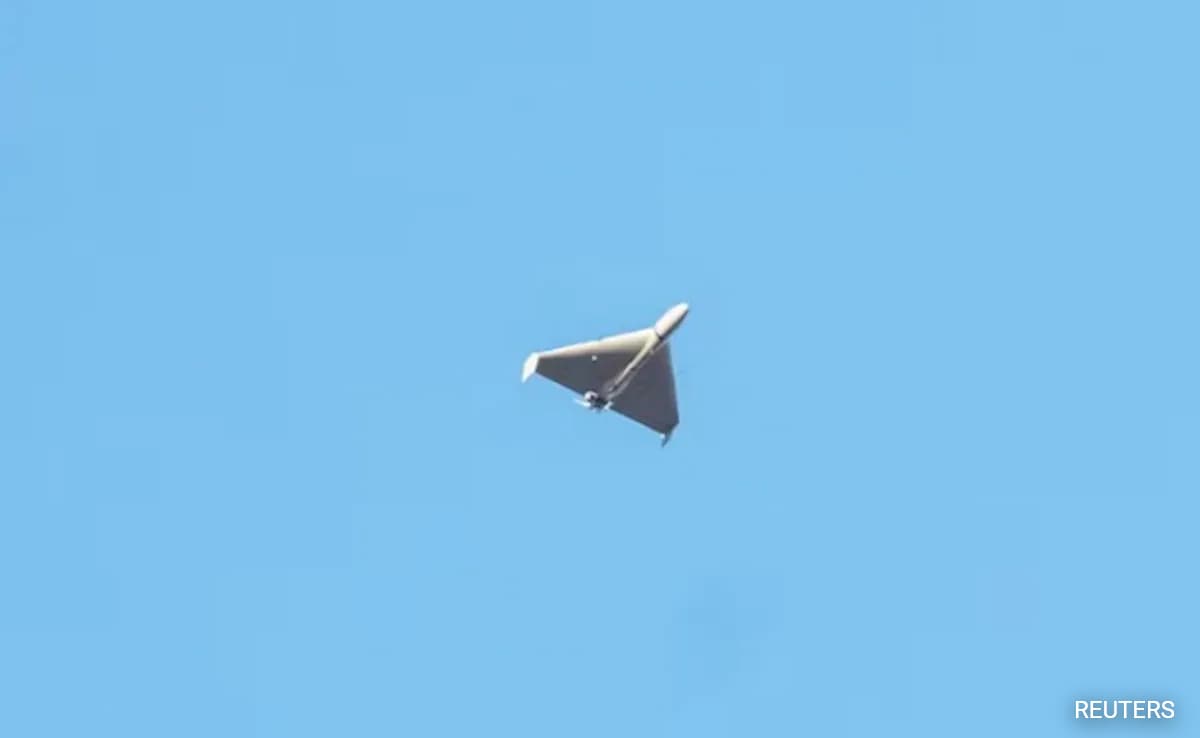
The "lazy consensus" pushed by mainstream defense analysts suggests that the Shahed-136 is a "lawnmower in the sky"—a primitive, buzzing nuisance that can be swatted away by superior Western tech. This perspective is dangerously arrogant. In the world of attrition warfare, "cheap and good enough" beats "expensive and perfect" every single time.
When a $20,000 drone forces a military to fire a $2 million Patriot missile, the drone has already won, even if it gets blown to pieces.
The Asymmetry of the Absurd
Modern defense contractors have spent decades selling us on the idea of surgical precision. They’ve built exquisite, fragile systems designed to fight an enemy that no longer exists.
I’ve seen defense budgets vaporized on "stealth" capabilities that can be bypassed by a swarm of plywood and fiberglass wings. The Shahed isn't a joke; it’s a disruption of the entire economic model of war.
- Cost of Entry: You can build a thousand Shaheds for the price of one high-end fighter jet.
- The Saturation Gap: Radar systems are optimized for fast-moving, high-altitude threats. Low, slow, and small is a nightmare for signal processing.
- Psychological Friction: The constant threat of a low-cost loitering munition forces a state of permanent high-alert, draining resources and morale far beyond the physical damage caused by the impact.
The Iranian envoy’s dismissal of Ukraine’s "support" to the U.S. as a joke is a tactical distraction. He knows, and the Pentagon knows, that the real joke is the price tag of the defense. If you have to spend $100 to stop a $1 threat, you go bankrupt. That isn't a military strategy; it’s a slow-motion financial suicide.
Stop Talking About "High-Tech"
We need to redefine what "advanced" means.
If a system uses off-the-shelf civilian GPS components, a basic internal combustion engine, and a simple flight controller to bypass billions of dollars in surveillance, that system is the high-tech one. It is more efficient. It is more adaptable.
The obsession with "cutting-edge" (excuse the term, but it’s the only way to describe the fetish) hardware has blinded us to the power of the commodity.
Imagine a scenario where a fleet of 500 drones is launched simultaneously. Even if your air defense has a 95% success rate—which is world-class—25 drones get through. If those 25 drones hit electrical substations or fuel depots, the "success" of the 475 intercepts becomes irrelevant.
The math of the swarm is cold and it does not care about your prestige.
The Sanction Paradox
The competitor article focuses on the diplomatic fallout of sanctions and "support." This is a fundamental misunderstanding of how modern supply chains work.
Sanctions on "dual-use" technology are a sieve. You cannot stop the flow of microchips used in washing machines or toy cars. Attempting to "starve" a drone program by banning high-end chips is like trying to stop someone from building a house by banning gold-plated faucets. They’ll just use wood.
I’ve watched procurement officers scramble to trace components back to their source, only to find a labyrinth of shell companies in jurisdictions that don't recognize Western intellectual property. The "joke" isn't the cooperation between Ukraine and the U.S.; the joke is the belief that 20th-century trade barriers can stop 21st-century distributed manufacturing.
Why We Fail to Adapt
- Sunk Cost Fallacy: We’ve invested so much in "Big Defense" that admitting a $500 flight controller can neutralize a billion-dollar platform feels like heresy.
- The Industrial Complex: There is no profit margin in building a $10,000 interceptor. The money is in the $2 million missile.
- Bureaucratic Inertia: Changing the procurement cycle to match the speed of consumer electronics takes years. The enemy moves in weeks.
The New Doctrine of Attrition
The real question isn't whether Iran supplied the drones or whether the envoy is lying. The question is: why are we still pretending that conventional air defense is a viable long-term solution to loitering munitions?
The answer is brutally honest: we don't have an alternative yet.
Kinetic interception—hitting a bullet with a bullet—is a losing game against mass-produced drones. We need to pivot to directed energy, electronic jamming, and "hard-kill" systems that cost pennies per shot.
Until we can drop the cost-per-intercept below the cost-per-drone, we are losing the war of logic.
Every time a politician stands up and brags about a "successful" interception of a swarm, look at the price of the interceptor. If the gap is more than 10x, they aren't winning. They are being bled dry.
The Iranian envoy might be a mouthpiece for a regime, but his mockery reflects a terrifying reality. In the age of the disposable drone, the side with the most expensive toys is the most vulnerable.
Stop buying the narrative that these drones are "just" simple tools. They are the heralds of a shift where volume is a quality of its own, and where the most sophisticated military on earth can be checkmated by a garage-built glider.
Buy the cheap tech or prepare to lose to it.