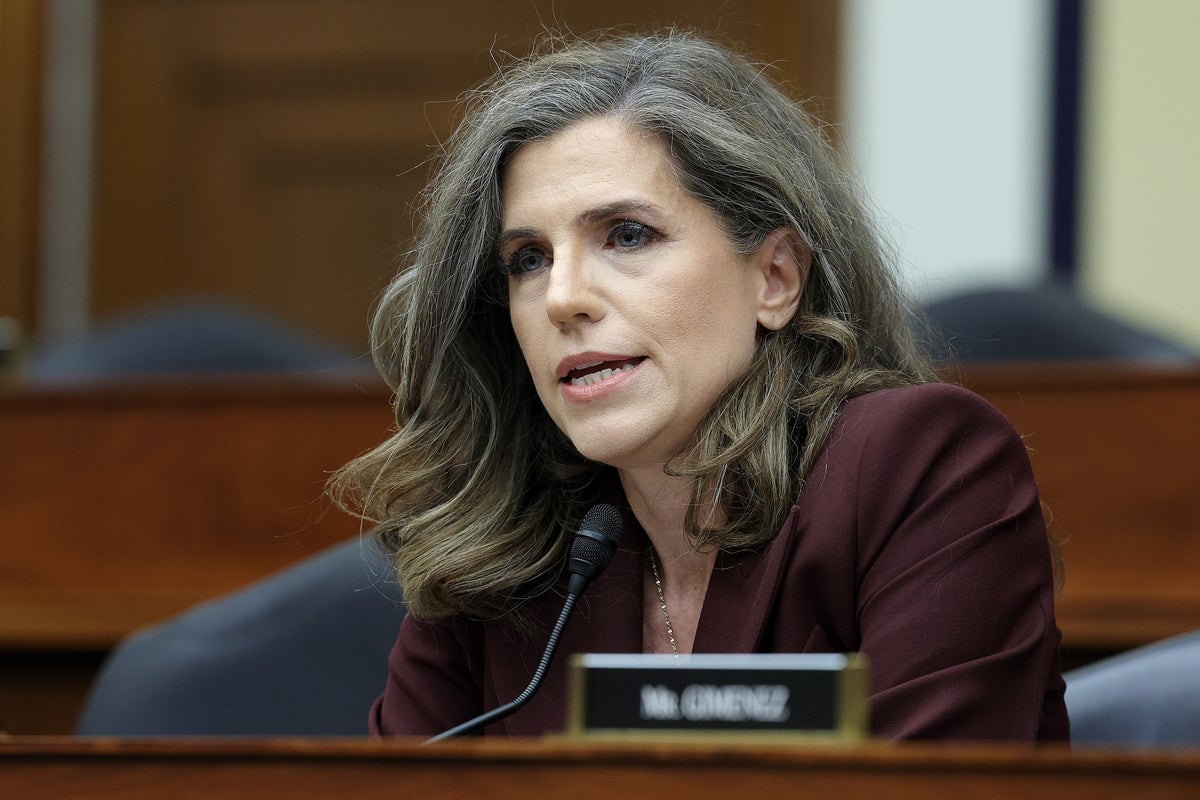
The United States Congress has spent decades operating under a set of rules that would bankrupt a private corporation and land its HR department in a federal courtroom. Recent disclosures from Representative Nancy Mace have pulled back the curtain on a specific, disturbing figure. More than $300,000 in taxpayer money was funneled into settlements for sexual harassment claims within congressional offices in just a few years. This isn't just a budget line item. It is a systematic failure of institutional accountability that uses public funds to shield powerful individuals from the consequences of their own misconduct.
While the $300,000 figure is the current lightning rod, the underlying mechanism is far more insidious. For years, the Office of Congressional Workplace Rights (OCWR), formerly the Office of Compliance, has acted as a buffer between lawmakers and the laws they write for everyone else. When a staffer is harassed, the path to justice is intentionally designed to be an exhausting marathon of bureaucracy. Settlements are paid out of a special Treasury Department account, meaning the member of Congress responsible for the behavior often never sees the bill.
The Mechanics of Institutional Secrecy
To understand how a $300,000 payout happens without a headline, you have to look at the Congressional Accountability Act of 1995. On the surface, this law was supposed to make Congress follow the same employment laws as the rest of the country. In practice, it created a labyrinth.
For decades, victims were forced into a mandatory "counseling and mediation" phase. This was effectively a cooling-off period designed to protect the institution. If a settlement was reached during this shadowy process, the money didn't come from the Representative's personal bank account or even their office budget. It came from a dedicated fund within the Department of the Treasury. This fund has no name on it. It has no face. It is simply a bottomless well of taxpayer cash used to make problems go away quietly.
The 2018 reforms made some progress by requiring members to reimburse the Treasury for settlements involving their own conduct. However, the system remains opaque. The public rarely learns which specific office was involved or the nature of the allegations. We are left with a raw number and a sense of betrayal. The $300,000 cited by Mace is likely only the tip of a very large, very expensive iceberg that has been growing in the dark for decades.
Why Settlements Fail to Solve the Culture Problem
In the private sector, a surge in sexual harassment payouts triggers an immediate response from shareholders and insurance providers. Risk management teams descend on the office. Heads roll. In Congress, the "shareholders" are the taxpayers, and they are kept in the dark by design.
When the government pays for a lawmaker's mistakes, the incentive to change disappears. A settlement is often paired with a Non-Disclosure Agreement (NDA). These gag orders serve a dual purpose. They provide the victim with a financial cushion to move on with their life, but they also ensure the harasser can continue their career without a stain on their public record. This creates a recurring cycle of abuse. A staffer leaves with a check, the lawmaker keeps their committee seat, and a new, unsuspecting staffer is hired into the same toxic environment six weeks later.
Critics of the current system argue that transparency would turn the legal process into a political weapon. They claim that "frivolous" lawsuits would be used to sink campaigns. This argument falls flat when you look at the rigor required to actually secure a payout from the Treasury. These are not participation trophies. They are the result of documented grievances that the government's own lawyers decided were serious enough to warrant a six-figure payout.
The Financial Shell Game
There is a distinct lack of fiscal responsibility in how these claims are handled. If a small business owner harasses an employee, they pay the price. If a CEO does it, the company’s stock might tank. When a member of Congress does it, the Treasury writes a check, and the budget is balanced on the backs of people working 9-to-5 jobs in Peoria and Phoenix.
The $300,000 mentioned by Mace is a drop in the bucket compared to the total history of the Treasury's settlement fund. Since 1997, the fund has paid out over $17 million for various workplace claims. While not all of these are for sexual harassment—they include discrimination based on age, race, and disability—the lack of granular data is a feature, not a bug. By grouping these payouts together, the institution hides the specific predators in its midst.
We are seeing a clash between two versions of Washington. One version wants to maintain the "dignity of the office" through silence and checks. The other, increasingly vocal version, argues that the only way to clean up the Hill is to name names and stop the flow of "hush money" coming from the public till.
The Power Imbalance in Congressional Offices
Congressional offices are unique workplaces. They are small, high-pressure environments where the boss is essentially a minor celebrity with absolute power over your career. If you are a 22-year-old legislative correspondent and a powerful Senator or Representative makes your life hell, where do you go?
The OCWR was supposed to be that place. But for years, the process was so weighted against the accuser that many chose to simply quit and disappear into the private sector. Those who did fight were met with a phalanx of government lawyers whose job was to protect the "Member," not the truth. The $300,000 in payouts represents the few who were brave enough to endure a process that felt more like an interrogation than an investigation.
The reality of these payouts is that they are often the "cheaper" option for the government. Going to trial is expensive and public. A quiet payout preserves the status quo. It keeps the gears of the political machine turning without the friction of a scandal. But this efficiency comes at a moral cost. It tells every staffer currently walking the halls of the Rayburn Building that their dignity has a price tag, and the American people will be the ones forced to pay it.
Beyond the $300,000 Figure
Mace’s revelation shouldn't be viewed in isolation. It is a symptom of a broader immunity that permeates the federal government. When we talk about "the swamp," we shouldn't just talk about lobbyists and special interests. We should talk about the internal culture that allows harassment to be treated as a clerical error.
The current push for reform centers on several key pillars. First, there is the demand for a public database of all settlements, including the name of the member of Congress involved. Second, there is a call to ban the use of taxpayer funds for any settlement involving sexual misconduct, forcing the money to come from the individual's personal funds or campaign accounts—though the latter carries its own set of ethical nightmares.
If we want to stop the harassment, we have to stop the subsidies. As long as the Treasury acts as an insurance policy for bad behavior, the behavior will continue. The $300,000 is a warning. It is evidence of a system that values the reputation of the powerful over the safety of the worker.
The next time you see a line item for "miscellaneous expenses" or "administrative settlements" in a federal budget report, remember that it might just be the cost of keeping a secret. The American taxpayer is currently the largest silent partner in the history of workplace misconduct. Changing that requires more than just a headline; it requires a total dismantling of the legal shields that make Congress the most protected workplace in the world.
Stop paying for the silence of victims and start demanding the accountability of the perpetrators.