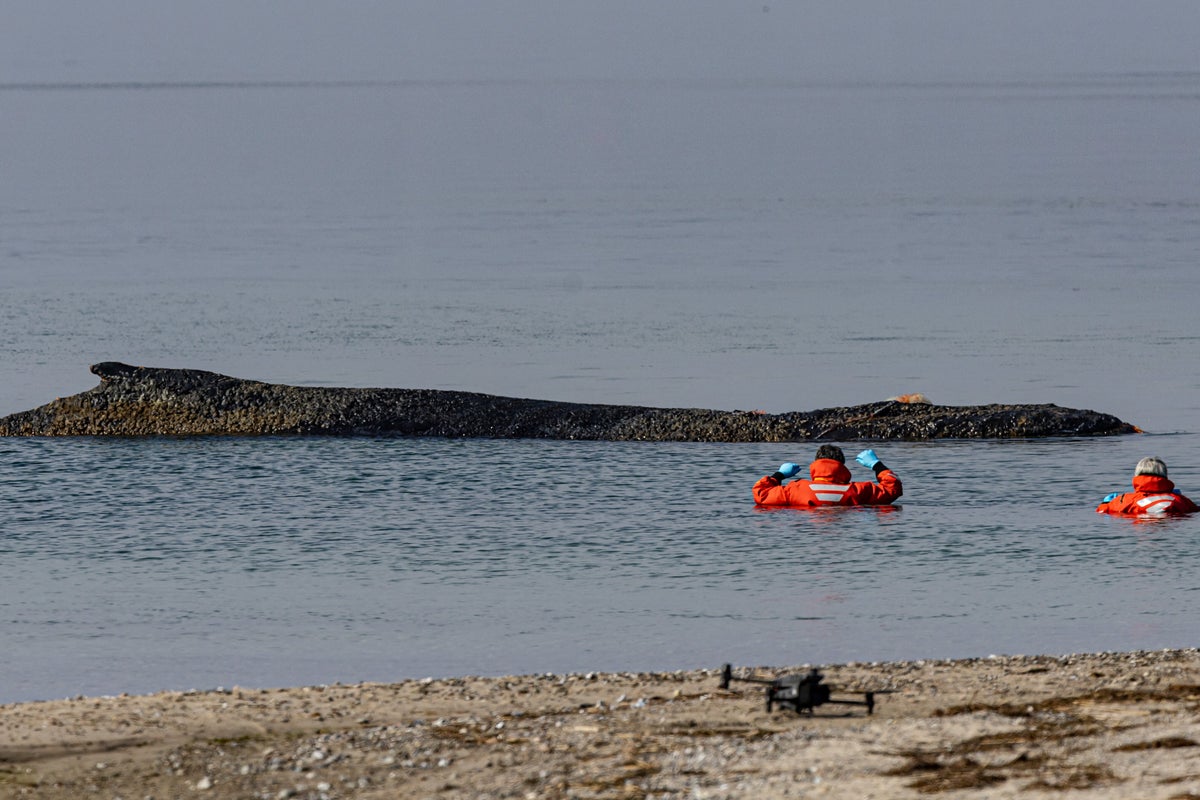
A massive fin whale is currently gasping for air on a sandbank off the German coast and the clock isn't just ticking—it’s screaming. This isn't a scene from a nature documentary where everything ends with a slow-motion swim toward the sunset. It’s a messy, high-stakes engineering nightmare near Rostock.
Rescuers are battling the tide, the animal's own crushing weight, and the freezing temperatures of the Baltic Sea. When a creature this size—roughly 15 to 20 meters long—hits the shallows, its body starts to betray it. Evolution designed these giants for the deep, where water provides the buoyancy needed to keep their internal organs from collapsing. On land, or even in knee-deep water, that same gravity turns their skeletal structure into a cage that slowly crushes their lungs.
The Science of Why They Strand
We often look for a single villain when a whale ends up on a beach. Was it sonar? Was it a ship strike? Sometimes, it’s just a wrong turn. The Baltic Sea is notoriously difficult for deep-sea navigators like the fin whale. It’s shallow, brackish, and filled with acoustic noise that can scramble a whale’s internal GPS.
Fin whales are the second-largest animals on Earth, surpassed only by the blue whale. They can swim at speeds up to 37 kilometers per hour, which makes them the "greyhounds of the sea." But that speed is useless in the labyrinth of the German coastline. Once they enter the Danish straits and move into the southwestern Baltic, the water depth drops significantly. For a fin whale, this is the equivalent of a human trying to navigate a narrow, pitch-black hallway.
When a whale hits a sandbank, it isn't just stuck. It's in shock. The physiological response is a cascade of stress hormones that can lead to muscle breakdown. Scientists call this "capture myopathy," and it’s a death sentence if not managed immediately.
Why Rescuers Can't Just Pull the Whale
You’d think a couple of tugboats and some thick rope would solve the problem. Honestly, that’s how you kill a whale.
Marine biologists from the German Oceanographic Museum (Deutsches Meeresmuseum) and local emergency services are walking a razor-thin line. If you pull a stranded whale by its tail, you risk dislocating its spine or causing internal hemorrhaging. The tail fluke isn't designed to support the entire animal's weight against the friction of sand and mud.
Instead, the team has to wait for high tide while keeping the animal’s skin moist. If the skin dries out, the whale loses its ability to regulate temperature, and it literally cooks from the inside out. This isn't exaggeration; the layer of blubber that keeps them warm in the Arctic acts like an insulator for their own metabolic heat once they stop moving.
The Logistics of a Baltic Rescue
Local reports from the Rostock area indicate that the water levels are the primary enemy. The Baltic doesn't have a massive tidal range like the North Sea, so rescuers are often dependent on wind-driven water levels.
- Hydration and Cooling: Rescuers use pumps and buckets to keep the blowhole clear but the skin wet.
- Monitoring Stress: Vets look for respiratory rates. A whale breathing more than once or twice a minute is in severe distress.
- Weight Distribution: If possible, slings are placed under the belly, but this requires specialized equipment that can handle 30 to 40 tons of living weight.
This isn't the first time Germany has faced a fin whale stranding. Back in 2016 and again in 2022, similar incidents occurred. In those cases, the whales were often sick or injured before they even hit the shore. It’s a harsh reality that a healthy fin whale rarely ends up on a sandbank in the first place.
The Odds Are Not Good
Most whale strandings in the Baltic end poorly. That's a hard truth. If the whale is already emaciated—meaning its ribs are showing through the blubber—it likely won't have the energy to swim even if it’s towed back to deep water.
Biologists on the scene are likely looking for signs of ship strikes. The shipping lanes in the Baltic are some of the busiest in the world. A collision with a container ship can cause internal trauma that doesn't show up as an external wound but leaves the whale unable to dive or navigate.
If the rescue fails, the logistics shift from a life-saving mission to a massive disposal project. A whale carcass is a biological hazard that can explode due to gas buildup during decomposition. It’s a grim thought, but one that local authorities in Mecklenburg-Vorpommern have to plan for even as they hope for a miracle.
Tracking the Trends in Whale Sightings
Data from the last decade shows an uptick in large whale sightings in the Baltic. While it’s tempting to think the population is booming, it’s more likely that their traditional food sources are shifting. Climate change is warming the North Atlantic, pushing krill and small fish like herring into new territories.
Fin whales are "gulp feeders," taking in massive amounts of water and filtering it through baleen plates. In the shallow Baltic, they often ingest sand and debris, which leads to digestive impaction. This contributes to the disorientation that leads to strandings.
What You Can Do
If you’re near the coast, stay away. The biggest mistake people make during a stranding is crowding the animal. Every human voice, every flash from a camera, and every drone buzzing overhead adds to the whale’s cortisol levels.
- Keep 100 meters back: Give the experts room to work.
- Report sightings immediately: Use the official apps or local emergency numbers.
- Support marine research: Organizations like the Whale and Dolphin Conservation (WDC) or local German marine institutes need funding for the expensive equipment required for these rescues.
The next few hours will decide everything for this whale. If the tide rises high enough and the animal has the strength to push off the sand, it might stand a chance. Otherwise, we’re looking at another tragic reminder of how fragile these giants are once they cross the threshold into our world.
Watch the official channels for the Rostock maritime authorities for live updates on the water levels. The window for a successful refloat is narrow and closing fast. If the animal isn't off that bank by the next high tide cycle, the mission likely shifts to a compassionate euthanasia to prevent further suffering. That’s the reality of marine biology on the front lines.