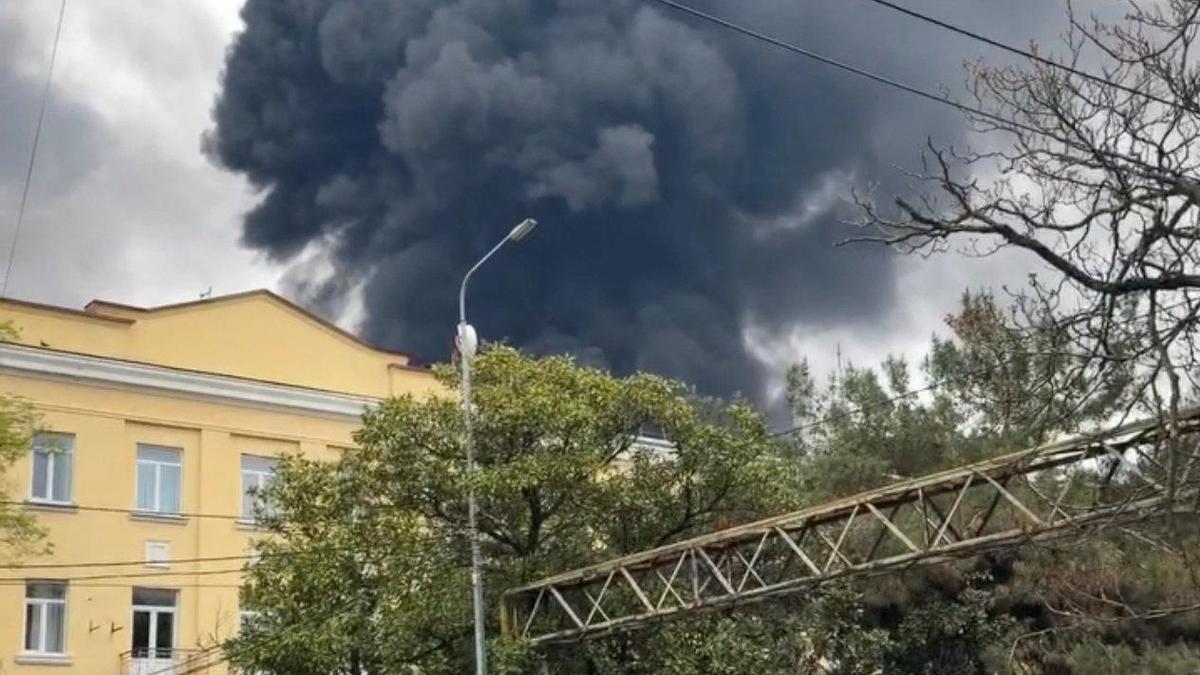
Ukraine just hit the Tuapse oil terminal again. This is the fourth strike in two weeks, and frankly, the "business as usual" narrative coming from the Kremlin is starting to look ridiculous. While Russian officials claim things are under control, the reality on the ground in the Krasnodar region is a chaotic mess of blackouts, toxic rain, and failing infrastructure.
This isn't just another random drone strike. It’s a methodical dismantling of one of Russia's most critical economic hubs. The Tuapse refinery, owned by Rosneft, isn't some backwater outpost; it’s a massive facility capable of processing 12 million tons of oil annually. Or at least, it was. After four visits from Ukrainian drones, those numbers are plummeting.
The strategic nightmare at Tuapse
If you’re wondering why Ukraine keeps hitting the same spot, look at a map. Tuapse is the only Russian oil refinery sitting directly on the Black Sea coast. It’s a combined processing plant and export terminal. When it burns, Russia doesn't just lose the ability to make fuel; it loses the ability to ship it out to global markets.
The SBU (Security Service of Ukraine) has been pretty open about their goal. They want to choke the petrodollars that fund the Russian war machine. By hitting the same facility repeatedly, they ensure that every time repair crews think they’ve made progress, they're sent right back to square one. It’s a strategy of exhaustion.
What oil rain actually feels like
The term "oil rain" sounds like something out of a bad sci-fi movie, but for the people living in Tuapse, it’s a health crisis. When these storage tanks get hit, thousands of tons of petroleum products go up in flames. The resulting soot and chemical byproducts—including nasty stuff like benzene and xylene—mix with the atmosphere.
Residents have reported a literal oily film covering their cars, their laundry, and their lungs. The air reeks of fuel. During the April 20 and April 28 strikes, concentrations of pollutants were measured at several times the legal limit.
- Blackouts: The latest strike on May 1 knocked out power to the city center.
- Environmental Dead Zones: Oily slicks now stretch over 70 kilometers along the Black Sea coast.
- Health Hazards: Toxic smog has drifted as far as Sochi and Anapa.
The Kremlin's disconnect from reality
On April 28, Vladimir Putin told his Emergency Situations Minister that there were "no serious threats" in Tuapse. He said people were "coping." It’s a classic move: downplay the damage to maintain the illusion of an impenetrable defense.
But you can’t hide a fire that’s visible from space. Satellite imagery has already confirmed that multiple fuel tanks have been completely vaporized. The facility hasn't actually been operational since the strikes in mid-April. You can say there's no threat all you want, but when the city center is in a total blackout and the internet is down, the people living there know better.
Why this changes the game for 2026
We're seeing a shift in how Ukraine fights. They aren't just waiting for Western missiles anymore. They've built their own deep-strike drones, like the "Peklo" and "Flamingo," which can reach targets hundreds of miles inside Russian territory.
They're applying what experts call an "effects-based approach." Instead of spreading their resources thin, they're hammering the energy value chain. They hit the refinery, then the storage tanks, then the pumping stations. If they can knock out the Novorossiysk and Tuapse ports for good, they’ve essentially disconnected a huge chunk of Russia's economy from the rest of the world.
The immediate fallout
The Slavyansk-on-Kuban refinery was also forced to halt operations recently. The pattern is clear: Russia’s air defenses are being stretched to the breaking point. They have to choose between protecting front-line troops or protecting the refineries that pay for those troops.
If you're tracking the energy markets, keep an eye on Russian refined product exports. While their crude exports might stay steady for a bit, their ability to sell processed fuel is tanking. That’s a direct hit to their profit margins.
If you live in or near the Krasnodar region, the best move is to stay indoors during these "smog events" and avoid any local tap water that might be contaminated by runoff. For everyone else, watch the satellite feeds. The smoke over Tuapse tells a much more honest story than the official press releases.