Wall Street is currently high on its own supply. If you’ve spent the last week reading the financial press, you’ve seen the same tired headline: stocks are marching toward records because earnings are "strong," even as oil prices creep higher. It is a comforting bedtime story for retail investors. It is also fundamentally wrong.
The market isn't climbing because of organic growth. It’s climbing because of a toxic cocktail of share buybacks, aggressive cost-cutting that cripples long-term R&D, and a desperate hope that the Federal Reserve will blink. When the media says earnings are "strong," they are looking at bottom-line figures manipulated by accounting gymnastics. They are ignoring the decay in the top line. Revenue is stalling. Consumer demand is fraying. We aren't in a bull market; we are in a liquidity-fueled hallucination.
The Earnings Mirage
Let’s talk about these "strong" earnings. In a healthy economy, companies make more money because they sell more products or services to more people. That isn't what's happening right now. We are seeing margin expansion through attrition.
I’ve sat in boardrooms where the strategy isn't "how do we innovate?" but "how many people can we fire to beat the quarterly EPS estimate by two cents?" This is phantom growth. When a company cuts 10% of its workforce to meet an earnings target, the stock price jumps. The pundits cheer. But that company just traded its future for a temporary bump in its share price.
Furthermore, share buybacks are at an all-time high. When a company buys back its own stock, it reduces the number of shares outstanding. Even if total profit stays flat, the "Earnings Per Share" (EPS) goes up. It’s a math trick. It’s the corporate equivalent of an athlete using PEDs to mask a torn ACL. You might look good on the field today, but the collapse is inevitable.
The Oil Myth
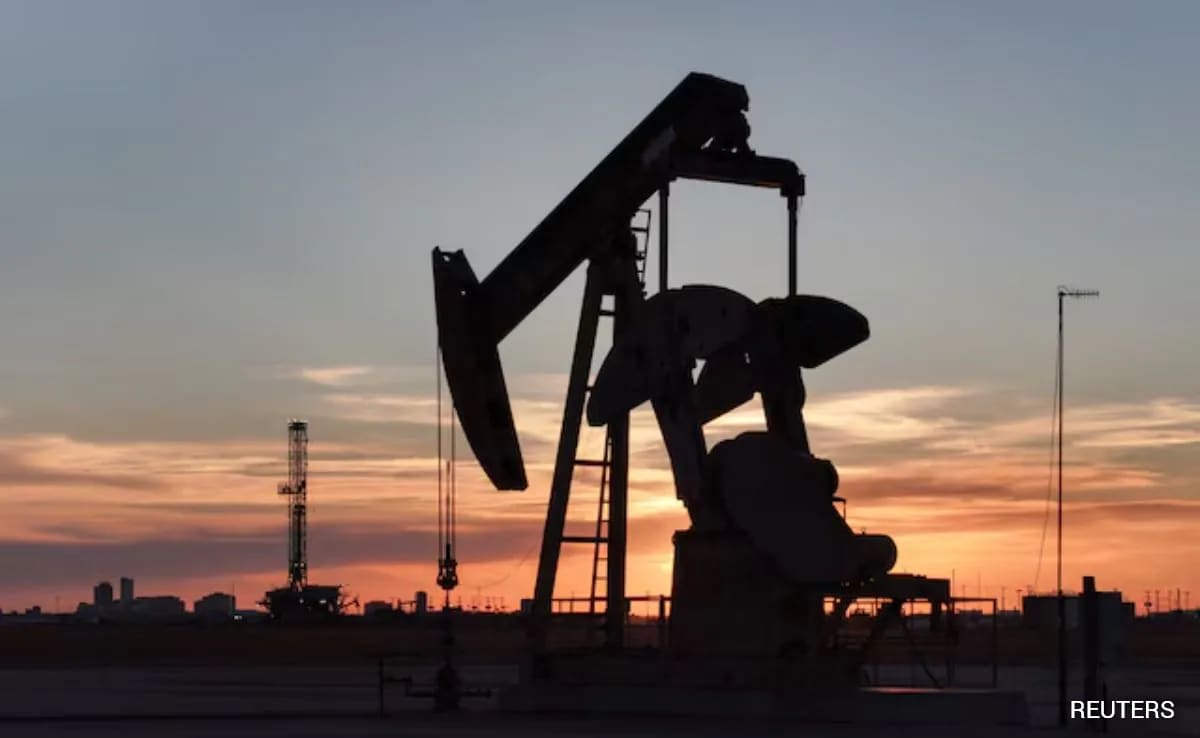
The "despite rising oil prices" line is the most glaring piece of ignorance in the current narrative. The consensus view is that higher oil prices are a "headwind" that the "resilient" market is overcoming.
Reality check: higher oil prices aren't just a hurdle for the market to jump over; they are a tax on the entire global economy. When Brent crude stays elevated, it doesn't just make it more expensive to fill up a Ford F-150. It increases the cost of every single plastic component, every shipment of grain, and every kilowatt of power used by those "strong" tech companies to run their data centers.
The market isn't "ignoring" oil. The market is lagging. There is a documented delay between energy price spikes and the resulting compression in consumer discretionary spending. People don't stop buying iPhones the day gas hits $4.50. They stop three months later when their credit card balance becomes unmanageable. We are currently in that lag phase. The "resilience" the media loves to talk about is actually just the sound of a fuse burning down.
The P/E Ratio Trap
"Stocks aren't expensive if you look at forward earnings!"
This is the siren song of the permabull. Using forward Price-to-Earnings (P/E) ratios is like betting on a horse based on how fast the owner says it will run next year. These projections are almost always overly optimistic.
If we look at the Shiller P/E ratio—which adjusts for inflation and uses a 10-year average of earnings to smooth out the noise—we see a much darker picture. We are trading at levels that have historically preceded every major market crash in the last century.
- 1929: Sky-high valuations.
- 2000: Irrational exuberance.
- 2008: Complete blindness to systemic risk.
- Today: A belief that AI will magically solve the productivity gap while the middle class is squeezed dry.
We are paying a premium for mediocrity. Investors are so afraid of missing out (FOMO) that they are willing to pay 30 times earnings for companies that have zero path to 30% growth. This isn't investing; it's a game of "Greater Fool Theory." You only buy because you hope someone else will be dumb enough to buy it from you at a higher price tomorrow.
The Death of the Middle Class Consumer
The "strong earnings" narrative conveniently ignores the health of the entity that pays for those earnings: the consumer.
Personal savings rates have plummeted. Credit card delinquencies are hitting decade highs. The "strong" retail sales numbers we see are often just reflections of inflation—people aren't buying more stuff; they are paying more for the same amount of stuff.
When the media reports that "Consumer spending rose 0.5%," they rarely adjust for the fact that the cost of living rose 0.6%. In real terms, the consumer is shrinking. You cannot have a sustained record-breaking stock market when the people who buy the products are underwater.
I have seen this movie before. In 2007, the "strong" housing market was the bedrock of the economy. Until it wasn't. Today, the "strong" corporate earnings are the bedrock. But that bedrock is made of sandstone, and the tide of interest rates is coming in.
Why "Wait and See" is a Death Sentence
The conventional wisdom says "don't time the market" and "stay invested for the long haul."
This is great advice if you are 22 and have forty years of compounding ahead of you. It is catastrophic advice if you are within ten years of retirement or if you are managing capital that you cannot afford to lose.
Being contrarian doesn't mean being a perma-bear. It means being a realist. The "lazy consensus" wants you to stay in the pool while the shark is circling because they get paid on Assets Under Management (AUM). They don't care if your portfolio drops 40%, as long as you don't withdraw the money.
The Interest Rate Delusion
Every time a Fed official sneezes, the market rallies on the hope of a "pivot." This obsession with rate cuts is the ultimate sign of a broken market. A healthy market wants higher rates because higher rates imply a strong, growing economy where capital has value.
The fact that the S&P 500 surges every time there’s a hint of a recession (because a recession means lower rates) proves that the market is no longer a discounting mechanism for future prosperity. It is a ward of the state. It is a junkie looking for its next fix of cheap money.
If you are rooting for rate cuts, you are rooting for an economic slowdown. You are rooting for the very thing that will eventually destroy the "strong earnings" you claim to love. You can't have it both ways. Either the economy is strong and rates stay high, or the economy is weak and rates come down. The "soft landing" is a fantasy designed to keep you from selling.
Stop Listening to the "Experts"
The people on TV telling you that "everything is fine" are the same people who missed the 2022 bond market massacre. They are the same people who said inflation was "transitory." They have a vested interest in your optimism.
Real expertise isn't about following the trend; it's about identifying the inflection point where the trend becomes a lie. We are at that point. The divergence between the stock price and the underlying economic reality is wider than it has ever been.
How to Actually Play This
- Stop buying the index: The S&P 500 is top-heavy. If the "Magnificent Seven" stumble, the whole index dies. Look for individual companies with actual cash flow, zero debt, and products people need, not just want.
- Hold Cash: In a world of overvalued assets, cash isn't "trash"—it’s an option on future fire sales. 5% in a money market fund is better than -20% in a "strong" stock market.
- Watch the Credit Market: Stocks are the noisy children; bonds are the adults in the room. When the high-yield credit spreads start to widen, get out. The bond market always knows the truth before the equity market does.
- Acknowledge the Downside: My stance might mean you miss out on the last 5% of a melt-up. Fine. I’d rather miss the last 5% of a rally than be caught in the first 50% of a collapse.
The records being set today aren't trophies; they are warnings. The "strong earnings" are a byproduct of a dying cycle, and the rising oil prices are the friction that will finally stop the engine.
Get out of the consensus. Stop believing the headlines. The market is climbing a wall of worry, but the wall is crumbling.
Everything is fine. Until it isn't. And "isn't" is coming a lot faster than the "strong earnings" narrative suggests.
The "resilient" American consumer is maxed out, the "strong" corporate earnings are an accounting trick, and the "ignorable" energy prices are a systemic tax that is about to come due.
Don't be the last one holding the bag when the music stops. The chair you think is there has already been moved.
Check the exits. Now.