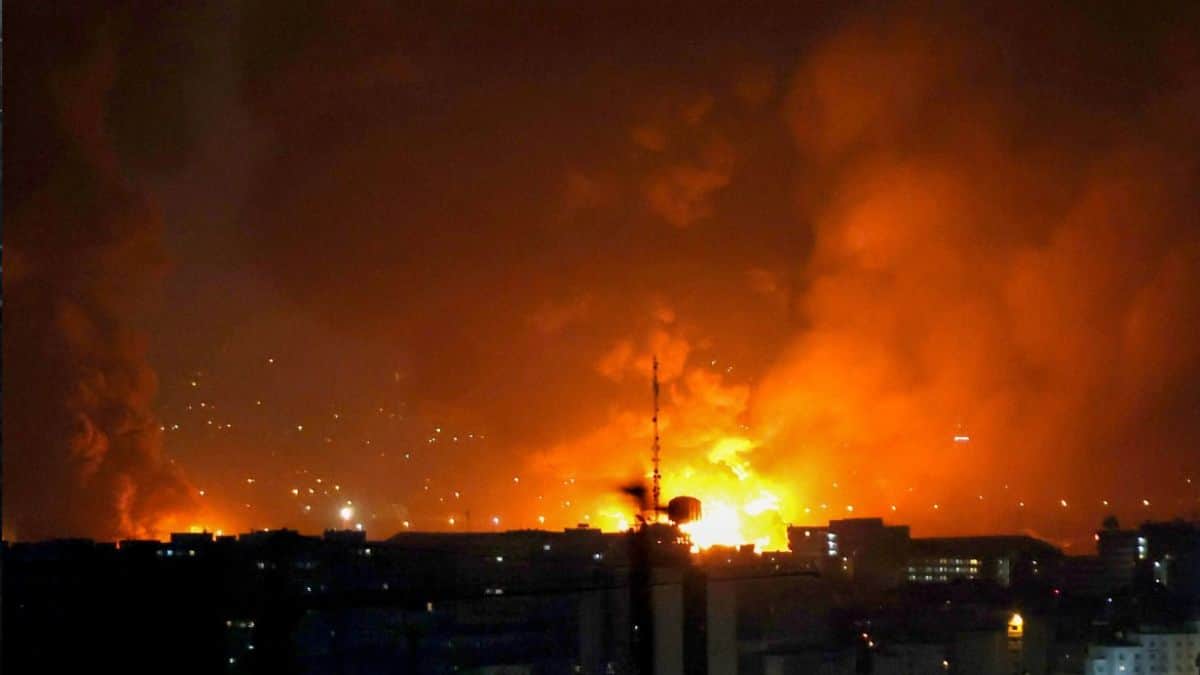
The Middle East isn't just "tense" right now—it's in a state of open, high-stakes kinetic warfare that’s hitting closer to home for expats and travelers than anyone expected. On March 7, 2026, Iran’s Islamic Revolutionary Guard Corps (IRGC) launched a significant drone and missile barrage at the Al Dhafra Air Base in the UAE. This wasn't a random show of force. The IRGC specifically claimed they were targeting a "US air combat center" and a satellite communications hub. If you're living in Abu Dhabi or Dubai, you probably heard the booms or saw the emergency alerts on your phone long before the official news wires caught up.
The fallout was immediate. Dubai International Airport (DXB), the busiest international hub on the planet, had to freeze operations. We aren't just talking about a few delays; we're talking about a complete halt that left thousands of passengers stranded and the global aviation network in a tailspin.
What actually happened at Al Dhafra
The IRGC isn't hiding their motives. They’ve stated this attack was retaliation for a US strike on a school in Minab, Iran, earlier in the week. While the Pentagon is still "investigating" that school incident, Tehran didn't wait for a report. They sent waves of Shahed drones and precision missiles toward Al Dhafra, which houses thousands of US personnel and advanced fighter jets like the F-35.
I’ve seen reports that UAE air defenses—which are some of the most sophisticated in the world—intercepted the vast majority of these threats. But "most" doesn't mean "all." Debris fell in residential areas, and minor structural damage was reported at the base itself. This isn't just a military-to-military spat anymore. When debris falls near Zayed International Airport or residential towers in Dubai, the "safety" of the Gulf’s commercial hubs feels a lot thinner.
The chaos at Dubai International Airport
If you had a flight scheduled through DXB on Saturday morning, you've lived through the nightmare. A drone strike near the airport triggered an immediate suspension of all flights.
- Evacuations: Passengers in Terminal 3 reported being moved away from glass windows and into secure areas.
- Injuries: At least four airport staff members were injured during the initial disruption.
- Logistics: Emirates has been forced to play a massive game of Tetris with their fleet, diverting planes to Al Maktoum (DWC) or grounding them entirely.
While DXB has partially resumed operations as of Saturday afternoon, don't think for a second that things are back to normal. The "safe air corridors" that airlines used to rely on are shrinking. When you're flying over the Gulf right now, you're essentially flying through a live fire zone. Major carriers like Lufthansa and several Asian airlines are now bypassing the region entirely, adding hours to flight times and driving up fuel costs that you'll eventually see on your ticket price.
Why the UAE is caught in the crossfire
It’s easy to look at the map and think this is just between Washington and Tehran. It’s not. The UAE is in a tough spot because it hosts the very assets the IRGC wants to hit.
The IRGC has been operating with what they call "fire at will" authority. While Iranian President Pezeshkian recently tried to walk this back and apologized for strikes on neighbors, the hardliners in the Guard Corps don't seem to be listening. They view Al Dhafra as a launchpad for American operations. As long as those assets are on Emirati soil, the risk to civilian infrastructure in Abu Dhabi and Dubai remains high.
What this means for you
If you're a resident or a traveler, the "wait and see" approach isn't enough. Here’s the reality of the situation:
- Travel is a gamble: Don't just check your flight status; check the news. If there's an active escalation, expect your 14-hour flight to become a 20-hour odyssey or a total cancellation.
- Air Defenses are working, but not perfect: The UAE’s Patriot and THAAD systems are doing heavy lifting, but falling debris is a real threat. If the sirens go off, stay away from windows. This isn't a drill.
- The "Expat Bubble" has popped: For years, people moved to Dubai and Abu Dhabi because they felt insulated from regional wars. That insulation is gone.
Next steps for staying safe
If you're currently in the UAE or planning to travel there, don't wait for your airline to email you. Check the General Civil Aviation Authority (GCAA) updates directly. If you’re a US citizen, make sure you're enrolled in the STEP program to get real-time security alerts. Most importantly, keep a "go-bag" and a departure plan that doesn't rely solely on a single airport. When DXB shuts down, the whole city feels the squeeze.
Stay informed through local media like WAM or The National, but verify everything with independent tracking tools like FlightRadar24 to see where the planes are actually going. The situation is moving fast, and in 2026, being "surprised" by a regional escalation is a luxury nobody can afford.