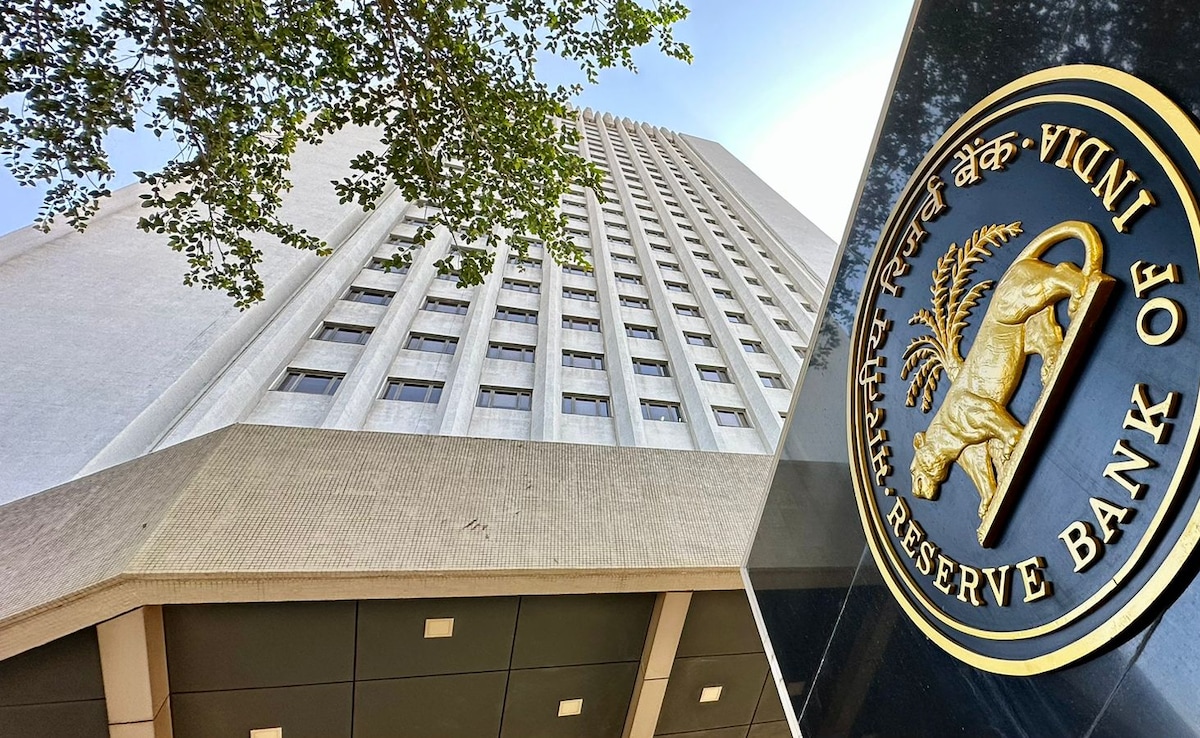
Central banks are terrified of things they cannot audit with a spreadsheet. The Reserve Bank of India’s recent move to "assess the risks" of Anthropic’s Mythos model is a masterclass in bureaucratic theater. They are treating a structural evolution like a virus.
The consensus among the Mumbai financial elite is predictable. They claim Mythos—a model capable of simulating complex multi-agent economic shifts—is a "black box" that might trigger a liquidity crisis or provide biased credit scoring. This is a lazy, defensive posture. The real risk isn't the AI; it is the brittle, archaic logic of the banks currently trying to contain it. You might also find this related coverage insightful: Justin Sun and the Death of the Decentralized Dream.
The Myth of Stability Through Ignorance
Traditional banking risk models are glorified history lessons. They look at what happened in 2008, 1997, or the local NBFC crisis of 2018 and assume the future will wear the same clothes. Mythos doesn't care about history. It processes real-time, non-linear variables that human analysts ignore because they are too "noisy."
When the RBI asks banks how they will mitigate Mythos-driven risk, they are asking the wrong question. They should be asking why their current risk frameworks are so fragile that a more efficient data processor threatens to topple them. As discussed in detailed coverage by Investopedia, the effects are worth noting.
I’ve spent years watching institutions "stress test" their systems. Most of these tests are rigged. They test for the shocks they already know how to survive. Mythos introduces a level of predictive granularity that makes these manual tests look like using an abacus to calculate orbital mechanics. The fear isn't that the AI will be wrong; the fear is that the AI will be right, and the banks won't have the stomach to follow its lead.
The Bias Smokescreen
Regulators love to talk about algorithmic bias. It’s a convenient moral high ground. They argue that models like Mythos might unfairly deny loans to specific demographics.
Let's be brutally honest: Human loan officers in India have been "biased" for decades based on pin codes, surnames, and social connections. The difference is that human bias is opaque and unfixable. AI bias is mathematical. It can be isolated, measured, and tuned.
By slowing down the adoption of Mythos under the guise of "fairness," the RBI is effectively protecting a status quo where human prejudice remains the primary gatekeeper of capital. You cannot audit a loan officer’s subconscious. You can audit a model's weights and biases. To choose the former over the latter is a deliberate rejection of transparency.
Why "Wait and See" is a Death Sentence
The global financial system is moving toward a state of hyper-liquidity. Capital moves at the speed of light, but Indian regulatory oversight still moves at the speed of a registered post.
If the RBI forces Indian banks to use neutered, "safe" versions of Mythos while global hedge funds and neo-banks use the full-throttle version, the result is inevitable: an information asymmetry that will drain the Indian market of its competitive edge.
- Scenario A: The RBI permits a "controlled" rollout. Banks use the AI for back-office paperwork but ignore its market signals. Foreign players arbitrage the hell out of them.
- Scenario B: The RBI embraces the chaos. Banks are forced to upgrade their underlying infrastructure to handle the speed of AI-driven decision-making.
The "risks" the RBI is worried about—market volatility and flash crashes—are symptoms of a mismatch between 21st-century intelligence and 20th-century plumbing. You don't fix the lightning; you fix the lightning rod.
The Computational Superiority Gap
Let’s talk about $O(n)$ complexity in risk assessment. Traditional models scale poorly. As you add more variables—global oil prices, local monsoon data, semiconductor supply chains—the human ability to synthesize that data hits a hard ceiling.
Mythos operates in a high-dimensional space where these correlations are clear. While a bank's risk committee is arguing over a 25-basis point move, an agentic model has already re-balanced its portfolio based on a whisper of a shift in the yen carry trade.
The RBI’s "concern" is actually a confession of incompetence. They are realizing that their own supervisory tools cannot keep up with the models they are supposed to supervise.
The Actionable Pivot for the C-Suite
If you are running a bank, stop waiting for the RBI’s circular to tell you what to do. They will always be two years behind the curve.
- Cannibalize Your Legacy Models: If your current risk model agrees with Mythos, one of them is redundant. If they disagree, Mythos is likely seeing the signal you’re missing. Trust the signal.
- Fire the "AI Ethics" Consultants: Most are just there to tell you why you shouldn't innovate. Instead, hire adversarial engineers to try and break your model. That is the only "assessment" that matters.
- Accept the Volatility: Stability is a lie sold by people who want to keep their jobs. The market is volatile because the world is volatile. Trying to smooth the curves with regulation just creates a bigger explosion later.
The RBI is right about one thing: Mythos will change everything. They are wrong about everything else. They think they can negotiate with a shift in the fundamental laws of information. They can't.
Stop looking for the brake pedal. The car doesn't have one anymore.