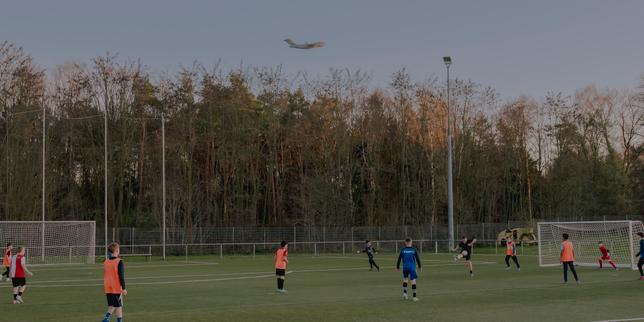
The standard narrative surrounding Ramstein Air Base is a masterpiece of sentimental PR. You’ve read the script: a "symbiotic" relationship between a small German town and a massive American military machine. We are told the locals love the dollars, the Americans love the Pfalz forest, and despite the geopolitical friction in Washington, the bond is unbreakable.
It is a lie. Or, at the very least, it is a profound misunderstanding of how power and economics actually function in the 21st century.
The media loves to frame the "Trump vs. NATO" saga as a tragedy of broken alliances. In reality, the dependency of the Kaiserslautern Military Community (KMC) is not a success story. It is a textbook example of a "company town" trap that has stifled German regional innovation for eighty years. Ramstein isn't an asset to Germany’s future; it’s a high-subsidy crutch that prevents the region from ever standing on its own feet.
The Myth of the Economic Engine
Mainstream reporting focuses on the €2 billion injected into the local economy annually. They point to the 7,000 local nationals employed by the base and the thousands of landlords living off American housing allowances.
Here is what they won't tell you: that money is "dead" capital.
When a region builds its entire infrastructure to service a foreign military, it stops competing in the global marketplace. The local economy in the KMC is essentially a service-sector vassal state. It produces nothing. it exports nothing. It simply facilitates the presence of 50,000 Americans.
Compare this to regions like Stuttgart or Munich. Those areas were forced to diversify. They built automotive giants and tech hubs. Meanwhile, the area around Ramstein has spent decades perfecting the art of building duplexes for USAF Colonels and running American-style burger joints.
I have seen dozens of municipalities fall into this "easy money" trap. It feels good while the checks are clearing. But the moment those C-130s stop flying, the region is left with specialized infrastructure—like oversized runways and specific residential zoning—that has zero utility for a modern, digital-first economy. Germany isn't "attached" to the base; it is addicted to the subsidy.
The Trump Threat is a Strategic Gift
Every time a U.S. President threatens to pull troops out of Germany, Berlin panics. This panic is misplaced.
If we look at the logistics of global power, the U.S. needs Ramstein far more than Germany needs the U.S. presence. Ramstein is the "central nervous system" for operations in Africa and the Middle East. It houses the Landstuhl Regional Medical Center. It is the essential pit stop for every drone strike and troop deployment heading East.
By acting like a desperate host, Germany loses all its leverage.
Imagine a scenario where the German government actually called the bluff. Instead of pleading for the troops to stay, Berlin should be drafting the "Post-American Palatinate" transition plan.
The land occupied by Ramstein is some of the most strategically valuable real estate in Western Europe. It is a massive, pre-cleared, highly connected logistics hub in the heart of the continent. If that land were returned to German control and repurposed for green-tech manufacturing or a continental cargo hub, the long-term GDP growth would dwarf the current military spending.
But that requires courage. It requires moving past the 1945 mindset.
The Sovereignty Tax
We need to talk about the hidden costs of the Status of Forces Agreement (SOFA). Most people think the U.S. pays for everything. They don't.
The German taxpayer shells out millions annually in "offset" costs, including construction projects, environmental damages, and social security payments for local employees. Then there is the environmental "externalities" cost. The noise pollution over the Palatinate forest is staggering. The groundwater contamination from PFAS (per- and polyfluoroalkyl substances) used in firefighting foams is a ticking time bomb that the U.S. military is notoriously slow to clean up.
When you factor in the health costs and the environmental degradation, that €2 billion "injection" starts to look like a net loss.
The Great Misconception: Defense as a Product
The biggest mistake industry insiders make is viewing military bases as a "security product" provided for free.
In the real world, there is no such thing as a free security lunch. The presence of Ramstein makes the region a primary target in any peer-to-peer conflict. Residents of Kaiserslautern are living in the crosshairs of every hypersonic missile currently being developed in the East.
Is the "economic benefit" of a few thousand rent payments worth being the first strike location in World War III?
The "lazy consensus" says yes, because "it hasn't happened yet." This is the same logic used by people who refuse to buy insurance until their house is underwater. Real strategic thinking requires acknowledging that the U.S. military presence is a liability hedge that has reached its expiration date.
Breaking the Dependency
The people of Ramstein-Miesenbach aren't "attached" to the base out of a sense of Atlanticist brotherhood. They are terrified because they have been conditioned to believe they cannot survive without it.
I’ve seen this play out in the Rust Belt. I’ve seen it in mining towns. When a single entity controls the local labor market, it exerts a "soft" tyranny over the local culture. Intellectual capital flees. Why bother starting a software company when you can just rent your basement to a Master Sergeant for €2,000 a month?
This is the "Brain Drain of Convenience." It is the silent killer of German provincial dynamism.
To fix this, Germany doesn't need to fight with Washington. It needs to stop caring what Washington does. If the troops stay, tax them properly and enforce environmental standards. If they leave, treat it as the single greatest urban redevelopment opportunity in the history of the Federal Republic.
The Hard Truth About 2%
Everyone argues about the 2% GDP spending requirement for NATO. This debate misses the point.
The real issue isn't how much Germany spends on its own military, but how much it "spends" in lost opportunity costs by hosting someone else's. Every acre of land dedicated to the U.S. Air Force is an acre not dedicated to German industry. Every local worker fixing a Humvee is a worker not building a Siemens turbine or a Bosch sensor.
The "pro-base" crowd argues that the withdrawal of U.S. troops would lead to an economic desert. This ignores the basic laws of supply and demand. Europe is desperate for centralized logistics and industrial space. Ramstein is a gold mine disguised as a garrison.
Stop asking how Germany can keep the Americans happy. Start asking why Germany is still acting like an occupied territory when it has the largest economy in Europe. The "tensions" with the U.S. aren't a crisis; they are an exit ramp.
If the base closed tomorrow, the first two years would be painful. The third year would be a boom. By the tenth year, the region would be an industrial powerhouse rather than a collection of landlords and dry cleaners.
The only thing keeping the base there isn't "security." It’s a lack of imagination.
Stop mourning the potential departure of the U.S. military. Start planning the liquidation of a legacy asset that has long since stopped paying dividends. The era of the "American Protectorate" is over, and the sooner the people of Ramstein realize they are being held back—not propped up—the sooner the region can actually thrive.
Pack the bags. Hand over the keys. Let’s see what that land can actually do when it’s put to work for the people who actually live there.