The release of Ajou Ajou by the Saskatchewan Roughriders isn’t a story about justice. It’s a story about the terrifying efficiency of corporate risk management in the modern sports era.
Most sports outlets are busy regurgitating the same surface-level narrative: a player was investigated, and the team acted decisively. They call it "accountability." They call it "integrity." I’ve spent enough time in front offices to know that those are just the PR terms we use when we’re too afraid to talk about the bottom line.
The Saskatchewan Roughriders didn't release a promising young receiver because they reached a moral epiphany. They released him because, in the current CFL climate, the cost of a "distraction" has officially surpassed the value of a touchdown.
The Myth of the Investigation Lead Release
Wait for the "investigation to conclude" is the biggest lie in professional sports. By the time a team announces a release following a probe—especially one involving gender-based violence—the verdict has already been rendered by the marketing department, not a judge or a league official.
When the Roughriders cut ties with Ajou, they weren't waiting for a legal "beyond a reasonable doubt" standard. They were looking at a "beyond a reasonable PR recovery" standard. In the CFL, where gate receipts and community-owned optics are the lifeblood of the franchise, the margin for error is razor-thin.
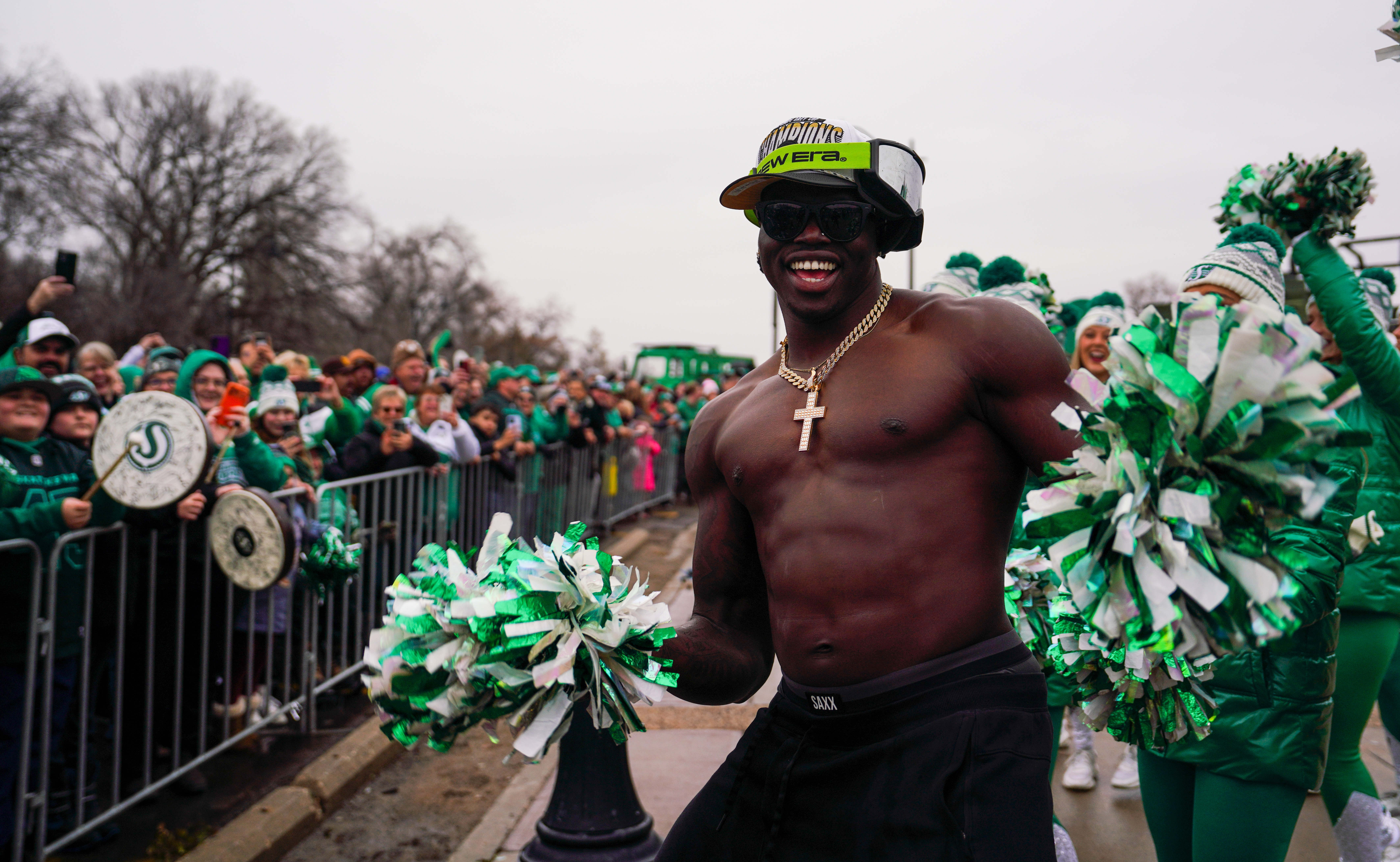
Ajou Ajou was a physical specimen. At 6'2" and 211 pounds, with a wingspan that made scouts salivate, he was supposed to be the future of the Canadian air attack. But talent is a currency that devalues instantly the moment a police report hits the wire. The Riders looked at the spreadsheet and saw that the potential "upside" of a breakout season wasn't worth the "downside" of a season-long protest or a lost sponsorship.
Why The Zero Tolerance Policy is Actually a Resource Problem
We love to talk about "zero tolerance" as a virtue. It isn't. It's a logistical shortcut.
True organizational leadership involves a complex system of internal discipline, counseling, and due process. But that requires time, money, and a backbone. It’s much easier—and significantly cheaper—to hit the eject button.
The Math of Cutting Talent
- The Vet Minimum vs. The Headache: A rookie or developmental player like Ajou is statistically replaceable. If you aren't an All-Star, you aren't a human being; you’re an entry in a ledger.
- Sponsorship Clauses: Modern naming rights deals and jersey patches come with "morality clauses" that are more restrictive than a Victorian boarding school.
- The Twitter Court: Teams no longer fear the league office; they fear the 48-hour outrage cycle that can tank ticket sales in a community-owned market like Regina.
I’ve sat in rooms where we’ve weighed the "character" of a player. It’s never about who the man is; it’s about how much the fans think they know about who the man is. If Ajou had been an incumbent MOP candidate, the Riders would have been "monitoring the situation closely" for six months. Because he was a developing asset, he was expendable.
The Failure of the CFL Developmental Pipeline
The tragedy here isn't just the incident itself—it's the league's inability to manage its human capital.
The CFL loves to market itself as a "league of second chances." It’s a nice slogan for a bus wrap. In reality, the league is a revolving door for players who have nowhere else to go and no support system once they arrive. When a player like Ajou—who bounced through the NCAA at Clemson, USF, and Garden City—lands in the pros, he is expected to be a finished product of maturity.
But why would he be?
Teams spend millions on strength coaches and nutritionists. They spend $0 on the actual psychological infrastructure required to navigate the transition from a high-profile college athlete to a professional in a foreign country. When these players stumble, the teams act shocked, clutch their pearls, and issue a press release.
It’s the ultimate "not my problem" maneuver.
Dismantling the "Community Owned" Shield
The Roughriders are unique. They aren't owned by a billionaire who can ignore a few mean tweets. They are owned by the people. And "the people" are the most fickle, reactionary bosses on the planet.
This ownership structure forces the Riders to be more conservative than a big-market NFL team. They have to over-correct. They have to be holier-than-thou because their season ticket holders are also their neighbors.
By releasing Ajou immediately, the Riders aren't leading. They’re pandering.
They are signaling to the province that they prioritize the feeling of safety over the process of justice. This is the "nuance" that the mainstream sports media missed: the Riders didn't act because they are a "high-character" organization. They acted because they are a vulnerable one.
The Hidden Cost of the Quick Cut
What happens to the next player? And the one after that?
When you establish a culture where the accusation is the conviction, you create an environment of fear, not excellence. I’ve seen this play out in front offices across North America. Players stop trusting the training staff. They stop talking to the coaches. They realize that the team is not their ally; the team is a cold, calculating entity that will burn them the second the optics get murky.
If you think this "swift action" makes the locker room better, you’ve never been in one. It makes the locker room quiet. And a quiet locker room is a dead one.
Reality Check: The Public vs. The Professional
- The Public wants: Blood, immediate firing, and a public apology.
- The Professional needs: Facts, internal mediation, and a path to rehabilitation (or a justified exit).
The Riders gave the public what they wanted. But in doing so, they admitted they have no interest in the "Professional" side of player management. They are in the business of optics, and Ajou was a smudge on the lens.
The Wrong Question to Ask
The media asks: "Was this the right move for the Roughriders' culture?"
The real question is: "Does the Roughriders' culture actually exist, or is it just a reflection of whatever the loudest voices on Facebook want today?"
If your culture can be dismantled by one player’s off-field investigation, you never had a culture to begin with. You had a PR strategy. Real culture is tested when things get ugly. Real culture involves standing by a process even when it’s unpopular.
By dumping Ajou, the Riders proved their "culture" is just a set of retractable values. They chose the path of least resistance because the path of leadership was too expensive.
Stop praising teams for firing people. It’s the easiest thing a CEO or a GM can do. Start asking why these teams—who claim to be pillars of the community—are so quick to wash their hands of the very people they scouted, recruited, and promised to develop.
The Riders didn't win this week. They just successfully avoided a fight. And in professional sports, if you’re afraid to fight for your process, you’ve already lost the season.
The jersey says "Saskatchewan," but the move says "Corporate Legal Department."
Stop calling it integrity. Call it what it is: a business liquidation.