The coffee shop at the corner of 5th and Main doesn’t look like a battlefield. There are no sirens here, no smell of cordite, no jagged ruins of apartment blocks. There is only the hiss of the espresso machine and the soft chime of a credit card reader. But when Elias looks at the screen of that reader, his hand hesitates. The price of a plain black coffee has ticked up again. It is a tiny, microscopic tremor from an earthquake happening five thousand miles away.
We often talk about war in the language of maps. We look at red arrows pushing into blue territory, or charts tracking the tragic climb of casualty counts. But for those of us watching from the safety of an American zip code, the war doesn't arrive as a shell; it arrives as a slow, suffocating fog. It settles over the grocery aisles, the gas pumps, and the retirement accounts we try not to check too often.
The first week of a major conflict is a blur of high-altitude geopolitical chess, but the board is our basement.
The Ghost in the Machine
Consider the "Just-in-Time" world we built. For decades, the global economy functioned like a perfectly synchronized ballet. A component made in a suburb of Kyiv would meet a chip from Taiwan in a factory in Germany, eventually becoming the sensor in a Ford F-150 sitting on a lot in Ohio. It was beautiful. It was efficient.
It was also fragile.
When the first missiles fly, that ballet stops. The music cuts out. Suddenly, the "ghost" in the machine—the invisible logistical thread that keeps our shelves stocked—snaps. In the first seven days of a modern conflict, the US markets don't just react to what has happened; they panic over what might never happen again.
For a person like Sarah, a hypothetical freelance graphic designer in Denver, this isn't abstract. She isn't thinking about "sovereign debt yields." She is looking at the price of neon gas. Why? Because Ukraine produces about half of the world’s semiconductor-grade neon. No neon, no lasers. No lasers, no chips. No chips, and Sarah’s wait time for a new laptop stretches from three days to six months. The price jumps 20%.
Her livelihood is tethered to a neon plant in Mariupol by a string she never knew existed until it was cut.
The Arithmetic of Anxiety
Markets hate a vacuum. In the absence of certainty, investors flee toward the oldest, coldest harbor they know: gold and the US Dollar. You would think a surging dollar is a victory. It feels like strength. But for the American exporter—the small business owner in South Carolina trying to sell machined parts to Brazil—that strong dollar is a wall. Their products suddenly become too expensive for the rest of the world to buy.
Then there is the oil.
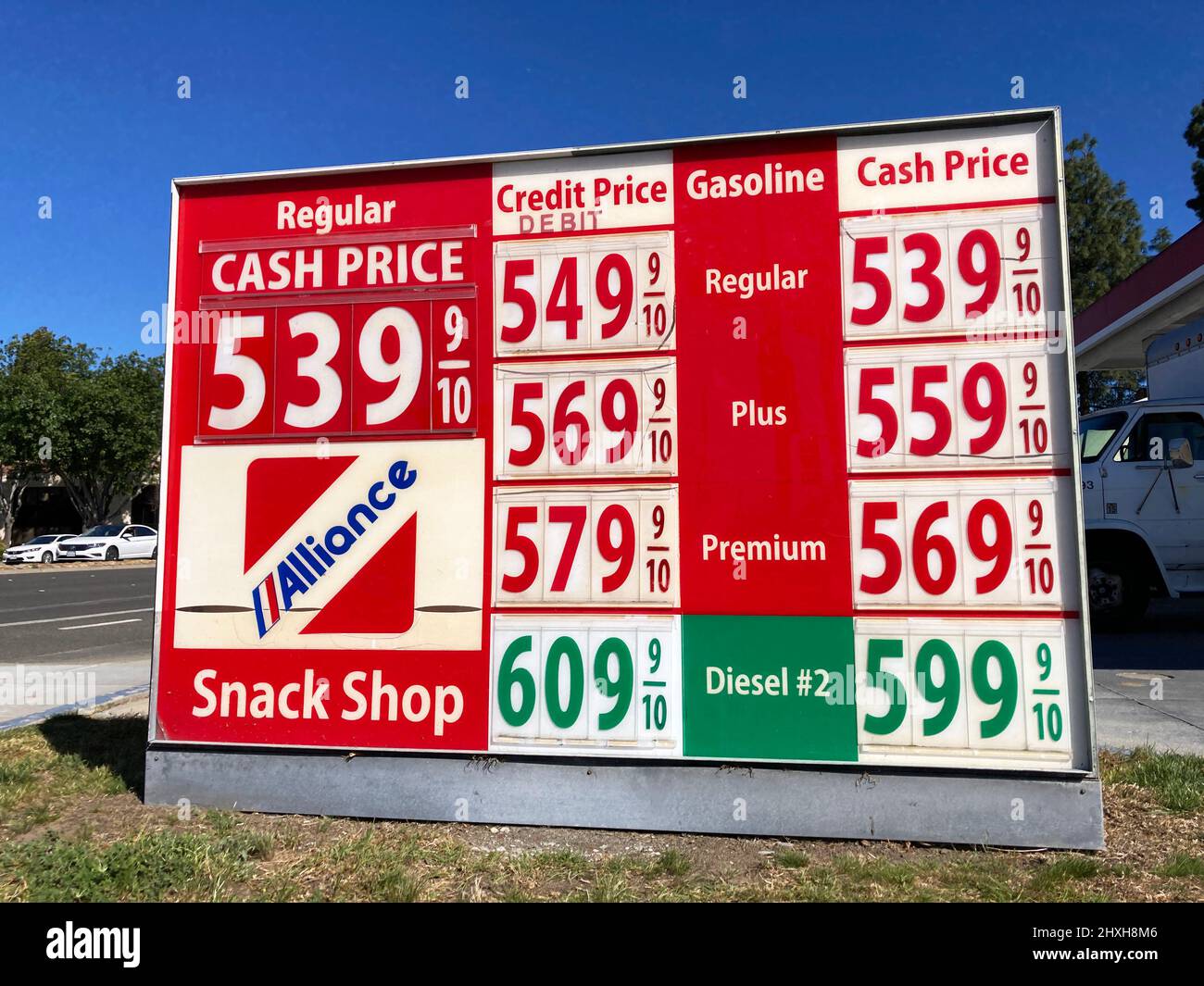
Energy is the heartbeat of everything. When a major producer is sanctioned or a pipeline is threatened, the world holds its breath. We see the charts showing "Brent Crude" spiking, but the reality is more visceral. It’s the father who realizes his commute just started costing him an extra $40 a week. That is $160 a month. That is a grocery trip. That is a pair of shoes for a growing kid.
$Cost_{war} = \Delta P_{fuel} + \Delta P_{food} + \text{Anxiety}$
The math of conflict for the average American family isn't found in a Pentagon briefing. It’s found in the "Total" line of a Receipt from Kroger.
The Invisible Tax of Uncertainty
Beyond the dollars and cents, there is a psychological toll that no chart can properly visualize. It is the "Uncertainty Tax."
When the news cycle is dominated by footage of families huddling in subways, the collective American psyche tightens. We stop spending on the "extras." The local restaurant sees fewer patrons. The theater sells fewer tickets. We retreat into a defensive crouch. This contraction is the quietest impact of war. It’s the sound of a million wallets zipping shut at once.
We are told that the economy is a collection of data points: GDP, CPI, S&P 500. But the economy is actually a collection of human expectations. If we expect the world to be dangerous tomorrow, we act differently today.
Consider the wheat.
Eastern Europe is often called the breadbasket of the world. When those fields become minefields, the global supply of grain plummets. While the US produces its own wheat, we exist in a global pool. When the pool drains, everyone’s level drops. The price of a loaf of bread in a Topeka bakery is dictated by the ability of a farmer in the Donbas to get his tractor into the mud.
The Broken Mirror
There is a peculiar dissonance in living through the first week of a war from a distance. You feel a deep, aching empathy for the people under fire. You see the images of grandmothers holding rifles and children crying on trains, and it breaks your heart.
Then, you go to the gas station and feel a flash of resentment because it cost $90 to fill the tank.
Then, you feel guilty for feeling that resentment.
This emotional whiplash is part of the cost, too. We are connected to the conflict not just by our supply chains, but by our screens. The war is the first thing we see when we wake up and the last thing we see before we sleep. It creates a state of perpetual high-alert. Our nervous systems were not designed to process a 24-hour stream of high-definition tragedy while simultaneously trying to navigate a performance review at work.
The Anchor in the Storm
Is there a silver lining? Perhaps only in the realization of our interconnectedness.
The first week of war serves as a brutal, unwanted reminder that "isolation" is a myth of the 19th century. We are woven together. The tech worker in Seattle, the wheat farmer in Kansas, and the barista in Manhattan are all part of a single, breathing organism that spans the globe.
When one part of that organism is wounded, the rest of us feel the throb.
We see the charts. We see the lines for inflation trending upward and the lines for consumer confidence trending down. But those lines are just the shadows cast by real people. They are the shadows of Elias at the coffee shop, Sarah at her computer, and a father at the gas pump.
As the first week closes and the second begins, the shock wears off and the grind sets in. The charts might stabilize, but the prices rarely go back down as fast as they went up. We learn to live with the new math. We adjust. We carry on.
But we do so with a new, heavy understanding. We realize that peace is not just the absence of falling bombs; it is the presence of the hidden stability that allows a child to get new shoes, a freelancer to buy a laptop, and a man to buy a cup of coffee without a second thought.
The fire is five thousand miles away, but the smoke is in our eyes. It stings. It reminds us that in a world this small, there is no such thing as a distant war. There is only the price we all pay for the privilege of a quiet morning.
Elias finally taps his card. The machine chimes. The transaction is approved. He takes his coffee and steps out into the American sun, squinting against the brightness, wondering how much more the world will change by the time he finishes his drink.