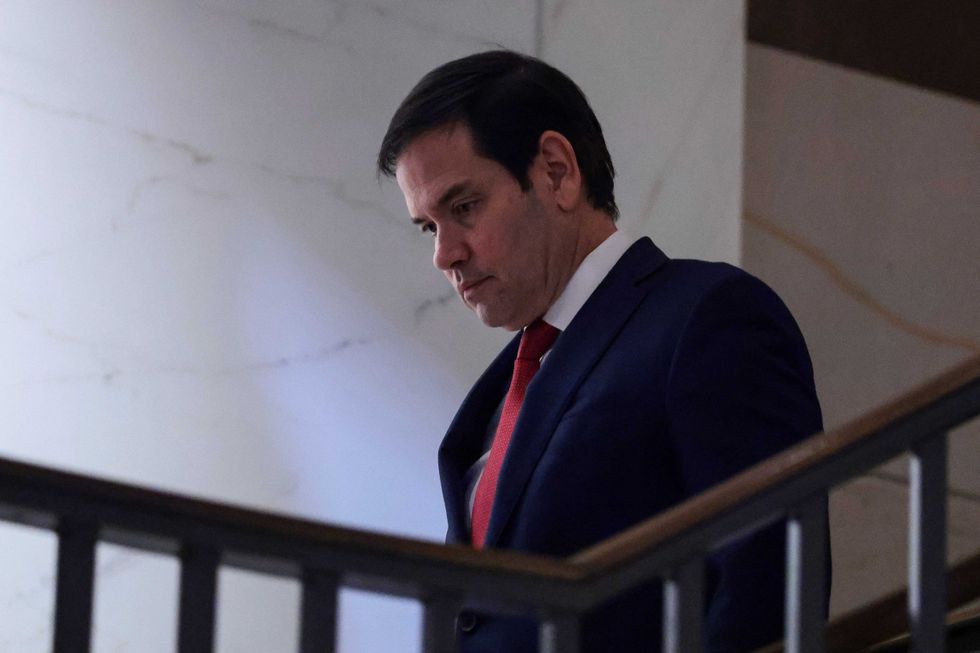
The shifting posture of Senator Marco Rubio regarding intelligence community whistleblowers is not an anomaly of character but a predictable outcome of Political Capital Reallocation. When an elected official transitions from a legislative oversight role to a high-stakes executive-track position, the utility function of challenging the intelligence establishment changes. The core tension lies in the friction between Constitutional Duty (oversight) and Administrative Alignment (potential executive branch integration).
To analyze this shift requires deconstructing the mechanism of Congressional oversight into three operational pillars:
- Information Asymmetry Reduction: The process of using whistleblowers to bypass bureaucratic gatekeeping.
- Reputational Hedging: Supporting a whistleblower to signal independence or integrity.
- Strategic Silence: Withdrawing support when the political costs of friction with the executive branch outweigh the gains of transparency.
The Calculus of Whistleblower Support
Whistleblower protections in the United States operate under a fragile ecosystem defined by the Intelligence Community Whistleblower Protection Act (ICWPA). For a senator, the decision to champion a whistleblower is a high-risk, high-reward investment. In the earlier stages of his career, Rubio utilized this mechanism to establish a brand of rigorous, non-partisan oversight. This created a "Security Hawk" profile that relied on a steady flow of inside information to challenge administrative narratives.
The logic of this support was rooted in Counter-Bureaucratic Leverage. By acting as a conduit for internal dissenters, a senator can force an administration to disclose information that would otherwise remain classified under the guise of national security. However, as political proximity to the executive branch increases—specifically through potential Cabinet appointments or a shift in party-line loyalty—the "Oversight Premium" evaporates. The senator is no longer incentivized to reduce information asymmetry; they are incentivized to maintain institutional stability.
Transitioning from Oversight to Executive Alignment
The perceived "MIA" status of Rubio in recent whistleblower cases represents a pivot in his Strategic Resource Management. In a legislative capacity, a senator’s primary currency is influence over policy via public discourse and committee hearings. In an executive-adjacent capacity, the primary currency is Institutional Trust.
Supporting a whistleblower is inherently disruptive. It challenges the chain of command and suggests that internal grievance mechanisms have failed. For a figure positioned as a potential Secretary of State or a key surrogate for a future administration, fostering disruption is counterproductive. The shift follows a specific trajectory:
- Phase 1: The Disruptor (Oversight Focus). High engagement with whistleblowers to expose perceived administrative failures.
- Phase 2: The Institutionalist (Stability Focus). Moderate engagement, focusing only on "safe" disclosures that do not threaten party leadership.
- Phase 3: The Surrogate (Executive Focus). Minimal engagement, where silence functions as a signal of loyalty to the administrative hierarchy.
This transition creates an Oversight Vacuum. When a primary advocate for whistleblower rights moves into Phase 3, the institutional memory and legal protections previously afforded to dissenters are weakened. This is not merely a change in rhetoric; it is a structural removal of a key bypass valve in the intelligence community’s internal pressure system.
The Cost Function of Whistleblower Advocacy
Championing a whistleblower involves significant Institutional Friction Costs. These costs are calculated against the political lifecycle of the representative.
Direct Political Costs
- Agency Retaliation: Intelligence agencies may limit the flow of sensitive information to a "difficult" senator.
- Party Alienation: If the whistleblower’s disclosures harm the party in power (or the party seeking power), the senator risks being sidelined by leadership.
- Voter Decoupling: Complex oversight issues rarely translate into high-yield campaign slogans, making them a low-ROI activity during election cycles.
The Mechanism of Attrition
The current critique of Rubio stems from a failure to recognize the Marginal Utility of Oversight. Early in a career, the marginal utility of being the "whistleblower senator" is high because it provides visibility. Once national visibility is achieved, the marginal utility drops. The senator has already "bought" the reputation; they no longer need to pay the maintenance costs of active advocacy.
This results in a phenomenon known as Legislative Rent-Seeking, where a politician maintains the title of an advocate without performing the labor associated with the role. They leverage the past reputation of being a defender of whistleblowers to shield themselves from current criticism for inactivity.
Structural Failures in the Intelligence Oversight Committee
The Senate Select Committee on Intelligence (SSCI) is designed to be the ultimate arbiter of classified truth. However, the committee's effectiveness is constrained by the Incentive Gap between individual senators and the collective body.
While the committee as a whole is tasked with oversight, individual members are motivated by their personal career trajectories. When a ranking member or chairman becomes a candidate for national office, the committee’s output tends toward Risk Mitigation rather than Fact Discovery. This creates a bottleneck where whistleblowers, who were previously encouraged to come forward, find their disclosures stalled in committee purgatory.
The mechanism of this stalling is usually administrative:
- Extended Vetting Periods: Using "national security reviews" to delay the public or legislative release of information.
- Narrow Scope Definition: Restricting the investigation to technicalities rather than the core ethical or legal breaches reported.
- Communication Blackouts: Ceasing all public-facing commentary on the status of the whistleblower to allow the news cycle to decay.
The Credibility Deficit and Its Long-Term Impacts
The withdrawal of support from a high-profile senator like Rubio doesn't just impact a single case; it devalues the Whistleblower Protection Brand. Potential dissenters within the CIA, NSA, or FBI monitor these political shifts as market signals. If the most prominent advocate for whistleblowers is seen as "MIA," the perceived risk of coming forward increases exponentially.
The intelligence community operates on a Risk-Reward Matrix. For a whistleblower, the reward is the correction of a systemic wrong. The risk is the total loss of career, security clearance, and potentially, liberty. When the political protection (the "Senator Shield") is removed, the risk becomes unmanageable.
This leads to Internalized Information Hoarding, where critical failures are kept internal or leaked to the press through unofficial—and often more dangerous—channels. The decline of formal oversight engagement directly correlates with an increase in unauthorized leaks. If the front door (the SSCI) is closed, the back door (unauthorized media leaks) becomes the only viable exit for information.
Measuring Strategic Silence as a Political Tool
Silence is not an absence of strategy; it is a deliberate application of Non-Engagement Power. By refusing to comment on or assist a whistleblower, a senator effectively validates the agency’s position without having to issue a formal statement. This is highly effective in a 24-hour news cycle because "no comment" is rarely a headline.
In the case of the Intelligence Community, silence functions as a Green Light for Bureaucratic Retaliation. Agencies are highly sensitive to political pressure. When that pressure is removed, the agency's internal disciplinary mechanisms—often described as "administrative gray zones"—can operate without fear of a congressional subpoena. This includes:
- Revoking security clearances for "unrelated" reasons.
- Reassigning whistleblowers to "dead-end" posts.
- Opening retaliatory counter-intelligence investigations.
The Strategy of Institutional Re-Entry
For Rubio, the shift suggests a focus on Executive Branch Re-Entry. The requirements for a high-level executive role are fundamentally different from those of a legislative overseer. An executive must demonstrate an ability to manage and protect the bureaucracy, not just critique it.
The move from "whistleblower advocate" to "institutionalist" is a signal to the deep-state apparatus and the broader administrative complex that he is a "safe" leader. This is a classic example of Pivot-Point Analysis: identifying the exact moment where a leader’s incentives shift from external disruption to internal management.
To expect a senator at this stage of their career to maintain the same level of aggressive oversight as a junior senator is to ignore the fundamental laws of Political Career Optimization. The goal has changed from influencing the machine to operating it.
The strategic play for any entity relying on legislative oversight is to recognize that Individual Advocacy is a Non-Durable Asset. Protections that rely on the temperament or career stage of a single senator are destined to fail during periods of political transition.
- Diversify Advocacy Channels: Stakeholders must move beyond a "single point of failure" model by engaging multiple committees and both chambers of Congress simultaneously to prevent a "MIA" scenario from stalling a disclosure.
- Codify Protections via Hard Law: Shift focus from seeking "senatorial champions" to passing self-executing statutes that do not require legislative intervention to trigger whistleblower protections.
- Monitor the Pivot Points: Track the committee members’ proximity to executive appointments as a leading indicator of oversight degradation. When proximity increases, advocacy must shift to members with "Terminal Legislative Careers"—those who have no intention of leaving the Senate and thus have no incentive to appease the executive branch.
The current landscape of intelligence oversight is not being reshaped by a change in values, but by a change in the Competitive Environment for Political Advancement. The vacuum left by Rubio's shift is a market opportunity for other legislators to claim the "Oversight Premium," provided they are willing to pay the friction costs he is no longer willing to bear.