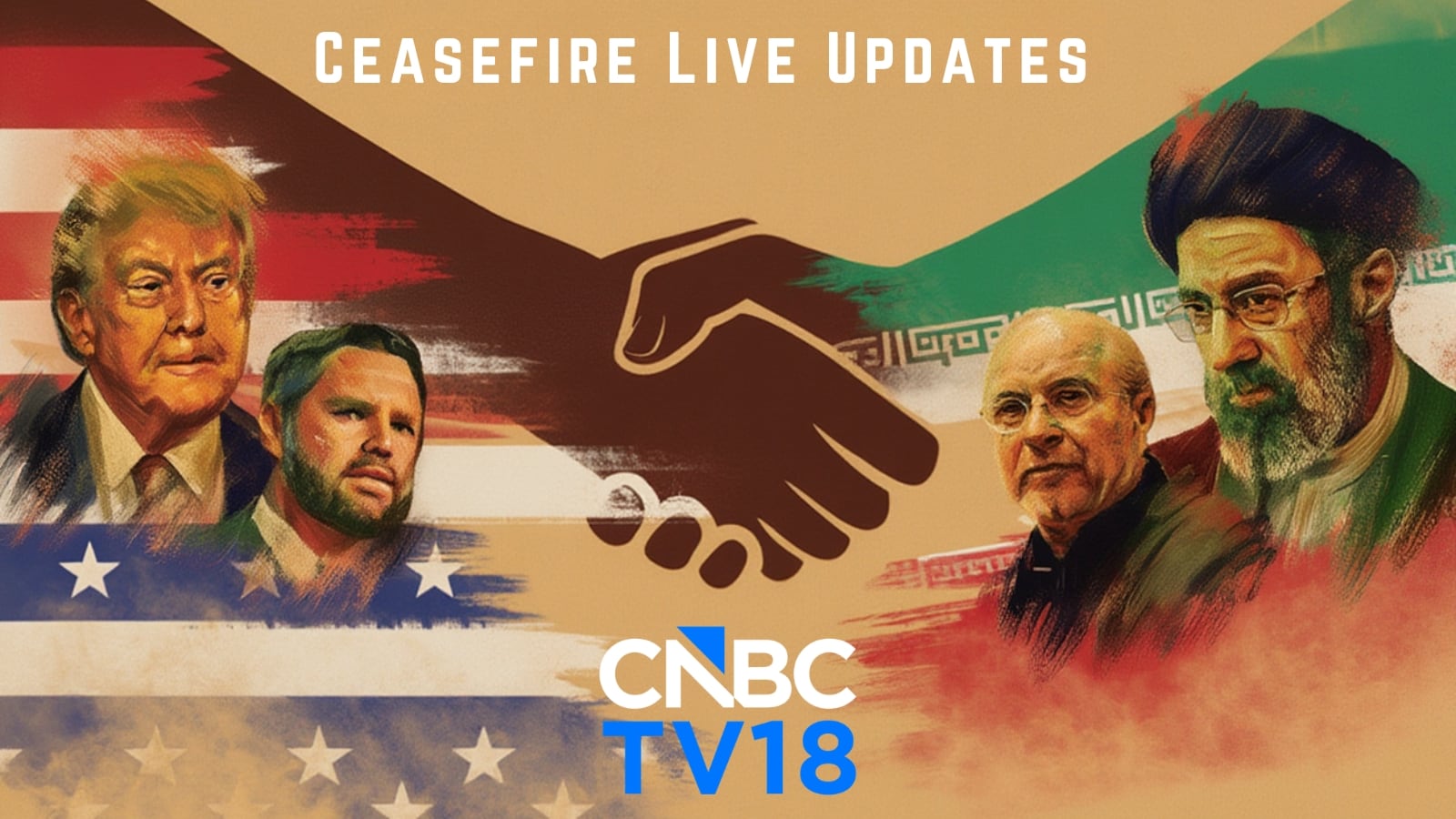
The air in the Situation Room is famously frigid, a calculated chill designed to keep the most powerful minds on earth from overheating. But thousands of miles away, in the crowded tea houses of Tehran and the quiet suburban kitchens of Virginia, the air feels heavy. Thick. It is the weight of a breath held too long. For the millions caught in the crosshairs of a potential conflict between the United States and Iran, history is not a series of bullet points on a news ticker. It is the sound of a phone ringing at 3:00 AM. It is the price of bread. It is the terrifying realization that your life is a chip on a high-stakes table where you aren't allowed to play.
Donald Trump stood before the cameras recently and tossed a verbal hand grenade into the discourse. He claimed Tehran is "dying to make a deal." It was a classic performance, a blend of bravado and transactional confidence that has defined his approach to the Middle East. To the analysts in Washington, it was a tactical pivot. To a mother in Isfahan, it was a flicker of hope wrapped in a shroud of uncertainty. Meanwhile, you can read similar developments here: The Industrialization of Political Exclusion The Mechanics of the Modern State Dinner.
The Mathematics of Survival
War is often discussed in the abstract language of "kinetic options" and "strategic assets." We talk about the range of a ballistic missile or the tonnage of a carrier strike group as if we are discussing the specs of a new smartphone. But the real math of this standoff is written in the ledgers of the ordinary.
Consider a hypothetical shopkeeper in Tehran named Elias. For Elias, the "maximum pressure" campaign isn't a policy paper; it is the slow, agonizing evaporation of his life’s work. When the currency loses its grip on reality, his shelves go bare. He watches his neighbors trade their heirlooms for medicine. When he hears a world leader say his country is "dying" to make a deal, he doesn't hear a diplomatic victory. He hears a literal description of his community. To understand the full picture, we recommend the recent analysis by BBC News.
The tension between these two nations is a decades-long ghost story. It is a haunting that began in 1953, echoed through the halls of the 1979 embassy, and now vibrates through the digital static of cyber warfare. Each side views the other through a distorted lens, a hall of mirrors where every defensive move is seen as an act of aggression.
The Art of the Brink
Negotiation at this level is a form of psychological theatre. Trump’s rhetoric suggests a world where complex religious, historical, and geopolitical grievances can be settled like a real estate dispute in Queens. He leans into the idea that everyone has a price. On the other side, the Iranian leadership plays a much older game, one rooted in the concept of mardomari—the art of enduring.
They are experts at the long wait.
But the wait has become lethal. The ceasefire discussions and the whispers of a "grand bargain" are happening against a backdrop of internal domestic pressure that is reaching a boiling point. The Iranian government isn't just negotiating with Washington; they are negotiating with their own streets. They are trying to find a way to surrender enough to save their economy without surrendering so much that they lose their soul—or at least, their grip on power.
The "deal" Trump speaks of is a ghost. Everyone wants it, but no one can agree on what color it is. Washington wants a permanent end to nuclear ambitions and a total withdrawal from regional proxy wars. Tehran wants the boot of sanctions removed from its neck and a guarantee that the next American administration won't simply tear up the agreement again.
Trust is the only currency that matters, and currently, both treasuries are empty.
The Invisible Casualties
We focus on the generals. We track the movements of the IRGC and the movements of the 5th Fleet. Yet, the most significant shifts are happening in the invisible spaces.
Think about the young Iranian scientists who have never known a world where they could collaborate with global peers. Think about the American soldiers stationed in the desert, writing "just in case" letters to their children. These are the stakes. The human element is the primary casualty of a "cold" war that threatens to turn "hot" with a single miscommunication or a stray drone.
The current ceasefire updates are like weather reports in a hurricane zone. They tell you which way the wind is blowing, but they don't tell you if your roof will hold. Trump’s assertion that Iran is desperate might be factually grounded in economic data, but desperation is a dangerous catalyst. A cornered animal doesn't always negotiate. Sometimes, it bites.
The Weight of a Word
When we hear the word "deal," we think of a handshake and a signed piece of parchment. In the context of US-Iran relations, a deal is a fragile ecosystem. It requires the alignment of hardliners in the Majlis and hawks in the Pentagon. It requires a miracle of timing.
The rhetoric coming out of the White House is designed to project strength, to show that the pressure is working. And by many metrics, it is. The Iranian economy is a shadow of its former self. But strength and wisdom are not always the same thing. The goal isn't just to win; it's to avoid a loss that neither side can afford.
History is littered with "small" wars that were supposed to be over by Christmas. It is filled with "calculated" risks that ended in catastrophic miscalculations. The current live updates, the scrolling tickers, and the breaking news alerts are all part of a larger, terrifying dance.
The real story isn't in the press release. It's in the silence between the threats.
It is found in the eyes of a refugee who doesn't want to leave home but has no choice. It is found in the steady hands of a diplomat who knows that one wrong syllable could trigger a chain reaction of fire. We are watching a game of poker where the stakes are the lives of millions, played by men who have forgotten what it’s like to lose something they can’t replace.
The table is set. The cards are dealt. The world is watching the bluff, praying that for once, the house doesn't win.
Imagine the sound of a city falling silent because the power grid failed, or the smell of salt air on a carrier deck at midnight. These aren't just details; they are the reality of the "updates" we consume with our morning coffee. We are participants in this narrative, whether we like it or not, tethered to the outcome by the invisible threads of a globalized world.
The deal isn't just about centrifuges or sanctions. It is about whether we believe that diplomacy is a sign of weakness or the ultimate expression of strength. It is about whether we are brave enough to put the cards down and look each other in the eye.
A man stands on a balcony in Tehran, looking out at a city he barely recognizes, wondering if tomorrow will bring bread or bombs. A president sits in an office in Washington, convinced his strategy is the only way forward. Between them lies an ocean of history and a desert of misunderstanding.
The clock is ticking, but it doesn't make a sound.