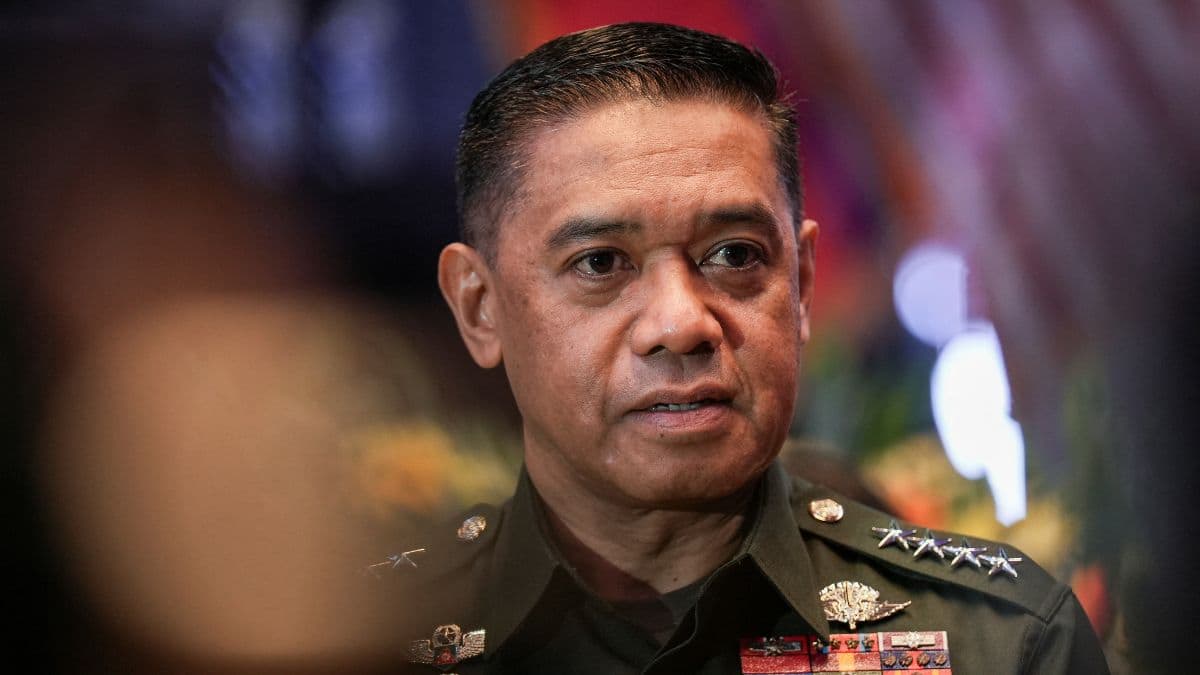
The shift in Philippine defense policy from "constructive engagement" to "assertive transparency" represents a fundamental recalibration of the national security cost-benefit analysis. For decades, Manila operated under the hypothesis that diplomatic de-escalation and economic interdependence would mitigate territorial encroachment. The failure of this hypothesis is now the baseline for the Armed Forces of the Philippines (AFP). By examining the operational friction at Second Thomas Shoal and the broader maritime theater, we can identify three structural pillars currently defining the Philippines’ strategy: the rejection of the "accommodation trap," the internationalization of domestic surveillance, and the transition toward a Comprehensive Archipelagic Defense Concept (CADC).
The Failure of the Accommodation Hypothesis
Strategic accommodation rests on the assumption that a smaller power can trade silence or territorial concessions for economic stability or long-term security guarantees. In the context of the West Philippine Sea, this model proved numerically and operationally insolvent. Between 2016 and 2022, the Philippines pursued a policy of softened rhetoric and stalled modernization in exchange for promised infrastructure investment. Meanwhile, you can read other events here: The Eastern Pacific Strike is a Tactical Success and a Strategic Disaster.
The data suggests a negative correlation between Philippine restraint and Chinese maritime expansion. During periods of low diplomatic resistance, the frequency and scale of "gray zone" activities—defined here as coercive actions falling below the threshold of kinetic warfare—actually increased. This created what military planners call a "strategic vacuum," where the lack of a clear deterrent allowed for the incremental normalization of a foreign presence within the Philippine Exclusive Economic Zone (EEZ).
The current stance of the AFP Chief of Staff signals the end of this experiment. The military leadership has identified that accommodation did not result in a status quo; it resulted in a steady erosion of the Philippine tactical position. The cost of reclaiming influence in these waters rises exponentially for every year a presence is not actively contested. To see the complete picture, we recommend the recent analysis by NBC News.
The Mechanics of Assertive Transparency
The Philippines has pioneered a doctrine of "assertive transparency" to counteract the information asymmetry inherent in gray zone operations. This is not merely a public relations exercise; it is a tactical tool designed to increase the "reputational cost" of maritime coercion.
The transparency framework operates through three distinct mechanisms:
- Objective Verification: By embedding journalists and deploying high-definition thermal and optical sensors on PCG (Philippine Coast Guard) vessels, the AFP transforms a localized skirmish into a global data point. This strips away the "plausible deniability" that typically shields maritime militia maneuvers.
- Diplomatic Compounding: Every documented instance of a water cannon attack or "dangerous maneuvering" serves as a legal building block. These incidents are fed directly into a multilateral diplomatic pipeline, providing Western and regional allies with the evidentiary basis required to issue formal condemnations or trigger security consultations.
- Psychological Parity: For the AFP personnel on the front lines, the presence of a global audience changes the risk calculus. It shifts the burden of escalation onto the encroaching party, who must now weigh the tactical gain of blocking a resupply mission against the strategic loss of being labeled an aggressor on the international stage.
This strategy identifies a critical vulnerability in gray zone tactics: they require shadows to function effectively. By illuminating the theater, Manila forces the opposing side to either escalate to overt conflict—which carries immense economic risks—or retreat into a more defensive posture.
The Comprehensive Archipelagic Defense Concept (CADC)
The AFP is currently undergoing a structural transformation from internal security operations (insurgency management) to external defense. This shift is codified in the Comprehensive Archipelagic Defense Concept. The CADC is a shift from "point defense"—protecting specific islands or features—to "area denial," where the goal is to project power throughout the entire EEZ.
The success of the CADC depends on several technical variables:
- Multi-Domain Awareness: This involves integrating satellite imagery, ground-based radar, and unmanned aerial vehicles (UAVs) to create a real-time Common Operating Picture (COP). Without a reliable COP, the Philippine Navy is forced to react to incursions rather than preempt them.
- Sub-Surface and Surface Interdiction: The procurement of BrahMos supersonic cruise missiles from India and the planned acquisition of submarines represent a shift toward asymmetric lethality. These systems are designed to make the cost of entry for a hostile fleet prohibitively high.
- Logistical Resilience: The BRP Sierra Madre at Second Thomas Shoal is the ultimate test of logistical endurance. The ability to sustain a permanent presence on a grounded, decaying vessel in the face of a blockade is a feat of specialized maritime logistics. The AFP is now looking to modernize these resupply methods using autonomous surface vessels to reduce the risk to human personnel.
The Strategic Bottleneck: Infrastructure and Interoperability
While the policy shift is clear, the execution faces a significant bottleneck in the form of "material readiness." The AFP remains outgunned in terms of tonnage and quantity of hulls. To bridge this gap, the Philippines is leveraging the Enhanced Defense Cooperation Agreement (EDCA) with the United States.
The logic here is not about permanent US bases, but about "distributed lethality." By allowing US forces to rotate through various Philippine sites, Manila creates a "tripwire" effect. However, this creates a dependency. The Philippine military must ensure that its own systems are interoperable with allied technology without becoming entirely reliant on foreign intervention for day-to-day maritime policing.
The "Cost Function" of this strategy is high. Modernizing a navy and air force for archipelagic defense requires a sustained percentage of GDP that often competes with social spending. The Philippine government must maintain public consensus for this expenditure by framing maritime security as inseparable from food security (fishing rights) and energy independence (offshore gas reserves).
Regional Alignment and the Multilateral Front
The Philippines is no longer viewing the South China Sea as a bilateral dispute. The strategy has shifted toward a "minilateral" approach, forming tight security clusters with Japan, Australia, and the United States.
The "SQUAD" (US, Japan, Australia, Philippines) represents a new tier of regional security architecture. These partnerships are defined by:
- Joint Patrols: Moving beyond "freedom of navigation" operations to integrated maritime exercises that test communication protocols between different navies.
- Transfer of Technology: Japan’s provision of patrol vessels to the PCG and Australia’s maritime surveillance support are critical for scaling the Philippines’ capacity.
- Legal Solidarity: Utilizing the 2016 Arbitral Award as a non-negotiable legal foundation, which forces other nations to choose between supporting a rules-based order or a power-based one.
The friction observed at Scarborough Shoal and Second Thomas Shoal is a symptom of a larger geopolitical correction. The Philippines has calculated that the risk of confrontation is now lower than the risk of continued submission. By raising the cost of aggression through transparency, legal pressure, and military modernization, Manila is attempting to reach a new equilibrium where its sovereign rights are respected not out of goodwill, but out of a calculated necessity by its neighbors.
The operational focus must now move toward hardening the "littoral defense." This involves the rapid deployment of mobile anti-ship batteries along the western coastlines and the establishment of "maritime hubs" that can sustain long-range patrols without returning to major ports. The AFP’s ability to maintain this high-tempo presence through the next fiscal cycle will determine if this pivot is a permanent strategic shift or a temporary surge in posture.
The strategic play is to transform the West Philippine Sea from an "access-denied" zone for Filipinos into a "high-friction" zone for encroaching forces. Success is measured not by the total removal of foreign vessels, but by the re-establishment of Philippine agency over its resource-rich waters. The Philippines must prioritize the acquisition of a "minimum credible deterrent"—a fleet capable of inflicting enough damage to make any large-scale seizure of Philippine territory a pyrrhic victory for the aggressor.