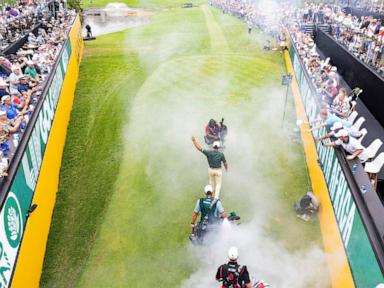
The PGA Tour is suffocating under its own history. While LIV Golf walked onto a fresh field with a handful of crayons and a blank sheet of paper, the Tour is trying to renovate a mansion that has too many rooms and a crumbling foundation. You see it every week. Players look exhausted. Fans are confused by which events actually matter. The sponsor dollars are stretched thin across a calendar that simply refuses to breathe.
If the PGA Tour wants to survive the next decade of this civil war, it needs to stop patching the holes. It needs to burn the map and start over.
Why a Blank Canvas Helped LIV Golf Win the Narrative
LIV Golf didn't just buy players with oil money. They bought simplicity. When Greg Norman and his team sat down to build their league, they didn't have to worry about a 50-year-old tournament in some mid-sized city that feels entitled to a prime May date. They didn't have a legacy membership of 200 pros demanding a place to play every Thursday.
They built a product for a shorter attention span. 14 events. 54 holes. No cut. Shotgun starts. You know exactly when it starts, exactly when it ends, and exactly who is playing. It’s predictable.
The PGA Tour is the opposite. It’s a messy, sprawling 40-plus week marathon. We’ve got Signature Events, Full-Field Events, Opposite Field Events, and the FedEx Cup Playoffs. It’s a lot to ask of a casual viewer. It’s even more to ask of the stars.
Look at the top guys. Scottie Scheffler and Rory McIlroy aren't just playing against a golf course anymore. They're playing against a business model that requires them to show up constantly to justify those massive purses. LIV proved that "less is more" isn't just a catchy phrase—it's a sustainable way to keep superstars from burning out before the Masters even rolls around.
The Signature Event Trap
The Tour’s response to the LIV threat was the Signature Event model. On paper, it makes sense. Get the best players together more often for $20 million bags. But in practice, it’s created a two-tier system that’s killing the soul of the sport.
When you look at the 2025 and 2026 calendars, the "regular" events feel like ghost towns. Sponsors at the John Deere Classic or the Rocket Mortgage Classic are paying millions to host what basically amounts to a high-end developmental tour event. The stars aren't there. The buzz is gone.
By trying to protect everything, the Tour is effectively protecting nothing. You can't have 45 weeks of "must-see" television. Nobody has that kind of time. Not the fans, and certainly not the players who have families and want a life outside of a courtesy car.
The blank canvas approach would mean admitting that not every tournament deserves to exist in its current form. It would mean telling long-term partners that the game has changed. That’s a hard conversation. It’s also a necessary one.
The Myth of the Traditional Season
Golf fans are traditionalists by nature. We love the history. We love the idea of the "Texas Swing" or the "Florida Swing." But we have to be honest about the fact that the traditional season is bloated.
Back in the day, the Fall Series was a way for guys to keep their cards. Now, it’s a weird limbo period where half the world is watching football and the other half is wondering why there’s a golf tournament happening in October.
A total reset would involve a hard stop. A real offseason. Imagine if the PGA Tour season ended at the Tour Championship in August and didn't start again until January. That four-month gap would create actual hunger for the sport. Instead, we get a continuous loop that makes the biggest wins feel temporary.
The Tour is terrified of losing airtime to the NFL. They shouldn't be. They should embrace the idea of being a premier seasonal sport rather than a year-round background noise.
How to Actually Fix the Schedule
If I were holding the pen for the 2027 season, I’d start by cutting the fat. You don't need 40 events to crown a champion.
- The 25-Event Max: Limit the primary schedule to 25 high-stakes tournaments. This includes the Majors and the Players.
- Mandatory Participation: If you're in the Top 50, you play all 25. No "skip" weeks that confuse the fans.
- The Global Loop: Use the blank canvas to actually travel. Go to Australia in the winter. Go to Japan. The Tour calls itself the "PGA Tour" but it’s mostly a US regional circuit with a few outliers.
- Promotion and Relegation: Borrow a page from European soccer. Have a secondary circuit that actually matters, where the bottom 20 guys from the big show get sent down.
This creates stakes. Right now, the stakes are buried under a mountain of FedEx Cup points that nobody—not even the math whizzes on Golf Channel—seems to fully grasp during a Sunday broadcast.
The Cost of Doing Nothing
The danger isn't just that LIV will take more players. The danger is apathy. If the PGA Tour continues to grind its stars into the dirt with a schedule that requires constant travel and 100% commitment to "Elevated" play, the quality of the golf will suffer.
We’re already seeing it. Sunday finishes feel a bit flatter. The post-round interviews sound a bit more rehearsed and tired. The "canvas" the Tour is working on is already covered in decades of layers of old paint. It’s thick, it’s heavy, and it’s hard to change the picture.
But they have to try. They need to look at what LIV did—not the politics of it, but the structure—and realize that a streamlined product is a better product. Fans want to see the best versus the best. They don't need to see it every single weekend for 11 months straight.
Stop trying to please every title sponsor from the 1990s. Start building a schedule that makes sense for the players in 2026.
The next step is simple but painful. The Tour leadership needs to sit down with its TV partners and explain that 18 weeks of premium, high-octane golf is worth more than 45 weeks of mediocrity. They need to buy out some contracts, merge some events, and create a calendar that actually has a beginning, a middle, and a definitive end. If they don't, they'll just keep painting over the same messy image while the rest of the sporting world moves on to a cleaner gallery.