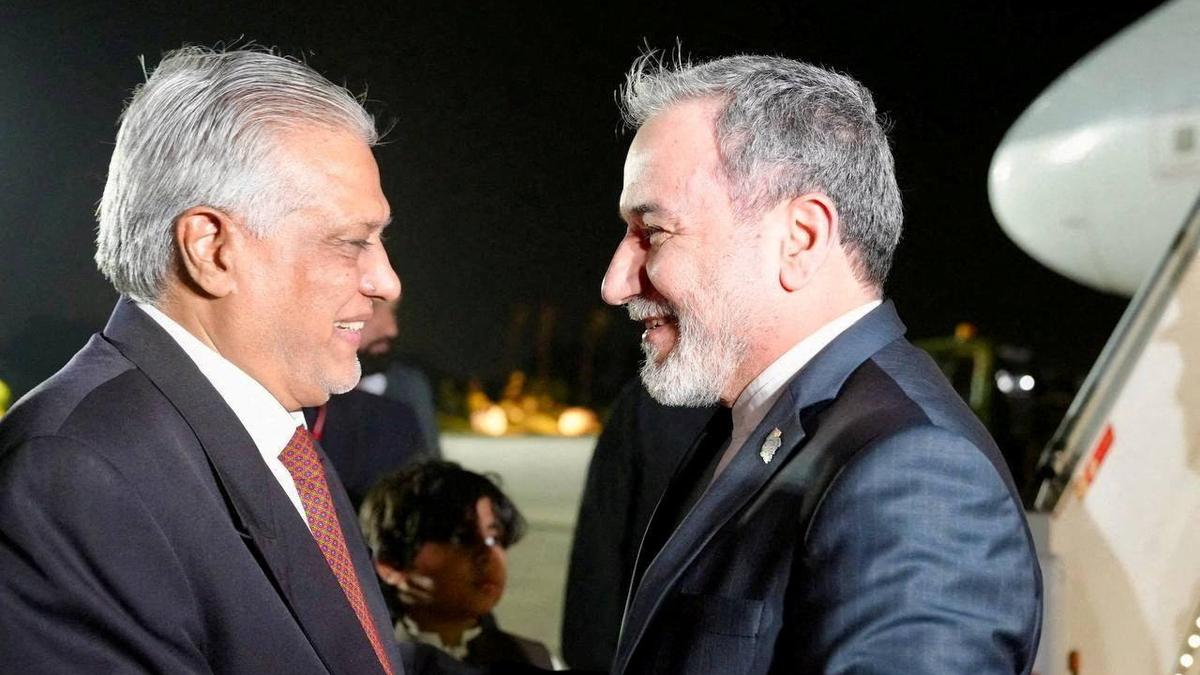
Diplomatic platitudes are the junk food of geopolitics. They are cheap to produce, provide zero nutritional value, and eventually rot the system from the inside out. When Pakistan’s Deputy Prime Minister stands at a podium and pledges "continued efforts to achieve peace and stability," he isn't describing a strategy. He is describing a holding pattern.
We have been conditioned to view "stability" as the ultimate win. It isn't. In the context of South and Central Asian trade and security, stability is often just another word for stagnation. While officials recycle scripts about regional connectivity and harmonious borders, the actual mechanics of power and economics are moving in the opposite direction.
The "lazy consensus" among the diplomatic corps is that more dialogue equals more security. This is a fallacy. Dialogue without leverage is just noise. If you want to understand why the region remains a tinderbox despite decades of "peace efforts," you have to stop listening to the speeches and start looking at the incentives.
The Stability Trap
The biggest lie in international relations is that everyone wants peace. They don't. Many actors—state and non-state—benefit immensely from a managed level of friction. Friction justifies military budgets. Friction maintains nationalist fervor. Friction allows for the "intermediary" economy where certain players get paid to solve problems they helped create.
When we talk about regional stability, we are usually talking about maintaining the status quo. But the status quo in this region is characterized by $0.5%$ GDP growth in key sectors and a complete lack of integrated energy infrastructure. Why would anyone want to stabilize that?
True progress requires disruption. It requires the breaking of old alliances and the uncomfortable realization that some "stable" structures are actually barriers to growth. If your version of peace relies on keeping outdated borders and inefficient trade routes frozen in time, you aren't a peacemaker. You're a tax on the future.
Connectivity as a Buzzword
You cannot build a regional hub on a foundation of distrust. The Deputy PM’s speech touched on Pakistan’s role as a gateway. It’s a compelling narrative. The geography supports it. The math does not.
Look at the Trans-Afghan Railway or the TAPI (Turkmenistan-Afghanistan-Pakistan-India) pipeline. These aren't new ideas. They’ve been "around the corner" for thirty years. Every time a high-ranking official mentions them, the market yawns. Why? Because connectivity isn't about laying tracks or pipes; it’s about the legal and political software that runs on top of them.
If you have a world-class port but a medieval customs process, you aren't a gateway. You're a bottleneck. The obsession with "peace efforts" often distracts from the boring, grueling work of regulatory alignment. We don't need more high-level summits. We need a unified bill of lading. We need digital transit guarantees that don't require ten signatures and a bribe.
The Myth of the Neutral Broker
There is no such thing as a neutral player in a resource-scarce environment. Every "peace effort" led by a regional power is an attempt to bake their own interests into the final agreement. This isn't a critique of Pakistan specifically; it’s a critique of the theater.
When a nation says they want a "stable Afghanistan," what they usually mean is they want an Afghanistan that doesn't export its problems but imports their influence. The disconnect between what is said at the UN and what is done at the border is where the real story lives.
I’ve spent years analyzing trade flows in emerging markets. I have seen projects worth billions die because two mid-level bureaucrats in neighboring countries couldn't agree on whose stamps were more valid. No amount of "stability" speeches fixes that.
The Economic Cost of Caution
Investors don't move toward "peace." They move toward predictability. There is a massive difference.
A region can be at war and still be a magnet for capital if the rules of engagement and the rules of business are clear. Conversely, a region can be technically at "peace" but remain a financial desert because the rules change every time a new cabinet is sworn in.
The Deputy PM’s rhetoric focuses on the external: regional actors, international partners, and peace initiatives. This is a classic redirection. The real threat to stability isn't the neighbor across the fence; it’s the lack of internal structural reform.
- Currency Volatility: You can’t trade with your neighbors if your money loses value while the truck is in transit.
- Energy Insecurity: Peace is irrelevant if the factories don't have power.
- Human Capital Flight: The smartest minds in the region aren't waiting for "stability." They are buying one-way tickets to Dubai, London, and Singapore.
By the time the politicians achieve the "peace" they keep promising, there won't be any talent left to build the economy they’re supposedly protecting.
Stop Asking for Peace, Start Asking for Liquidity
If you want to solve the regional puzzle, stop focusing on the security architecture. Focus on the plumbing.
Imagine a scenario where the borders remained contested, but the financial systems were integrated via a common digital ledger. Trade would continue because the cost of stopping it would be visible in real-time on every citizen's smartphone. We are trying to build peace from the top down through handshakes, when we should be building it from the bottom up through mutual economic dependency.
The current "efforts" are designed to be endless. They provide employment for the diplomatic class and filler for the evening news. They do not, however, create a environment where a merchant in Lahore can sell to a buyer in Tashkent without a 40% "friction tax" comprised of delays, security checks, and logistical nightmares.
The Hard Truth About Regional Cooperation
Regional cooperation is a luxury of the secure. When countries are struggling with double-digit inflation and debt-to-GDP ratios that look like heart attack indicators, "cooperation" becomes a zero-sum game.
The Deputy PM talks about the "desire" for peace. Desire is irrelevant. Necessity is what drives change. Until the cost of conflict becomes higher than the cost of losing face, the cycle of "efforts" and "instability" will continue.
We need to stop praising the "effort." Effort is what you give when you can't deliver results. We should be judging these administrations on one metric: the volume of private sector goods crossing the border. If that number isn't going up, the "peace efforts" are a failure, regardless of how many joint communiqués are signed.
The Strategy of Managed Chaos
If I were sitting in the war rooms of the regional powers, I wouldn't be aiming for a pristine, peaceful neighborhood. I would be aiming for a high-velocity, high-accountability trade zone.
The obsession with total stability is a ghost. The world is moving too fast for that. We are in an era of "permacrisis." The goal shouldn't be to stop the waves, but to build a ship that can sail in them. This means:
- De-linking Trade from Politics: Treat the flow of goods like the flow of air. Even enemies need to breathe.
- Hard-Coding Transit Agreements: Use technology to bypass the need for "trust." If a container is tampered with, the bond is forfeited automatically. No phone calls. No diplomacy. Just code.
- Admitting the Failure of the Old Guard: The people who spent the last 20 years failing to bring peace are not the people who will build the next 20 years of prosperity.
The Deputy PM’s speech is a relic. It belongs to an era where words had enough weight to buy time. That time has run out. The region doesn't need more "efforts" to achieve peace. It needs a brutal, unapologetic pivot toward economic integration that makes conflict an act of financial suicide.
If you're still waiting for the politicians to "achieve" stability before you invest, you’ve already lost. The real players are already building the workarounds. They know that in this part of the world, peace isn't something that's granted by a ministry—it’s something that's bought, sold, and traded in the marketplace.
The speech was a success in terms of public relations. In terms of reality, it was a eulogy for a strategy that never worked.
Stop listening to the podium. Watch the ports.