Pope Benedict XVI didn't just go to Africa to kiss babies and wave from a glass box. When he touched down in Cameroon, he was stepping into a complex web of hope, corruption, and a desperate thirst for change. His departure from Yaoundé marks more than the end of a trip; it’s a shift in how the Vatican views its most energetic region. Africa isn't a "mission territory" anymore. It's the heartbeat of the modern Church.
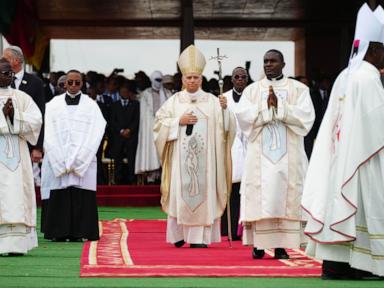
Honestly, the energy in Yaoundé's Amadou Ahidjo Stadium was something you won't find in the quiet, aging cathedrals of Europe. With 40,000 people singing and dancing, the Mass wasn't just a religious rite. it was a statement. Benedict was there to hand over the Instrumentum Laboris, a fancy name for the working document of the upcoming Synod of Bishops for Africa. But the real story was in the subtext.
Speaking truth to power in the land of hope
Cameroon is often called "Africa in miniature" because of its crazy diversity. It’s got everything from rainforests to deserts, and over 200 ethnic groups. But it’s also got problems. Benedict didn't shy away from them. While sitting just feet away from President Paul Biya, who’s been in power since the early eighties, the Pope dropped a hammer. He told the crowd that Christians can't stay silent when they see corruption and the abuse of power.
That’s a gutsy move. You don't usually see a visiting head of state call out his host on his own turf. But Benedict wasn't there to play politics. He was there to back the local Church leaders who are often the only ones willing to challenge the status quo.
The Pope also made a point to visit the Cardinal Léger Centre. This place is a lifeline for people with disabilities and those suffering from AIDS. In a country where healthcare is a luxury, seeing the Pope spend time with the most vulnerable sent a clearer message than any encyclical ever could. It’s about dignity. If the government won't provide it, the Church feels it must.
The Angolan pivot and the scars of war
Now, the focus moves to Luanda. If Cameroon was about setting the intellectual and spiritual agenda for the continent, Angola is about the grit of survival. The country is still picking up the pieces from a civil war that lasted nearly three decades. It’s got oil money flowing through its veins, but most people are still living in "abject poverty," as the locals will tell you.
Angola is a different beast. It’s a place of massive inequality. You’ve got shiny new skyscrapers in Luanda and people living in shacks just a few miles away. Human rights groups like Amnesty International are already shouting for the Pope to address forced evictions. There’s a messy history there where land titles, some involving the Church, have led to people being kicked out of their homes without a cent of compensation.
Benedict’s job in Angola is to be a peacemaker, but also a provocateur. He’s going to talk about national reconciliation, but you can bet he’ll be looking at whether that reconciliation actually includes the poor. A peace that only benefits the elite isn't peace. It’s just a pause in the fighting.
Why this matters for the rest of us
You might think a Papal tour of Africa is just niche news for Catholics. You'd be wrong. Africa is the only place in the world where the Catholic Church is growing at a massive rate. While parishes in the West are closing or merging, African seminaries are bursting at the seams.
This trip is a recognition of that power shift. Benedict called Africa the "continent of hope," and he meant it. He even mused about a new "School of Alexandria" emerging—a revival of African intellectual leadership in the Church. He’s basically saying that the future of the faith isn't in Rome or Paris. It’s in places like Yaoundé and Luanda.
The real challenges on the ground
- Corruption: It’s the elephant in the room. Without transparency, the "hope" Benedict talks about will just remain a slogan.
- The AIDS Crisis: Despite the Pope’s controversial comments on condoms, the Catholic Church remains the largest private provider of AIDS care in Africa.
- Youth Bulge: Most of the people Benedict is talking to are under 25. They want jobs and a future, not just prayers.
What comes next
If you're following this, don't just look at the photos of the big crowds. Watch the follow-up. The Synod document Benedict left in Cameroon is a roadmap for the next decade of African Catholicism. It focuses on "Reconciliation, Justice, and Peace." Those aren't just religious buzzwords; they’re the literal requirements for the continent's survival.
In Luanda, keep an eye on how Benedict handles the government. If he’s as direct as he was in Cameroon, things could get interesting. The Vatican is increasingly acting as a diplomatic broker in African conflicts, and this visit is the foundation for that work.
Stop looking at these trips as mere photo ops. They’re high-stakes diplomacy wrapped in a liturgy. For the people in the stadium in Yaoundé, the Pope’s visit was a sign that they haven't been forgotten by the rest of the world. Now, the pressure is on the local leaders and the international community to turn that "hope" into something people can actually eat.
Pay attention to the local Angolan press over the next few days. See if the government tries to spin the visit or if the Pope's message of justice actually gains traction in the streets. That’s where the real story lives.