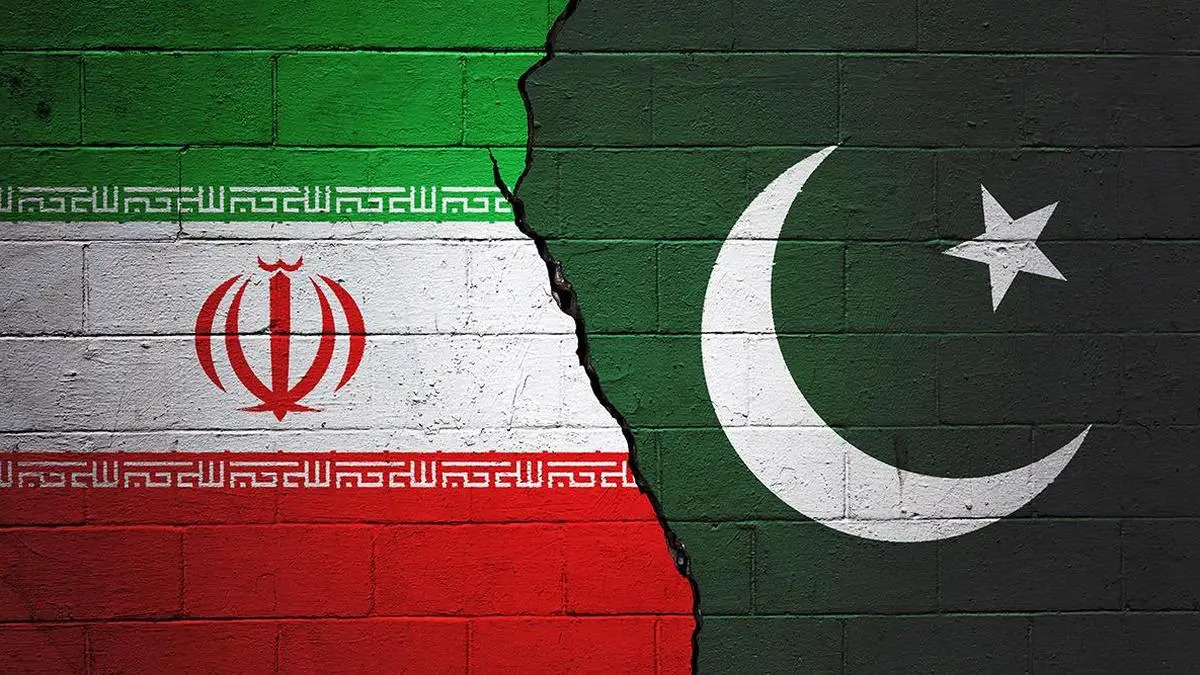
Pakistan is back at the table, or at least they are pulling up a chair and pretending there is a meal being served. The recent whispers from Islamabad about preparing for a "new round" of mediation between Washington and Tehran are being treated by the mainstream press as a sign of regional de-escalation.
They are wrong.
This isn't diplomacy. It is a survival tactic disguised as statesmanship.
The standard narrative suggests that Pakistan, as a neighbor to Iran and a long-term (if complicated) partner to the United States, is the natural bridge. The logic goes that if Islamabad can just get the right people in a room in Muscat or Doha, the nuclear standoff eases, sanctions soften, and everyone wins.
This ignores the fundamental physics of the current Middle Eastern power vacuum. Pakistan isn't trying to solve the US-Iran deadlock. It is trying to remain relevant in a world where both its neighbors and its patrons are increasingly looking past it.
The Myth of the Neutral Arbiter
To be a mediator, you need leverage. To have leverage, you need a stable foundation.
Pakistan currently possesses neither. With an economy on a permanent IV drip from the IMF and internal political fractures that look more like canyons, the idea that Islamabad can dictate terms—or even facilitate them—between a superpower and a regional revolutionary power is a fantasy.
When officials talk about "preparing for talks," they are actually performing for an audience of one: the international credit markets. By positioning itself as the indispensable diplomatic pivot, Pakistan attempts to justify its continued strategic importance to a Washington that has largely pivoted toward New Delhi.
I have watched this cycle for two decades. A cash-strapped capital offers "specialized intelligence" or "diplomatic channels" right when a loan installment is due. It is the geopolitical equivalent of a consultant charging a retainer for a meeting that could have been an email.
Why the US Doesn't Need a Middleman
The "People Also Ask" sections of the internet are filled with questions like, "Can Pakistan bridge the gap between Iran and the US?"
The brutal answer is: The gap is the point.
Washington’s strategy toward Tehran isn't failing because of a lack of communication. It is a deliberate application of friction. The US knows exactly where Iran’s red lines are. They don't need a third party to translate Farsi; they need the Iranian regime to feel enough domestic pressure to concede on regional proxies and ballistic missile development.
Furthermore, the Biden-Harris administration, and any subsequent administration, has direct lines through the Swiss (the Protecting Power) and the Omanis. Oman has a proven track record of quiet, effective, and—most importantly—discreet facilitation. Pakistan, conversely, is a sieve. Every "secret" initiative leaked to the press is a signal that the initiative is more about optics than outcomes.
The CPEC Complication
You cannot talk about Pakistan-Iran relations without talking about China. This is the nuance the "consensus" articles miss.
China is the real elephant in the room. Beijing’s $400 billion deal with Iran and its massive investment in the China-Pakistan Economic Corridor (CPEC) means that any Pakistani "mediation" is viewed through a lens of Chinese interests.
If Pakistan "facilitates" a deal that relaxes US sanctions, they aren't doing it for peace. They are doing it so the Iran-Pakistan (IP) gas pipeline can finally move forward without triggering US secondary sanctions that would bankrupt Islamabad.
- The IP Pipeline Reality: Pakistan is facing potential billions in 18-billion-dollar penalties for failing to complete its side of the pipeline.
- The Trap: They need the gas to fuel an industry that is dying, but they can’t build the pipe without US permission, which they won't get unless Iran stops its enrichment program.
Pakistan isn't a mediator; it's a hostage to its own geography and energy needs.
Thinking Like a Realist: The Zero-Sum Game
Let’s run a thought experiment. Imagine a scenario where Pakistan actually succeeds. A deal is struck. Sanctions are lifted. Iranian oil floods the market.
Does this benefit Pakistan? In the short term, maybe. In the long term, a resurgent, economically dominant Iran is a direct competitor for regional influence. Tehran and Islamabad have a history of border skirmishes, accusations of sheltering militants (Jaish al-Adl on one side, BLA on the other), and sectarian friction.
A "normalized" Iran is a more powerful Iran, and a more powerful Iran is a threat to the Sunni-led Gulf monarchies—Pakistan’s other primary bankrollers.
Islamabad is walking a tightrope where the rope is made of dental floss and the ground is covered in landmines. They have to pretend to help Iran to keep the gas pipeline penalties at bay, and they have to pretend to help the US to keep the F-16 spares and IMF tranches flowing.
The Institutional Failure of "Talks about Talks"
The term "preparing for talks" is diplomatic code for "nothing is happening, but we'd like to be invited to the party."
True diplomacy happens in the shadows. When you see a public announcement from "senior officials" about preparing for a round of talks, it usually means the actual participants (DC and Tehran) haven't agreed to anything.
The E-E-A-T (Experience, Expertise, Authoritativeness, Trustworthiness) of the Pakistani diplomatic corps is high—they have some of the most brilliant minds in the business—but they are being hamstrung by a domestic reality that makes them look like unreliable narrators.
I’ve sat in rooms where these "mediations" are discussed. The American side usually nods politely, takes the notes, and then goes back to their bilateral backchannels. The Iranians do the same, using Pakistan as a "good cop" to test the waters without ever committing to a hard stance.
The Real Friction Points
If you want to understand why this mediation is a ghost dance, look at these three factors:
- The Abraham Accords: The regional architecture has changed. Israel is now a central player in the security calculus of the Middle East. Pakistan doesn't recognize Israel. How can you mediate a regional conflict when you don't even acknowledge the existence of one of the primary drivers of that conflict?
- The Proxy War: Iran’s "Axis of Resistance" (Hezbollah, Houthis, PMF) is non-negotiable for Tehran. The US demand for their disbandment is non-negotiable for Washington. Pakistan has zero influence over any of these groups.
- The Nuclear Threshold: Iran is closer to a "breakout" than ever before. Diplomatic "rounds" are now secondary to the technical reality on the ground. You don't mediate a centrifuge.
Stop Asking if Pakistan Can Help
The wrong question is: "What role will Pakistan play in the next round of talks?"
The right question is: "How long can Pakistan use the prospect of talks to avoid its own economic collapse?"
This is a performance. It is a high-stakes play-act designed to keep the doors of the State Department open and the Iranian border guards from firing more mortar shells into Balochistan.
Islamabad is playing a weak hand with incredible bravado. But eventually, the players at the table ask to see your chips. Pakistan is betting with borrowed money and influence it no longer possesses.
The world has moved on from the era of "strategic depth" and "regional brokers." We are in an era of direct, brutal, transactional power. In that world, a mediator who cannot pay their own electricity bill isn't a bridge—they are a distraction.
If you’re waiting for a breakthrough led by Islamabad, prepare for a long, cold winter. The talks aren't a solution; they are the stalling tactic of a nation trying to stay relevant in a century that is rapidly leaving it behind.
Don't watch the handshake. Watch the bank balance. That's where the real diplomacy is happening.