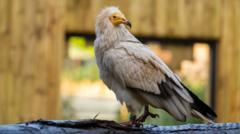
The transition of zoological institutions from static viewing galleries to dynamic ecological simulation centers requires a fundamental shift in how "nature's clean-up crew"—the necrophagous scavengers—are housed and presented. While public perception often prioritizes charismatic megafauna, the operational reality of a balanced ecosystem, and by extension a scientifically valid zoo, relies on the efficient integration of species such as vultures, hyenas, and specialized invertebrates. These species do not merely exist within a habitat; they provide a vital ecosystem service by managing nutrient cycling and preventing the spread of zoonotic pathogens. Replacing traditional cages with specialized enclosures involves a sophisticated calculation of biomechanical requirements, psychological enrichment, and metabolic management.
The Triad of Scavenger Habitat Design
Designing a high-performance enclosure for avian or terrestrial scavengers involves balancing three competing variables: spatial complexity, bio-security, and visual transparency. If any variable is over-indexed, the educational and conservation value of the exhibit collapses.
1. Spatial Complexity and Aerodynamic Loads
For avian scavengers like the Andean condor or the Rüppell's vulture, the enclosure is not a volume of air but a field of thermal opportunities. Standard netting often fails to account for the stall speeds and wingspan requirements of these birds. A superior design utilizes verticality to simulate thermal updrafts. By placing heat-conductive surfaces at varying elevations, architects can encourage natural soaring behavior even in confined spaces. This reduces the incidence of bumblefoot and muscular atrophy, which are common failure states in flat-floor designs.
2. Bio-Security and Pathogen Attenuation
Scavengers possess highly acidic digestive systems—vultures maintain a stomach pH near zero—allowing them to neutralize anthrax, cholera, and botulinum toxins. However, the enclosure itself must facilitate this process without becoming a reservoir for bacteria. The substrate selection is the primary lever here. Unlike the soil in a primate enclosure, scavenger substrates must be porous enough to allow for rapid drainage of organic runoff but durable enough to withstand the corrosive nature of uric acid.
3. Visual Transparency and Behavioral Integrity
The "clean-up crew" often suffers from a public image deficit. Strategic enclosure design uses "invisible" barrier technologies, such as stainless steel micro-mesh or anti-reflective glass, to remove the psychological distance between the viewer and the animal. The objective is to shift the narrative from "scavengers as pests" to "scavengers as sanitation engineers."
The Metabolic Cost Function of Scavenging
Understanding the scavenger requires a deep dive into the energetics of their lifestyle. Unlike predators that expend high energy in short bursts for a kill, scavengers are built for low-energy-cost persistence. The new generation of enclosures must replicate this metabolic reality through "Contrafreeloading" mechanisms.
- Variable Foraging Schedules: In the wild, scavengers do not eat daily. They feast and fast. Modern management protocols simulate this by utilizing automated carcass-drop systems that trigger at randomized intervals, forcing the animals to remain in a state of high-alert scanning.
- Nutrient Density Mapping: The chemical composition of provided carcasses must mirror the diverse diet of wild populations. Simply providing lean muscle meat leads to calcium deficiencies. Enclosures must be equipped with processing stations where animals can engage in bone-cracking behaviors, essential for both dental health and mineral intake.
This metabolic management reduces the "boredom-induced stereotypic behavior" often seen in older, static zoo models. When a vulture must work to extract marrow or compete for a specific anatomical part of a carcass, its cognitive load increases, resulting in a more authentic biological representation for the public.
The Thermodynamics of the Necro-Biome
A significant oversight in traditional enclosure design is the failure to account for the microclimate required for efficient scavenging. Carcass decomposition is a temperature-dependent process. To truly showcase the role of these animals, the enclosure must act as a controlled laboratory for the nitrogen cycle.
The interaction between the scavenger and the microbial community is a competitive one. Scavengers aim to consume the biomass before bacteria render it toxic or unpalatable. Advanced habitats now incorporate localized cooling zones to slow bacterial growth on "kill" sites, extending the window for natural feeding behaviors and reducing the odor profile for human visitors. This creates a bottleneck in the decomposition process that the scavenger is then forced to resolve, effectively making the animal the primary agent of environmental stabilization within the exhibit.
Structural Prose and Material Science in Aviary Design
The transition from heavy iron bars to tensile cable structures represents a leap in both animal welfare and structural engineering. The second limitation of older exhibits was the "ceiling effect," where birds felt constant downward pressure from heavy overhead structures. Modern tensile membranes allow for spans exceeding 100 meters without internal support columns.
This structural freedom enables:
- Uninterrupted Flight Paths: Allowing for the full extension of the humeral and ulnar muscles during takeoff and landing.
- Integrated Perching Hierarchies: Scavengers are notoriously social and hierarchical. Large-scale enclosures allow for the creation of "high-status" perches that are only accessible to dominant individuals, fostering a natural social friction that is vital for colony health.
- Multi-Species Integration: The increased volume allows for the co-habitation of different scavenger guilds—such as vultures and jackals—mirroring the competitive multi-taxa feeding frenzies observed in the Serengeti or the Indian subcontinent.
Quantifying Conservation Impact via Public Engagement
The success of a new scavenger enclosure is not measured in foot traffic alone, but in the shift of the "Value Perception Index." Scavengers are currently facing an extinction crisis; the Asian vulture population, for example, saw a 99% decline due to diclofenac poisoning. The enclosure serves as a critical node in a global communication strategy.
The logic follows a linear progression:
Increased Visibility -> De-stigmatization -> Policy Support -> Funding for In-Situ Conservation.
By utilizing high-definition telemetry displays integrated into the enclosure walls, zoos can show real-time tracking data of wild-tagged individuals. This connects the captive population directly to the survival of the species in the wild, transforming the enclosure from a display case into an active field station.
The Operational Bottleneck of Urban Integration
Locating a scavenger enclosure within an urban zoo presents a unique set of constraints. The primary friction point is the management of the "death-positive" narrative. Modern zoos must navigate the delicate balance of showing raw biological processes (the consumption of carcasses) while maintaining a sanitized environment for the general public.
The solution lies in architectural "veiling." Use of topography and strategic planting allows for "viewing pockets" where the public can witness feeding behaviors without the entire zoo being exposed to the sight of a carcass. Furthermore, advanced air filtration systems (HEPA and activated carbon) are now being integrated into the perimeter of these exhibits to neutralize the volatile organic compounds (VOCs) associated with decomposition.
Strategic Recommendation for Facility Expansion
Institutions looking to upgrade their scavenger facilities should move away from the "taxonomic" approach—grouping birds with birds—and toward a "functional" approach. The enclosure should be rebranded as a Bio-Sanitation Hub.
- Invest in Tensile Architecture: Prioritize volume over floor space. The ability for a scavenger to drop from height to a carcass is more biologically significant than the ability to walk 50 meters.
- Implement Automated Enrichment: Remove the human element from feeding. Use hidden mechanical systems to deliver food, ensuring the animals associate the environment, not the keeper, with resources.
- Develop a Nitrogen-Cycle Educational Module: Shift the signage from "What this animal eats" to "How this animal cleans the earth." Focus on the chemistry of the stomach and the speed of biomass removal.
The future of zoological scavenger management lies in the intersection of high-tension engineering and metabolic biology. By viewing these animals as high-performance ecological tools rather than curiosities, zoos can create habitats that are not only more humane but more scientifically significant. The ultimate goal is a self-regulating micro-ecosystem where the scavenger is the central nervous system of nutrient recovery.