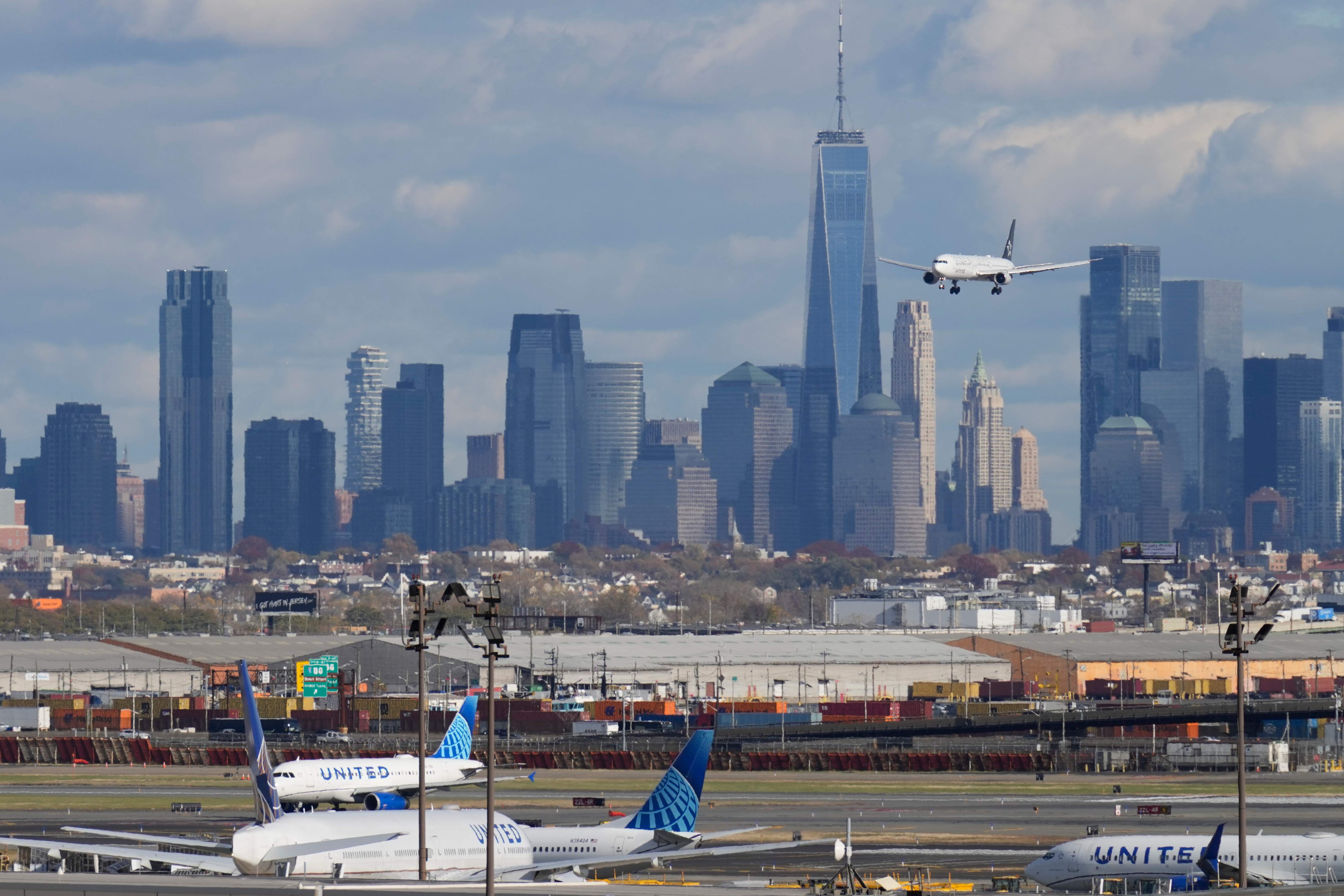
The collision between United Airlines Flight 2133 and a ground vehicle at Newark Liberty International Airport (EWR) functions as a case study in the breakdown of the "sterile ramp" protocol. While surface incidents are frequently dismissed as minor logistical frictions, they represent a critical failure in the high-stakes coordination of the ground-to-air transition phase. This incident highlights a systemic vulnerability: the interface between multi-million dollar avionics systems and low-tech ground support equipment (GSE). When an aircraft enters the terminal environment, it transitions from a regime of highly regulated, automated flight control to one governed by visual line-of-sight and human-centric signaling. The Newark incident proves that this transition remains the most volatile segment of the aviation value chain.
The Mechanics of the Ground Collision Loop
To understand why a Boeing 737 MAX 8—an aircraft equipped with sophisticated sensors—collides with a stationary or moving ground vehicle, one must analyze the Primary Visibility Gap. Pilots seated in a narrow-body cockpit have significant blind spots, particularly regarding objects positioned below the nose or beneath the wings. The aircraft’s geometry dictates that ground safety relies almost entirely on external observers and rigorous adherence to spatial corridors. In similar updates, read about: Structural Failures in Cruise Bio-Risk Management and the Hantavirus Transmission Vector.
The failure at Newark can be categorized into three specific operational breakdowns:
- Spatial Encroachment: The ground vehicle breached the protected safety envelope of the taxiway or gate lead-in line.
- Communication Latency: The feedback loop between the ground marshaler, the tug operator, and the flight deck experienced a synchronization delay.
- The Vigilance Decrement: In high-tempo environments like Newark—a congested Hub—the frequency of movement leads to "habituation," where operators anticipate cleared paths rather than verifying them.
The physics of the encounter are unforgiving. Even at taxi speeds of 5–15 knots, the kinetic energy of a 140,000-pound aircraft is sufficient to crush standard GSE frames and cause structural deformation to the aircraft’s aluminum or composite skin. This creates an immediate "AOG" (Aircraft on Ground) status, triggering a cascading financial loss that far exceeds the cost of physical repairs. Lonely Planet has also covered this important topic in great detail.
The Economic Burden of Ground Damage
The industry refers to these events as "ramp rash," a term that dangerously minimizes the fiscal impact. For a carrier like United Airlines, the cost of a ground strike is an aggregate of four distinct variables:
Direct Asset Depreciation
The immediate repair costs for a winglet, engine cowling, or fuselage skin are substantial. However, the more significant impact is the long-term diminution of value. An aircraft with a history of structural impact requires more rigorous inspection cycles and may fetch a lower price in the secondary leasing market.
Network Disruption and Re-accommodation
Flight 2133 was not an isolated entity; it was a node in a global hub-and-spoke network. The grounding of one 737 MAX 8 necessitates:
- The deployment of a "spare" aircraft, if available, which incurs repositioning costs.
- The payment of delay compensation or hotel vouchers for 150+ passengers.
- The potential expiration of crew duty hours, leading to further cancellations in the following flight legs.
The Opportunity Cost of Out-of-Service Time
Every hour an aircraft spends in a hangar for non-scheduled maintenance is an hour of lost revenue. Given that narrow-body aircraft are optimized for high utilization—often flying 10 to 12 hours per day—a three-day grounding for NTSB inspection and repair represents a loss of dozens of revenue-generating cycles.
Insurance and Regulatory Overhead
Frequent ground incidents lead to increased insurance premiums and heightened scrutiny from the Federal Aviation Administration (FAA). This creates a "Compliance Tax" on the airline’s operations, requiring additional man-hours for safety audits and mandatory retraining programs.
The Human-In-The-Loop Paradox
The Newark incident underscores a persistent irony in modern aviation: as flight becomes more automated, the ground environment remains stubbornly manual. The flight deck of a 737 MAX 8 features synthetic vision and advanced TCAS (Traffic Collision Avoidance Systems), but these systems are largely deactivated or ineffective during the final approach to a gate.
The safety of the aircraft is offloaded to a Ground Support Team that often faces the highest turnover rates in the industry. This creates a "Competency Gap." The pilots, who are the most highly trained individuals in the ecosystem, are functionally blind during the docking process, while the individuals responsible for directing the multi-million dollar asset are often the least experienced.
This creates a bottleneck in safety. If the ground vehicle operator at Newark was unaware of the aircraft’s turn radius or speed, or if the wing-walker was out of position, the system had no automated backup to prevent the strike. Unlike the "Auto-Brake" features found in high-end consumer automobiles, most commercial aircraft do not have autonomous ground-collision braking.
Environmental Stressors at Newark Liberty (EWR)
Newark is unique among major U.S. airports for its spatial constraints. The "Kilo" and "Zulu" taxiway systems are notoriously tight, and the proximity of Terminals A, B, and C creates a high-density theater of movement.
- Congestion Density: EWR handles a high volume of international and domestic traffic within a relatively small footprint. This increases the probability of "Conflict Points" where aircraft paths cross vehicle service roads.
- Infrastructure Age: While Terminal A has seen recent upgrades, much of the ramp infrastructure is designed for an era of smaller aircraft and lower frequencies.
- Weather Variability: Newark is subject to rapid weather shifts. Rain and fog do not just reduce pilot visibility; they degrade the traction of ground vehicles and muffle the acoustic warnings (sirens/horns) that serve as secondary safety signals.
The Technical Limitation of Proximity Sensors
One might ask why aircraft aren't simply fitted with 360-degree LIDAR to prevent such collisions. The answer lies in Weight-Benefit Analysis. Adding a suite of sensors capable of detecting a ground tug or fuel truck from all angles would add significant weight and drag to the airframe. In an industry where every pound of weight increases fuel burn exponentially over the 25-year life of the aircraft, airlines have historically opted for procedural safety (rules and people) over technical safety (sensors and hardware).
Furthermore, the "False Positive" problem on a crowded ramp would be immense. A sensor calibrated to stop an aircraft whenever an object is within 10 feet would make it impossible to park at a gate or be serviced by a fuel truck. The environment is designed for proximity; the goal is managed closeness, not total avoidance.
Structural Integrity and the "Return to Service" Protocol
Following the impact at Newark, the aircraft must undergo a rigid Damage Tolerance Assessment. This is not a simple visual check. Technicians must perform:
- Non-Destructive Testing (NDT): Using ultrasonic or X-ray equipment to check for subsurface cracks in the airframe.
- Alignment Verification: Ensuring the force of the truck impact did not slightly twist the landing gear assembly or the wing root.
- Logbook Recertification: Every step of the repair must be documented to satisfy FAA Part 121 requirements.
The "Safety-First" culture dictates that even a minor dent in a pressurized hull can lead to catastrophic failure at 35,000 feet due to cyclic fatigue. Therefore, the "minor" Newark collision necessitates a level of technical scrutiny that would be considered overkill in any other transport sector.
Strategic Imperatives for Ground Operations
To mitigate the recurrence of incidents like the United 2133 strike, carriers and airport authorities must pivot from reactive discipline to proactive system design. The current reliance on human "wing-walkers" is a 20th-century solution to a 21st-century traffic problem.
The following structural shifts are necessary:
- Digitization of the Ramp: Implementation of GPS-linked geofencing for all ground vehicles. If a truck enters a "Red Zone" while an aircraft transponder is active in that sector, an automated alert must be sent to both the driver and the cockpit.
- The Professionalization of Ground Support: Reducing turnover in GSE roles through better compensation and specialized "Ramp Mastery" certifications. Safety is a derivative of experience.
- Standardization of Vehicle Service Roads: Physical barriers or light-based "Virtual Gates" that clearly delineate where a vehicle can safely stop when an aircraft is under tow or under its own power.
The Newark collision was not a "freak accident." It was the logical outcome of a system operating at peak capacity with insufficient technological safeguards at the point of human-machine interaction. Until the "Blind Spot" of ground maneuvering is treated with the same analytical rigor as mid-air separation, the economic and operational costs of ramp collisions will continue to erode the margins of major carriers. The solution lies in closing the data gap between the tarmac and the cockpit, ensuring that the aircraft's sensors are as aware of a baggage tug as they are of a mountain range.