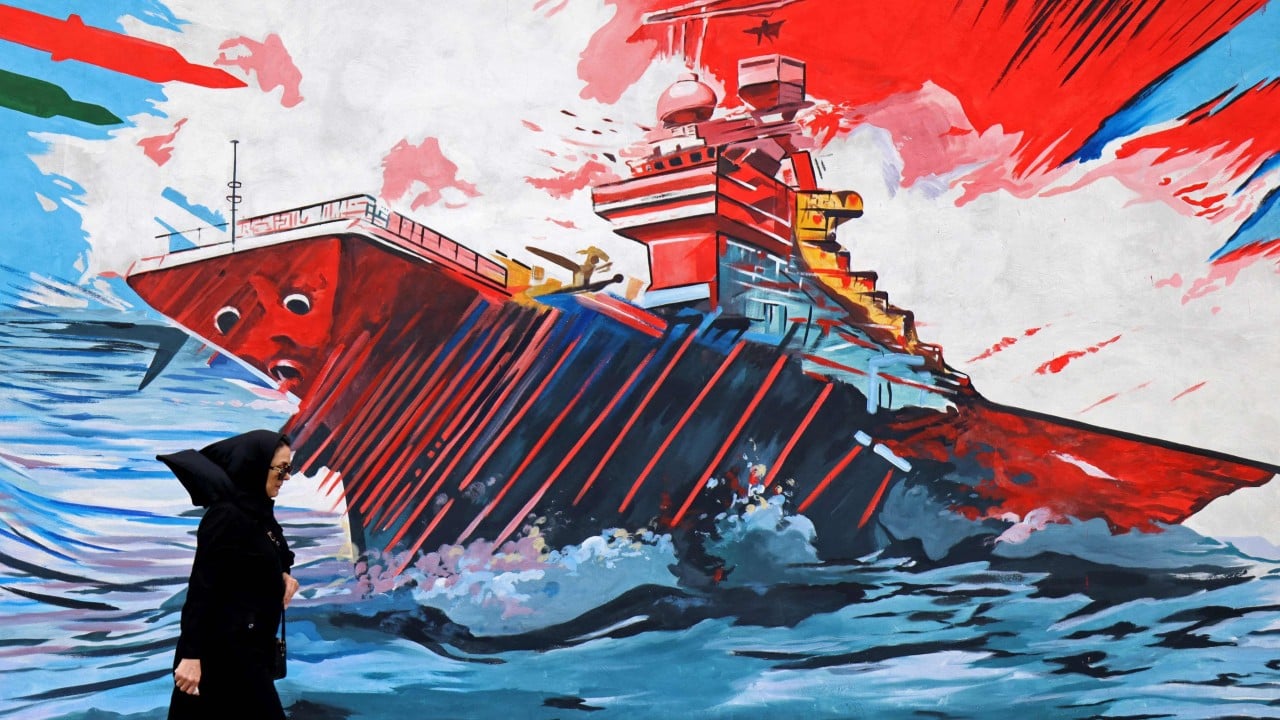
The joint U.S.-Israeli military campaign against Iran, which began on February 28, 2026, has fundamentally altered the geopolitical map of the Middle East, ending decades of "shadow war" in favor of a direct, high-intensity conflict. While the Pentagon and the Prime Minister’s Office in Jerusalem describe the operation as a targeted effort to dismantle nuclear and missile infrastructure, the reality on the ground suggests a far more ambitious and risky objective: the total strategic paralysis of the Iranian state.
Operation Epic Fury, as the American component is known, did not just target bunkers and enrichment halls. In its opening hours, it decapitated the Iranian leadership, reportedly killing Supreme Leader Ali Khamenei and dozens of top commanders. This was a calculated gamble by the Trump administration and the Israeli government, betting that a decapitation strike, combined with internal domestic unrest, would trigger a rapid collapse of the Islamic Republic. Five weeks later, as a fragile two-week ceasefire takes hold, the results are a chaotic mix of tactical success and strategic uncertainty.
The Intelligence Trigger and the 12 Day Precedent
To understand why the offensive happened now, one must look back to the events of June 2025. That 12-day skirmish served as a dress rehearsal. It proved that Iran’s integrated air defense systems, largely composed of aging S-300 batteries and domestic variants, could be overwhelmed by a coordinated saturation of F-35 stealth fighters and electronic warfare.
The immediate "trigger" for the February 2026 strikes appears to have been a collapse in indirect talks held in Oman earlier that month. Intelligence reports suggested that Iranian scientists had shifted to a "crash program" at the Isfahan facility. They were no longer just enriching uranium to 60%; they were moving toward the 90% threshold required for a compact warhead.
When the strikes began, they weren't limited to the well-known sites at Natanz. The alliance targeted "immune" underground bunkers, using newly deployed deep-penetration munitions. However, the IAEA recently noted that while surface infrastructure at Khondab and Natanz is in ruins, the status of the 200-plus kilograms of near-bomb-grade uranium at Isfahan remains a black hole.
The Strait of Hormuz Standoff
Iran’s response followed its long-established doctrine of asymmetric escalation. Blocked from traditional naval victory, the IRGC Navy utilized "swarm" tactics and naval mines to effectively shutter the Strait of Hormuz. This is the choke point through which a third of the world's seaborne oil passes.
The impact was immediate. Global energy prices spiked as tankers were redirected or refused to sail. Iran’s gamble was that by strangling the global economy, it could force the West to the negotiating table on its own terms.
- The Military Response: The U.S. Navy has deployed two carrier strike groups to the region.
- The Allied Role: The UK has permitted the use of bases in Cyprus and Diego Garcia, with the RAF participating in defensive "source destruction" missions.
- The Ground Reality: Despite the "regime change from the skies" rhetoric, the U.S. is now weighing the deployment of special forces to secure nuclear material before it vanishes into the black market.
The war has also been a testing ground for a new generation of weaponry. For the first time, U.S. forces employed one-way attack drones modeled after the Iranian Shahed, effectively using Tehran’s own low-cost, high-impact strategy against them.
Internal Collapse and the Succession Crisis
The death of Ali Khamenei has left a power vacuum that the Iranian regime was unprepared to fill. While his son, Mojtaba Khamenei, was quickly named as a successor, his legitimacy is being challenged on the streets and within the ranks of the regular military.
January 2026 saw some of the largest anti-government protests in Iranian history, driven by a crumbling economy and infrastructure failure. The joint U.S.-Israeli strikes were timed to exploit this internal weakness. However, history shows that foreign intervention often has the unintended effect of rallying a population around the flag, even a flag they were recently burning.
Reports from inside Tehran suggest a city in shock. Internet access is almost non-existent. Civilian casualties are mounting as strikes hit command-and-control centers embedded in urban areas. The "unconditional surrender" demanded by Washington remains a distant prospect, as the remnants of the IRGC have retreated into the mountains, preparing for a protracted insurgency.
The Regional Ripple Effect
The conflict hasn't stayed within Iran’s borders. Hezbollah, though weakened by years of Israeli operations in Lebanon, has launched thousands of rockets into northern Israel. This has forced Israel into a two-front war, conducting ground operations in Southern Lebanon while its air force is busy over Shiraz and Kerman.
Arab Gulf states find themselves in a precarious position. While many quietly welcome the degradation of Iranian power, they are the ones suffering the brunt of Iranian retaliatory strikes. Bases in Bahrain and Qatar have been hit by Iranian drones, and the UAE has seen infrastructure damaged by "unclaimed" missile fire.
The Nuclear Question
The central paradox of this war is that it may have accelerated the very thing it sought to prevent. With its conventional forces shattered and its leadership dead, the remaining Iranian hawks are arguing that the only way to ensure national survival is to complete the "sprint" to a nuclear weapon.
If the U.S. and Israel cannot account for every kilogram of highly enriched uranium, they face the prospect of a wounded, radicalized, and nuclear-armed remnant state. The IAEA has warned that "military force cannot eliminate the long-term proliferation risk" because the expertise cannot be bombed away.
The current two-week ceasefire is less a peace deal and more a pause for breath. Both sides are assessing their losses and restocking their magazines. The U.S. has threatened "extensive attacks on energy sites" if the Strait of Hormuz is not reopened by mid-April.
The strategy of "decapitation and degradation" has successfully broken the Iranian military machine, but it has yet to build a stable alternative. The region is now holding its breath, waiting to see if the second phase of Operation Epic Fury involves boots on the ground or a desperate, 11th-hour diplomatic breakthrough. The era of the "forever war" in the Middle East has not ended; it has simply entered its most dangerous chapter yet.