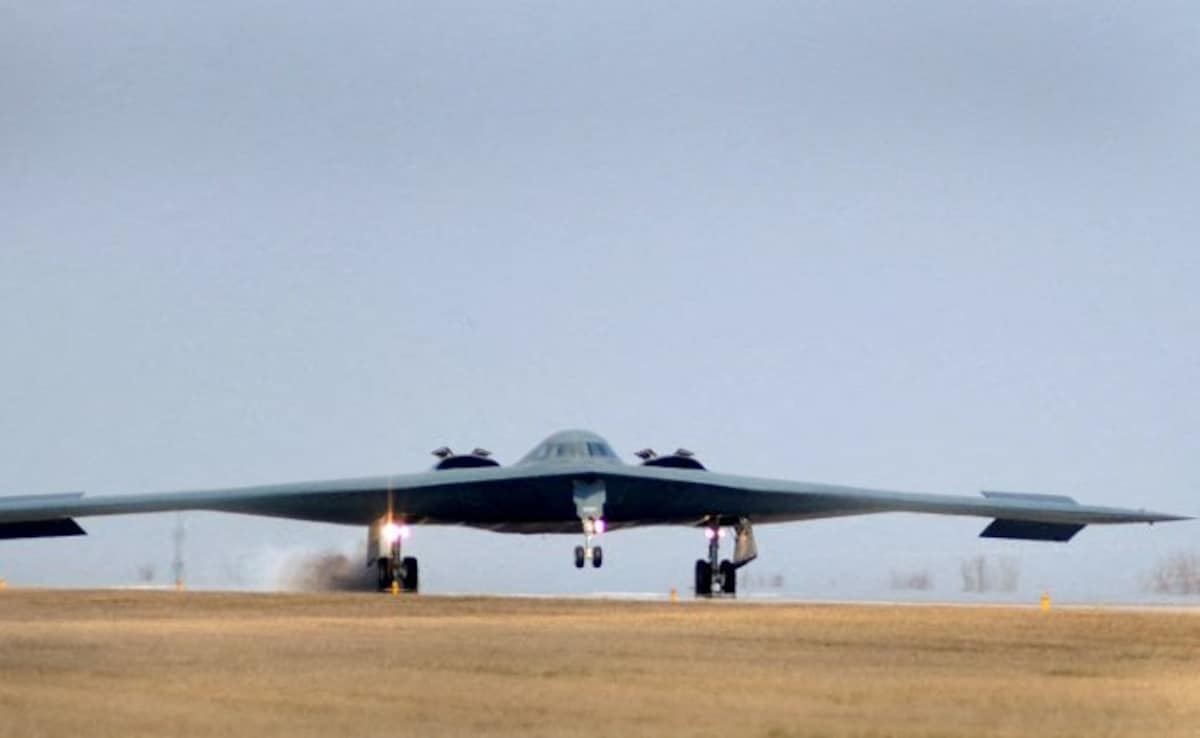
The United States has committed the B-2 Spirit to the front lines of Operation Epic Fury, marking a definitive shift from containment to the systematic erasure of Iran’s military industrial architecture. This is not a symbolic flyover or a "message" sent via telemetry. According to U.S. Central Command, these airframes are currently executing high-volume strikes designed to eliminate the Iranian regime’s ability to rebuild its strategic assets for a generation. While previous sorties focused on surface-level air defenses, the latest waves involve GBU-57 Massive Ordnance Penetrators (MOP) targeting the "uncrackable" subterranean fortresses of the Islamic Revolutionary Guard Corps (IRGC).
The Pentagon is no longer dancing around the objective. Defense Secretary Pete Hegseth and General Dan Caine have made it clear: the goal is the total destruction of Iran’s defense companies and its space-based warfare capabilities. By striking Iran's version of Space Command, the U.S. has effectively blinded the regime's long-range drone and missile guidance systems. The era of Iranian "strategic depth"—the idea that they could hide their most dangerous toys under mountains and wait out a Western administration—has officially collapsed under the weight of 30,000-pound bunker busters.
The Engineering of an Implosion
To understand why the B-2 is being used now, one must look at the geography of the targets. Iran has spent decades boring into the Zagros Mountains, creating "missile cities" that were thought to be immune to conventional Tomahawk strikes or F-35 internal payloads. The B-2 Spirit is the only platform in the world capable of delivering the GBU-57, a weapon that doesn't just explode on impact but hammers through hundreds of feet of reinforced concrete and rock before detonating.
Recent briefings from CENTCOM indicate that the strike volume has reached its highest level since the opening salvo on February 28. These aren't just random hits; they are surgical removals of "mission space." When a B-2 drops a pair of MOPs on a facility like Fordow, it isn't just trying to break the centrifuges. It is trying to collapse the entire geological structure, rendering the site a permanent tomb for the technology inside.
Space Command and the Guided Threat
A significant and overlooked development in this campaign is the systematic dismantling of Iran’s space infrastructure. For years, Western analysts warned that Iran’s satellite launches were a cover for Intercontinental Ballistic Missile (ICBM) development. By leveling the facilities responsible for satellite-based navigation and communication, the U.S. has reduced the accuracy of Iran’s remaining missile stockpile by an estimated 90%.
Without the digital "eyes" in the sky, the IRGC is forced to rely on inertial guidance and pre-set coordinates, making their retaliation predictable and far easier for Aegis-equipped destroyers and Patriot batteries to intercept. The result is a lopsided kinetic exchange where the U.S. can choose its timing, while Iran is left firing blind into the Persian Gulf.
The Escalation Ladder
While the B-2s handle the heavy lifting inland, the naval and amphibious components are tightening the noose around the coast. The deployment of the 31st Marine Expeditionary Unit—comprising 2,200 Marines and a squadron of F-35B fighter jets—aboard the USS Tripoli signifies a preparation for "sea control" missions. This is a direct response to the Iranian campaign against global shipping in the Strait of Hormuz.
The strategy here is multi-layered:
- Air Dominance: B-2s and B-52s suppress the interior and destroy the manufacturing base.
- Naval Attrition: Carrier Strike Groups 3 and 12 are hunting the Iranian Navy, which has already lost over 30 vessels, including a drone carrier roughly the size of a World War II aircraft carrier.
- Economic Strangulation: The closure of the Strait of Hormuz has sent oil and food prices into a tailspin, but it has also trapped Iran’s own "shadow fleet," cutting off their primary source of hard currency.
There is a cold logic to this escalation. By hitting the manufacturing plants and the "defense companies" Hegseth mentioned, the U.S. is ensuring that every missile Iran fires is a piece of equipment that cannot be replaced. It is a war of exhaustion where one side has a bottomless magazine and the other is running on fumes.
The Risks of a Power Vacuum
Despite the military success, the political reality is chaotic. The assassination of Supreme Leader Ali Khamenei in the early hours of the war created a leadership crisis that the appointment of his son, Mojtaba Khamenei, has yet to resolve. The U.S. is walking a fine line. President Trump has signaled that this is not a "regime change" war in the traditional sense, yet he has openly encouraged the Iranian public to "take over" their government.
This ambiguity is dangerous. If the IRGC’s command structure is completely decapitated without a viable civilian alternative, the result could be a fractured state armed with residual chemical or biological assets. Furthermore, the collateral damage—including the accidental strike on a girls' school near Bandar Abbas—serves as a potent recruitment tool for hardliners who are currently being sidelined by the massive internal protests.
A New Regional Architecture
The geopolitical fallout is already reshaping the map. Traditional U.S. allies in the Gulf, who previously feared Iranian retaliation, are now moving toward a more overt alignment with Washington as they see the "Axis of Resistance" crumble. Hezbollah is bogged down in its own conflict with Israel, and the loss of Syrian and Iranian support has left them more isolated than at any point in the last thirty years.
The question is no longer whether the U.S. can win a kinetic engagement with Iran, but what remains when the smoke clears. The B-2 strikes are effectively erasing the 1979 revolution’s military legacy. What replaces it will depend on whether the Iranian people can capitalize on the sudden absence of the IRGC’s iron fist, or if the region descends into a different kind of darkness.
Monitor the deployment of the third aircraft carrier to the region; its arrival will likely signal the start of the final phase of the air campaign, focusing on the total neutralization of the IRGC's remaining "sleeper cell" infrastructure and coastal defense batteries.


