The future of human intelligence is currently being litigated in an Oakland courtroom, but do not let the dry legal motions fool you. This isn’t a simple contract dispute between two billionaire egos. It is a fundamental autopsy of a "broken promise" that could reshape the global economy. At the center of the storm is the question of whether a non-profit founded to save humanity from an AI apocalypse can legally morph into a $1 trillion "wealth machine" for a select few.
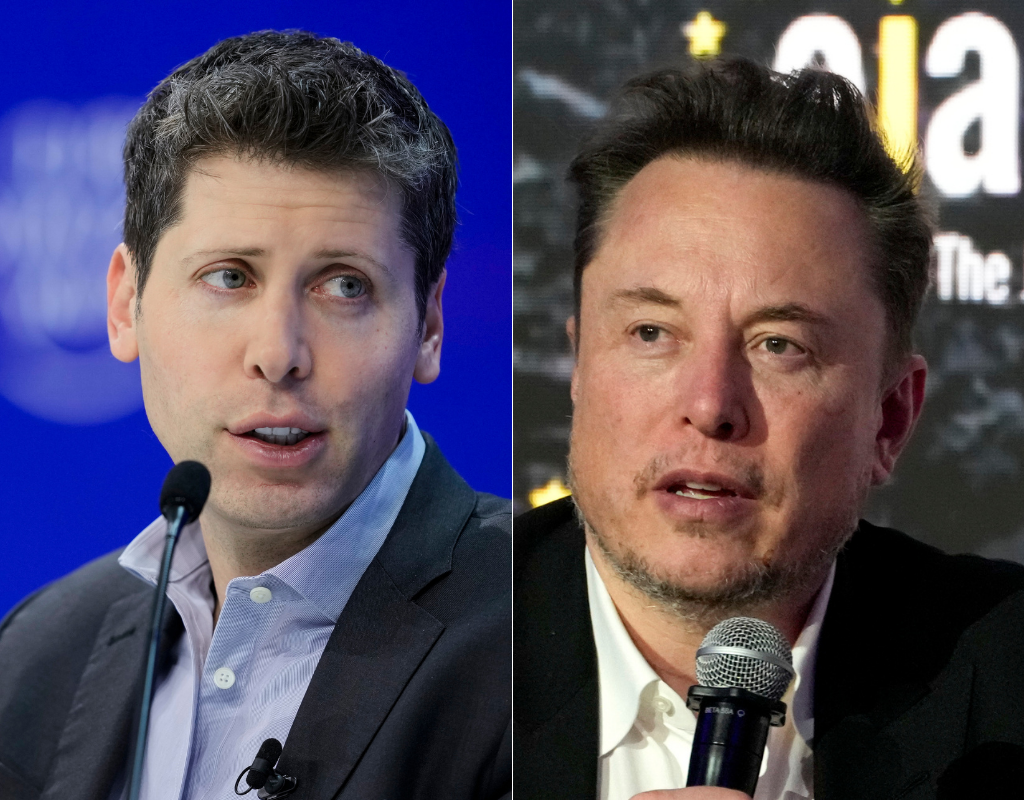
Elon Musk’s $134 billion lawsuit against Sam Altman and OpenAI entered a critical phase this week with jury selection. Musk alleges that Altman and co-founder Greg Brockman performed a "Shakespearean" bait-and-switch. They took his early funding—roughly $38 million—and his global prestige under the banner of a non-profit "open" mission, only to pivot into a closed, for-profit powerhouse tethered to Microsoft.
OpenAI’s defense is predictably sharp. They claim Musk is a "sore loser" driven by "competitive jealousy" because his own AI venture, xAI, is lagging. They argue his contributions were tax-deductible donations, not investments, and that Musk himself once agreed that a for-profit pivot was the only way to secure the massive computing power required to build Artificial General Intelligence (AGI).
The Long Con and the For Profit Pivot
To understand how we got here, you have to look past the current headlines and into the granular shifts of 2017. Internal emails surfaced in pre-trial filings show a mounting tension between the founders. Musk wanted total control to compete with Google’s DeepMind; Altman wanted a structure that could attract billions in venture capital.
When Musk walked away in 2018, the gates opened for the 2019 creation of a "capped-profit" subsidiary. But the cap was a legal fiction that allowed for massive returns. Fast forward to late 2025, and the transition is complete. OpenAI is now essentially a for-profit corporation, with the original non-profit relegated to a "Foundation" holding a 26% stake.
The math is staggering. That foundation stake is valued at $130 billion.
Musk’s legal team argues this wasn't just a change in business model; it was a breach of charitable trust. Under California law, assets donated to a non-profit are "dedicated to a charitable purpose." You cannot simply take a non-profit’s intellectual property—developed with public-subsidized donations—and hand the keys to a private corporation.
The Microsoft Shadow
Microsoft is the elephant in the courtroom. By 2026, the software giant has secured a 27% share of the restructured OpenAI, valued at approximately $135 billion. Their partnership isn't just about money; it’s about infrastructure. OpenAI runs on Azure. Without Microsoft’s servers, ChatGPT is a brain without a body.
Musk’s suit highlights a "secrecy provision" that effectively shields the environmental impact and technical specifics of this relationship from public scrutiny. This "regulatory moat" allows OpenAI to advocate for strict AI safety regulations that only they and Microsoft have the capital to satisfy. It is a classic incumbent move: pull up the ladder behind you.
Judge Yvonne Gonzalez Rogers, presiding over the case, has already expressed skepticism about halting OpenAI's operations, noting that "this country likes competition." However, she also acknowledged the potential for "irreparable harm" when public money is used to fund a private conversion.
The Stakes Beyond the Damages
While $134 billion is a headline-grabbing figure, the real prize is the definition of AGI. OpenAI’s original charter stated that if a for-profit entity built AGI, the technology would revert to the non-profit to ensure it benefits everyone.
The trial will likely hinge on whether GPT-4—or its successors—already constitute AGI. If they do, the Microsoft license (which only covers "pre-AGI" technology) should technically expire. Altman maintains we aren't there yet. Musk disagrees, claiming the "closed-source" nature of current models is a direct betrayal of the "Open" in OpenAI.
The Cost of Altruism
If Musk wins, he wants Altman and Brockman removed and the billions in damages returned to the charitable arm of the company. It would be a forced "de-privatization" of the most valuable startup in history. If he loses, the precedent is set: a non-profit mission is merely a marketing phase for Silicon Valley's next great monopoly.
The jury is being asked to decide if Altman is a visionary who did what was necessary to survive, or a strategist who used a humanitarian shield to build a private empire. There is no middle ground in this verdict. Either the founding mission was a binding legal contract, or it was a temporary sentiment that expired the moment the first billion-dollar check arrived.
The trial is expected to last three weeks. By the time it ends, the very definition of "non-profit" in the tech industry will have changed forever.