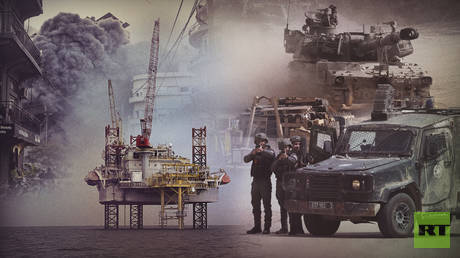
The global oil market isn't just tight. It's bleeding. While most people are watching the daily price tickers, Russell Hardy, the CEO of Vitol—the world’s biggest independent oil trader—just dropped a truth bomb that should make every finance minister and commuter break a sweat. We’ve already lost roughly 700 million barrels of supply because of the war involving Iran, and that number is sprinting toward a cool one billion.
If you think a billion barrels is just a rounding error in a world that consumes 100 million a day, think again. This isn't just about "missing" oil. It’s about the fact that we’ve been "borrowing" from our future to survive the present. We're raiding the cupboards, and the shelves are looking pretty bare.
The math of a massive supply crater
Let’s be real about what’s happening in the Middle East right now. The Strait of Hormuz, the world’s most critical energy artery, has been effectively choked off for non-Iranian shipping since late February. That’s not a minor disruption. That’s a cardiac arrest for the global energy trade.
Hardy pointed out at the FT Global Commodities Summit that we’ve lost about 12 million barrels per day (b/d) of supply. Meanwhile, global demand has only fallen by about 4 million b/d. Do the math. We have an 8 million barrel-per-day hole that isn't being filled by new production.
- Inventory raids: Most of the gap is being plugged by drawing down "oil-on-water" (the stuff already on tankers) and emergency government reserves.
- Infrastructure rot: It’s not as simple as flipping a switch when the fighting stops. Refineries are shut down. Pipelines are damaged.
- Refinery output: Global refinery runs are down by 6 million b/d because they can't get the crude they need.
Why you can't just borrow your way out of this
Hardy’s most chilling point was that we’ve "borrowed supply" from every available alternative. It's like living off a credit card with a 30% interest rate. You can do it for a month, maybe two, but eventually, the bank calls. In the energy world, the "bank" calling means demand destruction—a polite way of saying a massive global recession that forces people to stop buying fuel because they can't afford it or it simply isn't there.
The IEA already pulled its "break glass in case of emergency" lever, authorizing the largest-ever release of emergency oil stocks. But those stocks are finite. If the Strait of Hormuz doesn't open up in the next few days, we aren't just looking at $100 oil. We're looking at a physical shortage where the price becomes irrelevant because the product isn't on the shelf.
The myth of a quick recovery
One big mistake people make is assuming that a ceasefire means the oil starts flowing the next morning. It doesn't work that way.
Hardy was very clear: even if the ships start moving tomorrow, the recovery of the entire supply chain will take months. You have to restart upstream production in places like Saudi Arabia, Iraq, and the UAE—all of which had to shut in production because they had nowhere to send the oil. You have to inspect pipelines for sabotage or war damage. You have to get the "dark fleet" and regular tankers back into a predictable rhythm.
Honestly, we're looking at a "lost year" for energy stability. The war has already baked in higher costs for the foreseeable future. Even the UN is chiming in, saying this conflict has effectively locked in higher fossil fuel prices for years.
What this means for your wallet
If you’re waiting for gas prices to drop back to 2023 levels, don't hold your breath. The physical market is screaming. While paper traders in New York or London might bet on a peace deal, the people actually moving the barrels—the Vitols and Trafiguras of the world—see a different story. They see a world that has "lost" a billion barrels of its cushion.
- Expect volatility: Any news out of the Islamabad peace talks will cause $5 swings in hours.
- Watch the Strait: The status of the Strait of Hormuz is the only metric that actually matters right now.
- Refined products are the real bottleneck: It’s not just about crude. Diesel and jet fuel stocks are even tighter, which means shipping and travel costs are going to stay sky-high.
The reality is that the energy landscape has shifted. We've moved from a period of relative abundance to one where every barrel is a battleground. If you're running a business or managing a portfolio, you need to stop thinking about this as a temporary spike and start treating it as a structural deficit. The billion-barrel hole isn't going to fill itself overnight.
Get your hedges in place, look at your fuel exposure, and don't assume the "emergency" is over just because the headlines stop being written in all caps. The physical reality of a billion missing barrels is much harder to ignore than a news cycle.