The desert wind at Coachella doesn't just blow. It scours. It carries the grit of a thousand shattered dreams and the metallic tang of overpriced electrolyte drinks, swirling around the ankles of twenty-somethings who are desperately trying to curate a moment that feels like something more than a social media post. By the second weekend of the festival, the air is thick with a specific kind of exhaustion.
Then there is Sabrina Carpenter.
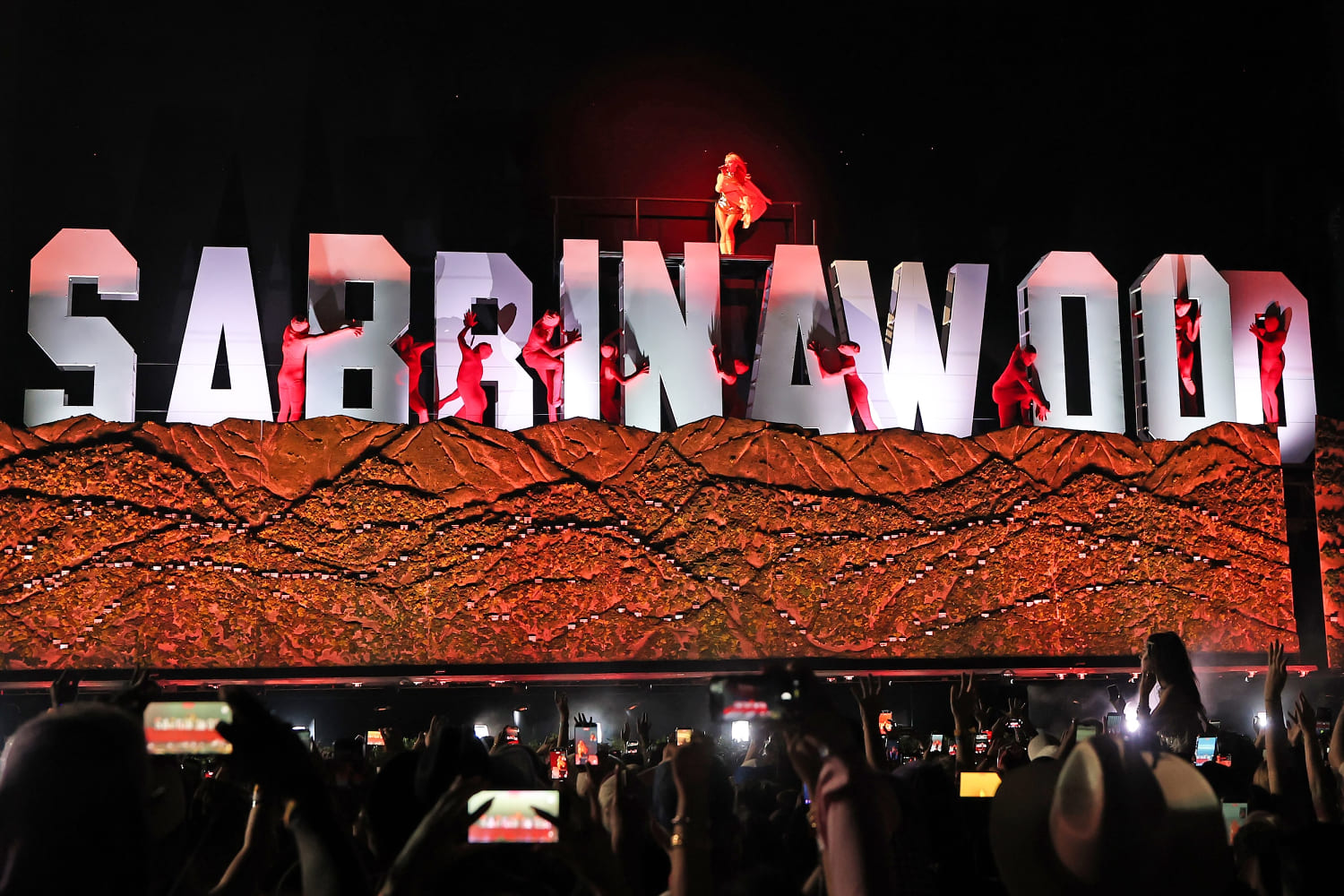
She stands on that stage, a petite powerhouse wrapped in lace and bravado, looking like a vintage postcard come to life. To the casual observer, she is another pop star in a long line of pop stars. But look closer. You can see the tension in the way she holds her microphone. This isn't just a setlist. It’s an audition for immortality. Every "Espresso" beat is a heartbeat; every choreographed flick of her hair is a calculated risk. She is navigating the precarious bridge between "viral sensation" and "cultural mainstay."
The stakes are invisible, but they are heavy. In the music industry, there is a terrifying phenomenon known as the ceiling. You can be big. You can be Top 40 big. But becoming an icon? That requires a blessing from the old gods.
The crowd didn't see it coming. Why would they? The rumor mill had been churning out names for weeks, but the names were contemporary. Peers. Friends. People who shared the same TikTok algorithm. Instead, the stage darkened, the air grew heavy with a familiar, rebellious electricity, and the world shifted.
The Material Manifestation
The silhouette was unmistakable. Even before the lights fully hit her, the posture told the story. It was the slouch of a woman who had seen every trend rise and fall since 1982 and found most of them wanting.
Madonna.
She didn't just walk onto the stage; she reclaimed it. There was no fanfare of horns, just the sheer, tectonic weight of her presence. For a moment, the desert grew silent. You could hear the clicking of thousands of phone cameras, a digital applause, but the physical energy was one of pure shock.
Consider the math of the moment. Sabrina Carpenter was born in 1999. By that time, Madonna had already reinvented herself five times, survived the Vatican’s condemnation, and defined the very blueprint of the modern female pop star. This wasn't a collaboration. It was a coronation.
The two stood together, a visual study in the evolution of the female gaze. Sabrina, the ingenue with the velvet voice and the sharp, Gen Z wit. Madonna, the architect of the house Sabrina now lives in. They began to move, a playful, scripted bit of theater that involved a mock-judgment of the dancers. It was camp. It was ridiculous. It was exactly what the desert needed.
The Weight of the Gaze
There is a specific kind of bravery required to share a stage with a legend. It’s a gamble. If you’re not careful, you don't look like a star; you look like a fan who won a contest. You become a footnote in someone else’s legacy.
Sabrina didn't flinch.
She leaned into the friction. She played the part of the cheeky student to Madonna’s jaded headmistress. As they critiqued the male dancers, the power dynamic flickered and sparked. This is how pop royalty maintains its lineage. It isn't through press releases or Grammy wins. It’s through the literal passing of the torch in front of a live, sweating, skeptical audience.
The older woman looked at the younger with a gaze that felt both predatory and protective. It was the look of a creator recognizing their own DNA in a new specimen. For Sabrina, the stakes were personal. To have the Queen of Pop stand in your light is to have your hard work validated. It is the industry’s way of saying: You are one of us now.
But there is a cost to that validation.
The Ghost in the Machine
We often talk about these moments as "surprises," as if they happen by accident. We ignore the months of back-and-forth, the NDAs, the frantic rehearsals in dark rooms, and the crushing anxiety of the performer who knows that if she misses a step next to an icon, the internet will never let her forget it.
Imagine being twenty-four years old. You have spent your entire life being told you are the next big thing. You have worked through the Disney machine, the heartbreak of public breakups, and the relentless grind of the touring circuit. You are finally at Coachella, the apex of the cool-girl pyramid. And then, the woman who invented the pyramid walks out.
The pressure is atmospheric.
If Sabrina felt it, she hid it behind a mask of pure, unadulterated joy. She sang with a clarity that cut through the desert haze, her voice holding its own against the weight of history. They performed a bit of "Nonsense," the song that has become Sabrina’s signature for its improvised, dirty-joke endings. Bringing Madonna into that world—the world of cheeky, self-aware pop—was a masterstroke. It bridged the gap between the "Like a Virgin" provocateur and the "Espresso" sweetheart.
It reminded us that the core of pop music hasn't changed, even if the delivery system has. It’s still about the thrill of the forbidden. It’s still about the girl who refuses to play by the rules.
The Desert Aftermath
When Madonna finally exited, the stage felt suddenly, cavernously large. Sabrina stood there for a beat, a small figure under a giant moon, catching her breath. The audience was still vibrating. They had just witnessed a glitch in the Matrix—a moment where the past and the future collided so violently that the present moment felt thin.
The "Espresso" singer resumed her set, but the air was different. The skepticism had evaporated. The influencers in the VIP section stopped checking their reflections and actually looked at the stage.
What we saw wasn't just a guest appearance. We saw the dissolution of the "TikTok star" label. You don't get Madonna to show up for a "content creator." You get Madonna to show up for an artist.
The invisible stakes had been met. The bridge had been crossed.
As the final notes of the night faded into the Coachella valley, the dust began to settle again. People began the long, sluggish walk back to their campsites and shuttles, their feet aching and their phone batteries hovering at one percent. They would wake up the next morning to a million headlines. They would see the clips on their feeds. They would argue about whether Madonna looked her age or if Sabrina’s dress was too short.
But for those who were there, standing in the grit and the heat, the narrative was simpler.
They saw a girl become a queen by standing next to one. They saw the lineage of pop music remain unbroken, a golden thread stretching from the dance floors of the eighties to the neon stages of today. They saw the fire pass from one hand to another, and for a few minutes, the desert wasn't just a place for brands and flower crowns. It was a cathedral.
Sabrina Carpenter didn't just bring out a guest. She brought out the sun. And in the harsh, unforgiving light of the morning, everyone else looked just a little bit smaller.