Rio de Janeiro does not wake up. It vibrates.
To stand on Copacabana Beach at dawn is to feel the city breathing beneath your sandals. The salt air carries the scent of roasted coffee and the faint, persistent promise of music. It is a crescent of sand that has hosted kings, dictators, and revolutionaries, but it finds its true purpose only when it transforms into the world’s largest living room. For a more detailed analysis into similar topics, we suggest: this related article.
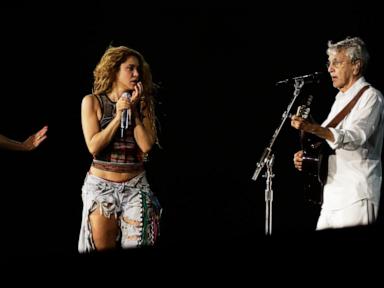
Soon, Shakira will arrive.
She is the latest in a line of seismic cultural events. Madonna stood here, commanding a sea of humanity that stretched until the horizon blurred into the Atlantic. Lady Gaga carved her own monument into this shoreline. Now, the Colombian icon prepares to turn the tide once more. It is not merely a concert. It is an act of communion. To get more background on this issue, extensive reporting can also be found at IGN.
Consider a woman named Elena. She lives in one of the hillside favelas overlooking the bay. For weeks, the hum of the city has changed. She doesn’t talk about ticket prices or parking logistics. She talks about the rhythm. She talks about the feeling of being part of a collective heart beating in sync with the bassline. For someone like Elena, the beach is the great equalizer. Inside the gilded walls of a stadium, you are divided by your wealth, your seat tier, and the velvet rope. On the sand, you are simply a body among thousands, swaying to the same frequency.
This is the invisible architecture of the free concert.
When an artist of this magnitude strips away the barrier of the entry fee, they are making a radical claim. They are asserting that the city itself is the stage. The logistics are, frankly, a logistical nightmare. Imagine coordinating the movement of a million people across a narrow strip of coastal real estate. Local authorities scramble. Security perimeters are drawn and redrawn on maps like battle plans. Sanitation crews prepare for the impossible. But none of that matters to the girl waiting at the barricade in the sweltering heat, clutching a homemade sign that says Te Amo.
We often view these massive gatherings through a lens of skepticism. We count the cost of policing, the carbon footprint of the stage, the sheer inconvenience to the residents who just want to get to work. These are valid calculations. They are the cold, hard arithmetic of modern urban life. But they miss the point entirely.
Think of a guitar string. When you pluck it, the vibration is local, but the sound waves travel outward, carrying energy into the vacuum. A show on Copacabana is a pluck. The energy generated here doesn't stay on the beach. It ripples through the global consciousness. It signals that this place—this sprawling, chaotic, beautiful city—is open. It tells the rest of the world that Rio is not just a collection of headlines about crime or economic struggle; it is a center of gravity for human joy.
The history of the beach as a stage is a history of defiance. When artists choose to play for free, they are bypassing the traditional gatekeepers of the music industry. They are handing their art directly back to the public. It is a gift that requires the artist to shoulder the immense weight of the production—the lights, the sound systems capable of rattling windows a mile away, the pyrotechnics that turn the night sky into a canvas.
There is a moment right before the lights go down. I remember it from years ago, caught in a crush of strangers near the shoreline. The air was thick, humid, and electric. The ocean was black, an infinite void behind us, while the stage was a blinding, pulsating beacon of light. In that brief silence, before the first drum kick, there was no past and no future. There was only the collective intake of breath from a million people. It was a terrifying, beautiful, and profoundly human sensation. It felt like being part of something larger than oneself. It felt like being home.
Shakira knows this theater. She has spent her life navigating the tension between the intimate and the infinite. Her music is a synthesis of the local and the global, a fusion of rhythms that belong to the soil of Colombia but resonate in the concrete corridors of Tokyo and New York. Bringing that to Copacabana is an act of closing the circle.
The criticism, of course, is predictable. Why spend the money? Why cause the chaos? Why invite the world to a beach that is already struggling under the weight of its own reality?
But the real problem lies elsewhere. The problem is our obsession with efficiency over experience. We are trained to measure value by what we can hold, what we can own, or what we can sell. We forget that some of the most profound human experiences are the ones that vanish the moment they happen. A song heard on the wind. A sunrise over the Atlantic. The feeling of a stranger’s shoulder brushing against yours as the music swells.
These things have no price. They have only weight.
When the last note fades and the stage lights dim, the sand will remain. The tide will come in and wash away the footprints of the million. The traffic will return to the coastal roads. The city will go back to its normal, frantic rhythm. But for one night, the geography of the place will have shifted. It will have been marked by the collective memory of a shared sound.
The people who were there will carry it with them. Elena, looking down from her hillside, will see the glow of the beach long after the crowd has dissipated. She will remember that for a few hours, the world didn’t look away from her home. It looked directly at it.
We are constantly told that the world is fragmenting. We are told that we are retreating into our digital silos, staring at screens that divide us into tribes of opinion and interest. Yet, there is a stubborn, ancient impulse in us that remains. We want to gather. We want to be loud together. We want to stand on the edge of the water and listen to a voice that speaks to the marrow of our bones.
The sand is waiting. The Atlantic is listening. And in the quiet before the chaos, the city holds its breath, ready to become the heartbeat of the world once again.