Anatoly sits in a basement in Kharkiv, the smell of damp concrete and cold iron filling his lungs. Above him, the world is tearing itself apart. He isn't a soldier. He isn't a politician. He is a clerk of the court, a man who spent thirty years filing papers that asserted, with quiet confidence, that rules matter. To Anatoly, a signed document was a shield. He believed that the collective "No" of the world’s leaders was a physical barrier against a tank.
He was wrong.
We are all watching the same slow-motion collapse that Anatoly feels in his bones. For nearly a century, we built a cathedral of glass called International Law. We designed grand halls in The Hague and Geneva, filled them with brilliant minds in silk robes, and convinced ourselves that as long as we had a forum for debate, the era of "Might Makes Right" was buried in the mud of 1945. But the glass is cracking. Not because of a single hammer blow, but because of a thousand small shrugs from people who have decided that the institutions we built are too slow, too weak, or too inconvenient to bother with anymore.
The Paper Fortress
The tragedy isn't that our institutions failed. It’s that we stopped believing they could work before we even tried to use them. When a powerful nation crosses a border, we don't look to the UN Charter as a binding contract. We look at it as a suggestion. We treat the Geneva Convention like a Terms of Service agreement that everyone clicks "Accept" on without ever intending to read, let alone follow.
Consider the mechanic of the veto. It was designed to keep the giants at the table, a necessary evil to prevent a third world war. Yet, it has become a garrote. Every time a permanent member of the Security Council raises a hand to block a resolution against their own atrocities—or those of their friends—a bit more of the world’s oxygen is sucked out of the room. It’s a cynical loop. A crime is committed; a resolution is drafted; a hand is raised; the crime continues.
The "International Community" is a phrase we use to make ourselves feel less alone, but it currently functions like a neighborhood watch where the burglars are also the captains of the patrol.
The Cost of a Shrug
There is a hidden price to this erosion. It’s not just measured in territory lost or buildings leveled. It’s measured in the death of the "Rule of Law" as a concept. When the powerful realize that the only consequence of breaking a treaty is a strongly worded letter and a temporary dip in the stock market, the incentive to be "good" evaporates.
Think of a small nation—let’s call it Althea. Althea has no nukes. It has a modest army and a lot of lithium. For decades, Althea’s leaders didn't overspend on defense because they relied on the "Rules-Based Order." They believed that if a neighbor invaded, the machinery of the world would grind that neighbor to a halt.
But Althea’s leaders are watching the news. They see that the UN is paralyzed. They see that the International Criminal Court issues warrants that are treated as souvenirs. So, Althea stops building schools. It starts buying drones. It stops investing in green energy and starts seeking a "Big Brother" protector, trading its sovereignty for a promise of survival.
This is the Great Regression. We are sprinting back toward a world of spheres of influence, where your safety depends entirely on which bully you pay tribute to. The law is becoming a luxury for the peaceful, while the violent treat it as a nuisance to be bypassed.
The Ghost in the Assembly Hall
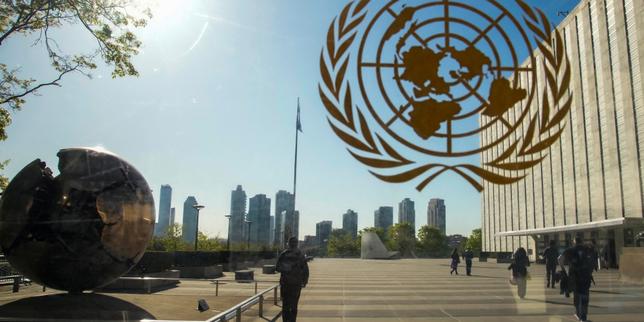
If you walk through the halls of the United Nations today, you can feel the weight of the silence. It’s the silence of missing voices. It’s the silence of the "Common Man" who was promised that "Never Again" meant something.
We often hear that these institutions are "obsolete." That they are relics of a post-WWII reality that no longer exists. This is a dangerous lie. The physics of human greed and aggression haven't changed since the Bronze Age. The institutions aren't broken; they are being deliberately starved. They are being denied the one thing that makes law real: enforcement.
A law without a penalty is just a poem.
Currently, our global "penalties" are selective. We sanction the weak and negotiate with the strong. We hold tribunals for the losers of wars but grant immunity to the victors. This hypocrisy is the acid that eats the foundation. You cannot ask a victim in Sudan or Yemen to respect the sanctity of international law when they see the architects of that law breaking it with total impunity on the other side of the globe.
The Last Exit Before the Abyss
We are standing at a crossroads, and the signs are written in a dozen languages, all saying the same thing: Use it or lose it.
The tools already exist. The General Assembly has the "Uniting for Peace" resolution, a mechanism designed specifically to bypass a paralyzed Security Council. The International Court of Justice has the power to adjudicate disputes before they turn into bloodbaths. The problem isn't a lack of hardware; it’s a lack of political will.
Governments claim their hands are tied by "national interest." But what is more in the national interest than a world where you don't have to worry about your neighbor's tanks rolling across your wheat fields? Is a short-term geopolitical win worth the long-term reality of a lawless planet?
The alternative to the institution is the trench.
When we stop talking in New York or Brussels, we start shooting in the Donbas, in Gaza, in the South China Sea. There is no middle ground. There is no "vibe-based" international order. There is only the law, or there is the fist.
The Gavel and the Dust
Back in that basement in Kharkiv, Anatoly finds a heavy wooden gavel he kept as a memento from his early days in the court. He holds it in his hand, feeling its weight. Outside, the thunder of artillery shakes the dust from the ceiling.
He wonders if anyone is still talking. He wonders if, in some bright room in a distant city, someone is arguing about a sub-clause or a technicality. He hopes they are. Because as long as they are arguing, there is a slim, vibrating thread of hope that the law still exists.
But if they stop—if they decide the institutions are too much trouble, that the "reality of force" is all that matters—then Anatoly’s gavel is just a piece of firewood. And our civilization is just a collection of targets waiting for their turn.
The lights flicker. Anatoly puts the gavel in his pocket. He realizes that the institutions won't save us because they are "the institutions." They will only save us if we decide, collectively and with a terrifying degree of urgency, that the rule of law is the only thing standing between us and a thousand years of darkness.
Force doesn't win because it's stronger. It wins because the law was allowed to grow quiet.
We are currently choosing the silence.