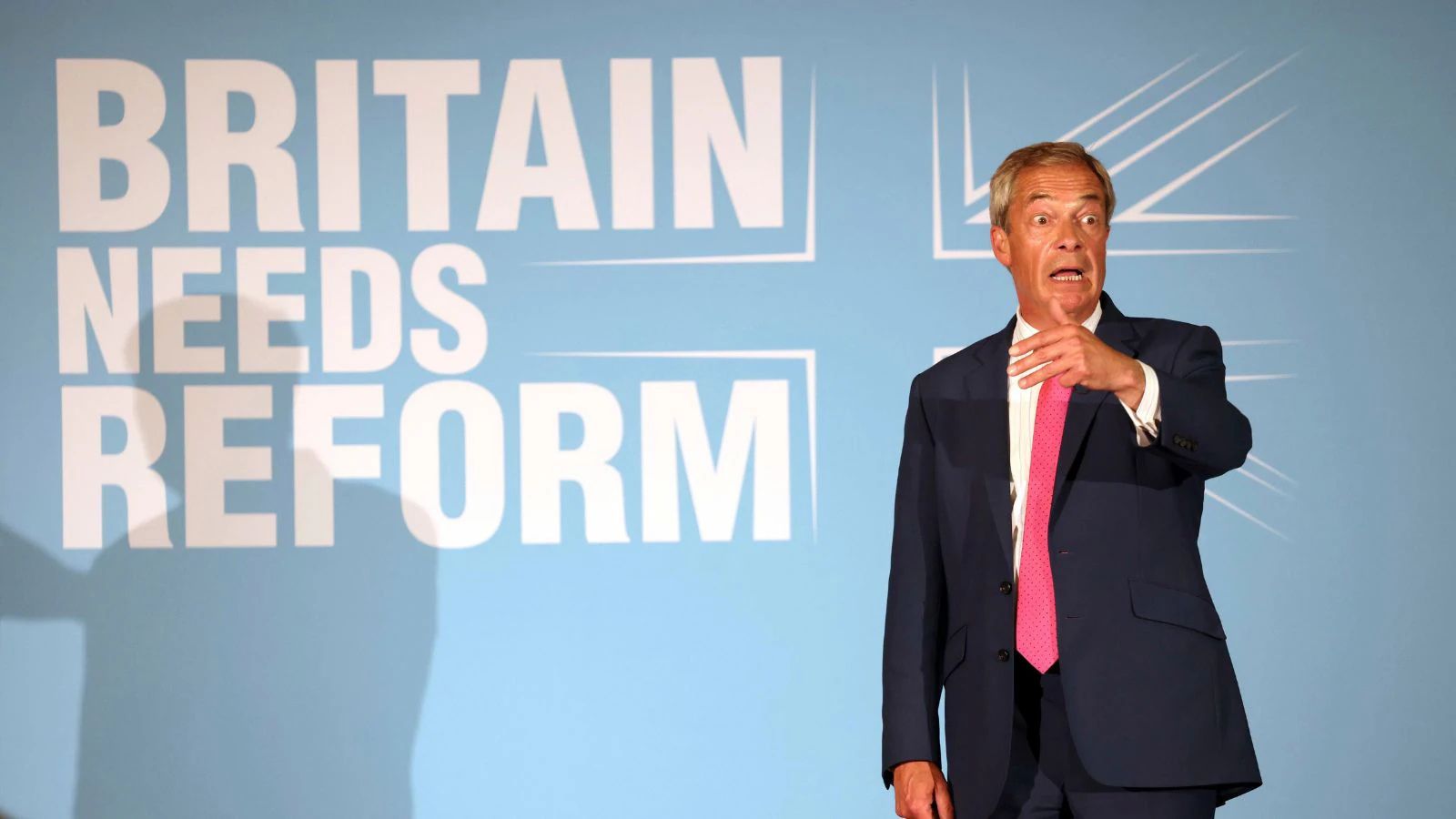
The media is currently obsessed with a £6 million sum—variously described as a "gift," a "donation," or a "bribe"—linked to Nigel Farage. The narrative is predictably tired. Standard outlets are sprinting to frame this through the lens of electoral "transparency" or "foreign influence." They are missing the forest for the trees. By fixating on the dollar amount, they ignore the fundamental shift in how political influence is actually manufactured in the 21st century.
This isn't a story about a politician getting a handout. It is a masterclass in personal brand capitalization.
The "probe" currently making headlines treats Farage like a traditional MP who forgot to log a free lunch at a constituency meeting. That is a category error. Farage isn't just a politician; he is a media entity, a walking IPO, and a proof of concept for the "Influencer-to-Power" pipeline. If you want to understand why the current investigation will likely result in a lot of noise and zero structural change, you have to stop looking at the ledger and start looking at the leverage.
The Transparency Trap
Mainstream commentary suggests that "dark money" is the primary threat to British democracy. This is a lazy consensus. The real threat isn't that we don't know where the money comes from; it's that we don't understand what the money is actually buying.
When a figure like Christopher Chandler or any high-net-worth individual backs a firebrand, they aren't buying "policy" in the way a lobbyist for the sugar industry buys a tax break. They are buying narrative dominance.
In the traditional political model, money buys ads. In the Farage model, money buys time. It buys the ability to remain a permanent fixture in the news cycle without the burden of actually governing. Farage has spent decades in the "political wilderness" while simultaneously occupying the center of every major national debate. That requires a massive capital floor.
The probe into the £6 million is a distraction from the uncomfortable reality: Farage has successfully commodified the British electorate’s grievances. The money is just the fuel for the engine.
The Outsider Paradox
Critics love to point out the hypocrisy of a "man of the people" receiving millions from wealthy benefactors. They think this "gotcha" will eventually stick. It won't.
I have seen political campaigns collapse because they tried to hide a £5,000 donation from a slightly controversial developer. Farage, meanwhile, stands in front of a private jet and tells his base that the elites are out to get him. It works because his supporters don't care about his bank account; they care about his antagonism.
To his followers, the £6 million isn't evidence of corruption. It is evidence of viability. In a world of sterile, focus-grouped politicians who are terrified of their own shadows, a man who can command that level of financial backing from "the wings" looks like a winner.
The media’s attempt to "expose" his wealth is actually a branding gift. It reinforces the idea that he is a heavy hitter playing a different game than the "Starmers" and "Sunaks" of the world. You cannot shame a man who has built a career on being unashamed.
The Regulatory Lag
The UK’s Electoral Commission is a 20th-century tool trying to solve a 21st-century problem. They are looking for receipts. They should be looking at algorithm manipulation and media equity.
Imagine a scenario where a billionaire doesn't give a politician a single penny. Instead, they buy a social media platform or a news network and give that politician unlimited, unfiltered airtime. Under current rules, that is barely a blip on the regulatory radar.
Farage’s "gift" is essentially a venture capital investment in a political startup. The traditional rules of political financing assume that a candidate is an individual seeking office. Farage is a content creator seeking a platform.
- The Old Model: Donation -> TV Ad -> Vote.
- The Farage Model: Investment -> Viral Outrage -> Media Capture -> Political Shift.
The probe is focused on the "Donation" part of a defunct model. It is the equivalent of trying to regulate Uber by checking the horse-and-carriage licenses.
Why the "Far-Right" Label is a Strategic Mistake
The competitor article, like so many others, leans heavily on the "far-right" descriptor. While factually grounded in his policy stances on immigration and sovereignty, using it as a primary descriptor is a strategic failure for those who wish to oppose him.
Labeling Farage "far-right" treats him as a fringe element. It creates a psychological wall that prevents analysts from seeing how much he has shifted the Overton Window.
In 2010, the idea of leaving the EU was a punchline. By 2016, it was a mandate. Farage didn't do this by being a "leader" in the traditional sense. He did it by being a market disrupter. He identified a massive, underserved segment of the "political market"—the working-class voters who felt abandoned by both Major parties—and he executed a hostile takeover of the national conversation.
If you call him a "fringe extremist," you ignore the millions of people who see him as the only person speaking their language. You make yourself feel better, but you lose the argument.
The Myth of the "Gift"
Let’s be brutally honest about the £6 million. In the world of high finance and global influence, £6 million is a rounding error. It is the price of a mid-sized apartment in Mayfair. The idea that this sum "bought" Nigel Farage is laughable.
Farage is the one with the power in this transaction. The donors are the ones desperate for a piece of his reach. They aren't "controlling" him; they are hitching their wagons to his momentum.
When the media asks, "What did the donor get in return?" they expect a smoking gun—a secret contract or a promised law. The reality is much simpler: they got a seat at the table of the most effective populist movement in modern British history. They got to be part of the "insurgency."
The Real People Also Ask
Q: Is Nigel Farage's funding legal?
The question is irrelevant. It’s likely "legal enough" to survive a probe with a slap on the wrist. The real question is: Why is it legal for a political figure to function as a corporate entity?
Q: Who is Christopher Chandler?
He’s a billionaire who understands that the highest ROI (Return on Investment) isn't in stocks—it's in societal destabilization. When the status quo breaks, new markets emerge.
Q: Will this probe end Farage’s career?
No. It will fuel it. Every minute spent discussing his "mysterious millions" is a minute not spent discussing his lack of actual policy solutions. He thrives on the "investigation" trope. It makes him the protagonist of a thriller.
Stop Looking for a Smoking Gun
You won't find one. There is no secret room where Farage signs away the soul of Britain for a briefcase full of cash. The transaction is happening in broad daylight.
The "gift" isn't a bribe; it’s an operating budget.
Until the British public and the regulatory bodies realize that politics has become a branch of the attention economy, they will continue to be baffled by men like Farage. They will continue to launch "probes" into bank accounts while the actual power is being exercised in the hearts and minds of people who haven't felt "seen" by a politician in thirty years.
The probe into the £6 million is a symptom of a dying system's inability to comprehend its own replacement. Farage isn't breaking the rules. He’s playing a game where the rules haven't been written yet.
The media isn't "holding him to account." They are providing him with free advertising. Every headline about his "dark money" is just another signal to his base that he is the man the "establishment" fears most. If you wanted to destroy him, you would ignore him. But you can't. Because he’s the best show in town, and he’s just been handed £6 million to make sure the lights never go down.
The investigation will finish. A report will be issued. Some technicalities might be cited. And Nigel Farage will still be the most influential person in British politics who doesn't actually hold an office.
Money doesn't buy politicians anymore. It buys the reality they inhabit.
Stop checking the receipts. Start checking the frequency.