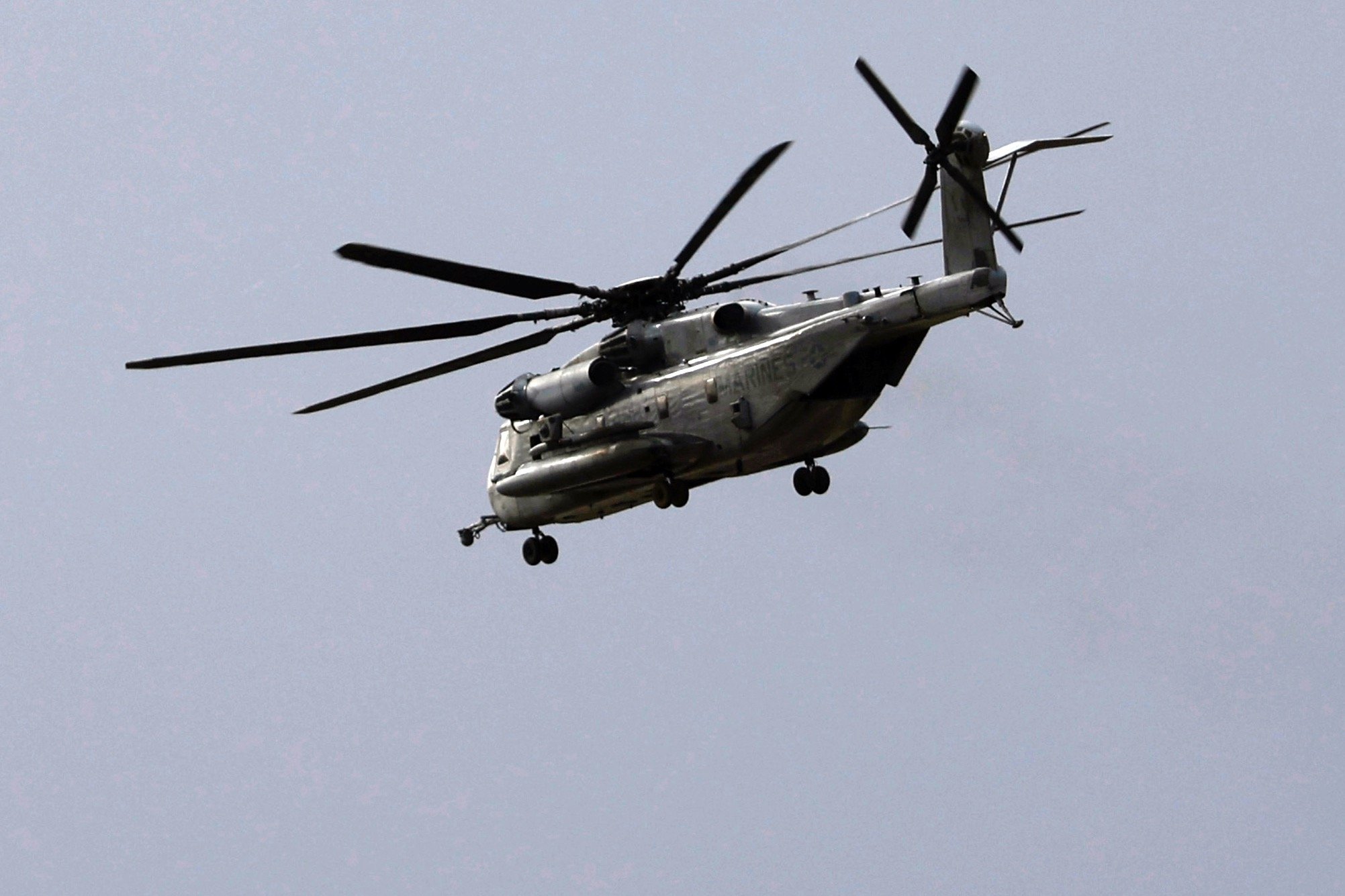
Emmanuel Macron and Keir Starmer are attempting to project an image of decisive European leadership over a waterway they no longer control. The recent emergency summit focused on "reopening" the Strait of Hormuz—a 21-mile-wide choke point through which a fifth of the world’s liquid natural gas and oil flows—misses a grim reality. The Strait isn't technically closed by a physical blockade; it is being strangled by an asymmetric attrition war that Western navies are currently losing.
While the diplomatic optics suggest a coordinated Franco-British effort to stabilize global energy prices, the strategic math doesn't add up. Paris and London are pledging maritime security in a region where the cost of defense now dwarfs the cost of attack. To understand why this summit is more about political theater than petroleum, one must look at the shifting mechanics of naval warfare in the Persian Gulf.
The Economic Asymmetry of the Choke Point
The primary crisis isn't a lack of diplomatic will. It is a fundamental shift in the cost of doing business at sea. For decades, the presence of a Western destroyer was enough to deter interference. That era ended when cheap, mass-produced drones and shore-based missiles became the standard tools of regional disruption.
Currently, a European frigate might fire a surface-to-air missile costing upwards of $2 million to intercept a "suicide" drone that costs less than a used mid-sized sedan. This is unsustainable. When Macron speaks of "securing" the passage, he is essentially promising to spend billions of euros in ordnance to protect commercial vessels that are increasingly uninsurable regardless of naval presence.
Lloyd’s of London and other major insurance syndicates have already signaled that "war risk" premiums for the Strait are hitting levels that make many transit routes unprofitable. Even with a French or British escort, the risk of "soft" damage—electronic interference, GPS spoofing, or minor hull breaches—remains high enough to keep tankers at a standstill.
The Empty Arsenals of the West
Starmer’s involvement highlights a specific British desperation. The Royal Navy, once the undisputed master of these waters, is currently grappling with a severe availability crisis. Out of the UK's fleet of Type 45 destroyers—the primary vessels capable of high-intensity air defense in the Gulf—only a handful are usually deployable at any given time due to maintenance backlogs and manning shortages.
France faces a similar squeeze. While the French Navy maintains a permanent base in Abu Dhabi (Camp de la Paix), their fleet is stretched thin across the Mediterranean and the Indo-Pacific. By convening a summit, both leaders are attempting to use diplomacy to mask a deficit in hulls and hardware. They are asking for a "coalition of the willing" because they know they cannot sustain a 24/7 escort operation on their own for more than a few months.
The hard truth is that the shipping industry has noticed. Maersk and MSC, the giants of global logistics, don't make decisions based on handshakes in Paris. They make them based on cold calculations of risk. If the UK and France cannot guarantee a 100% intercept rate against swarming tactics, the big ships will continue to take the long way around the Cape of Good Hope, adding weeks to transit times and billions to global inflation.
The Regional Players Ignoring the Table
Noticeably absent from the core of the Macron-Starmer initiative are the people who actually live on the banks of the Strait. Any solution that doesn't involve a direct, functional understanding with Iran is a fantasy. Tehran views the Strait of Hormuz as its "internal" waters or at the very least, its primary lever of sovereign power.
The summit participants discussed "multilateral pressure," but that hasn't worked in forty years. The regional power brokers—specifically Saudi Arabia and the UAE—have been notably cautious about tethering themselves to this new European initiative. They have lived through "tanker wars" before. They know that when Western ships eventually sail home, the regional geography remains unchanged. Riyadh, in particular, has moved toward a policy of de-escalation with its neighbors, preferring Chinese-mediated stability over European-led naval patrols that might spark a broader conflict.
Energy Security or Election Security
There is a domestic undercurrent to this summit that smells of political survival. Starmer is facing a restive British public hammered by energy costs. Macron is navigating a fractured parliament and a looming threat from the right-wing opposition. Both need a win. They need to show their voters they are "doing something" about the high price of petrol and heating.
By framing the Strait of Hormuz as a problem that can be solved with European "coordination," they create a convenient narrative. If prices stay high, they can blame the "unstable international environment" while claiming they did everything possible to intervene. It is a classic move from the geopolitical playbook: when you can't solve a problem at home, go looking for a crisis abroad that allows you to look presidential or prime ministerial.
The reality of the energy market is that the Strait is sensitive to whispers. Just the announcement of a summit can cause a temporary dip in oil futures as speculators bet on a resolution. But the "Strait of Hormuz: The Brutal Truth" is that a dip in futures is not the same as a safe passage.
The Technical Reality of Escort Operations
Escorting a tanker through the Strait is a tactical nightmare. The waterway is narrow. The "traffic separation scheme" is only a few miles wide. This gives any hostile actor on the shore a massive advantage. They can see everything. They can time their strikes.
A modern destroyer's radar system is designed to track targets in the open ocean. In the cluttered, crowded waters of the Strait, surrounded by fishing dhows and commercial traffic, identifying a hostile threat becomes a game of seconds. One mistake leads to an international incident. One missed drone leads to a burning tanker.
$$Cost\ of\ Defense \gg Cost\ of\ Attack$$
The math of this equation is the ghost at the feast. Until Macron and Starmer can explain how they intend to flip that ratio, their summit remains a collection of high-definition photos and meaningless communiqués. The shipping industry is waiting for a solution that involves more than just "enhanced monitoring" and "increased presence." They are waiting for a way to make the Strait of Hormuz boring again.
The current strategy relies on the hope that the mere sight of a European flag will deter unconventional warfare. It is a gamble based on a 20th-century mindset. In the 21st century, the flag doesn't matter as much as the cost-per-intercept. If the UK and France want to lead, they need to stop talking about summits and start talking about how to build a maritime defense system that doesn't go bankrupt every time a $20,000 drone is launched from a pickup truck.
Investors and logistics directors should watch the insurance markets, not the press conferences. When the "war risk" surcharges begin to drop, that will be the sign that the Strait is reopening. Until then, the Macron-Starmer summit should be viewed as what it is: a desperate attempt to maintain relevance in a region where the traditional tools of Western power are rapidly losing their edge.
Move the assets. Change the math. Or stop pretending the summit changed the tide.