The United States recently started shifting Terminal High Altitude Area Defense (THAAD) resources from South Korea toward the Middle East, and if you think this is just a routine logistical shuffle, you’re missing the bigger picture. This isn't just about moving a few missile batteries. It’s a massive signal to Beijing that the American military footprint is becoming more fluid, more unpredictable, and much harder for China to counter through traditional diplomatic pressure.
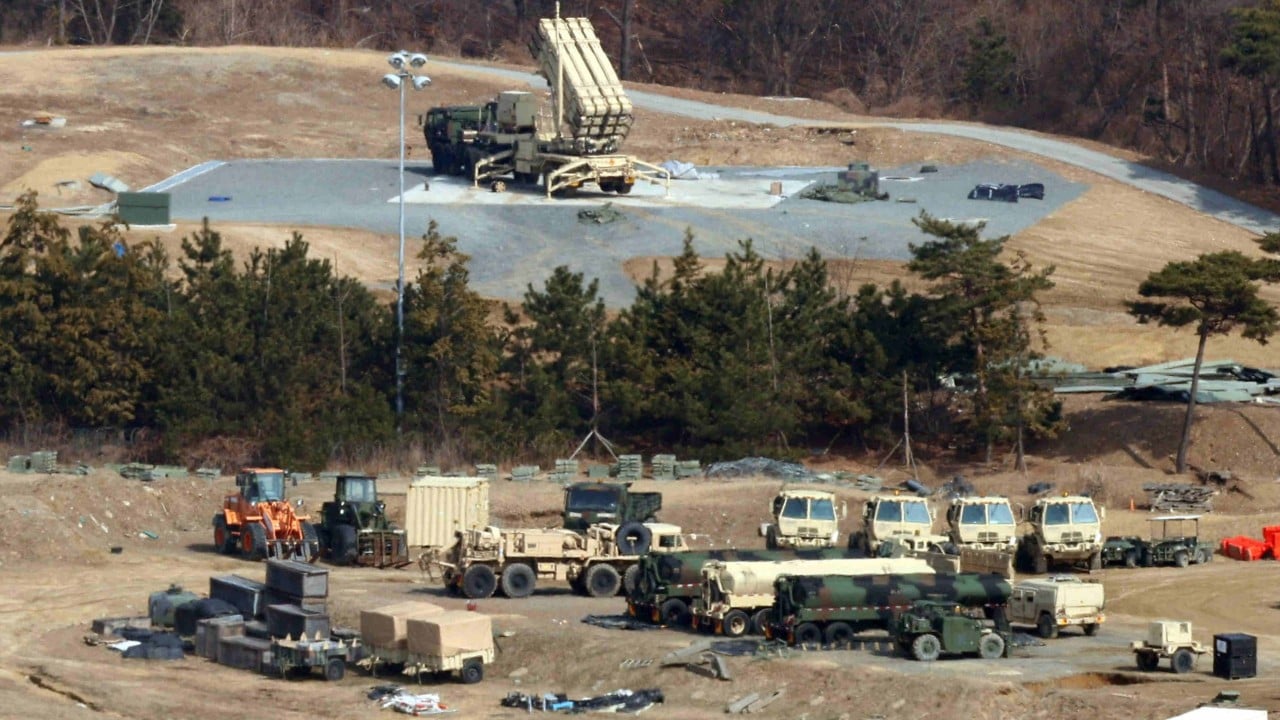
For years, the THAAD presence in Seongju, South Korea, has been a jagged thorn in the side of China-South Korea relations. Beijing viewed the system’s powerful AN/TPY-2 radar as a tool for the U.S. to "peek" into Chinese airspace, potentially neutralizing their nuclear deterrent. By moving these assets, Washington is effectively telling China that its long-standing campaign of economic coercion against Seoul didn't actually buy the security Beijing wanted. Instead, the U.S. is proving it can pivot its most advanced defensive tech to wherever the fire is hottest—currently the Red Sea and the Persian Gulf—without asking for permission.
China's Surveillance Nightmare Just Got More Complicated
When THAAD first landed on Korean soil in 2017, China went into a tailspin. They didn't just complain; they hammered South Korea’s economy. Lotte stores were shuttered, K-pop tours were canceled, and Chinese tour groups vanished. Beijing’s logic was simple: if we make the cost of hosting U.S. tech high enough, Seoul will eventually fold.
But now the chess pieces are moving. By shifting THAAD assets to the Middle East to counter Iranian-backed threats and protect global shipping lanes, the U.S. is demonstrating "Dynamic Force Employment." This is a fancy way of saying they want to be less predictable. For China, predictability was a comfort. They knew exactly where the radars were. They knew exactly which flight paths were monitored.
Now? The radar coverage is shifting. If the U.S. can pull a battery out of Korea and drop it into a Middle Eastern conflict zone in a matter of weeks, they can just as easily drop it back into the Philippines, Japan, or even Taiwan during a crisis. This mobility destroys the "status quo" that China spent billions of dollars trying to influence through trade pressure.
The Radar Game and the Myth of Sovereignty
Let's be real about what China actually fears. It isn't the interceptor missiles. THAAD is a defensive system; it hits incoming birds in their terminal phase. It can't strike Beijing. The real "threat" is the radar. The AN/TPY-2 radar can operate in two modes: "terminal" (to help the missiles hit targets) and "forward-based" (to track launches from deep inside enemy territory).
Beijing argues that even in terminal mode, the system gives the U.S. early data on Chinese missile launches that could be fed into the larger American ballistic missile defense network. This, they claim, upsets the "strategic balance."
By moving these units to the Middle East, the U.S. is subtly undermining China's argument that THAAD is a permanent fixture of "containment" in the Pacific. It shows the system is a flexible response to global instability, not a static wall built specifically to hem in the People's Liberation Army. However, don't expect China to say "thank you." They see this as the U.S. strengthening its grip on the world's energy heartland, which is just as annoying to them.
Why the Middle East Needs THAAD Right Now
The Middle East is currently a shooting gallery of low-cost drones and high-end ballistic missiles. Groups like the Houthis have shown they can reach out and touch high-value targets with surprising frequency. Patriot batteries are great, but they have limits. THAAD fills the gap by catching faster, longer-range threats at higher altitudes.
- Protecting Energy Flows: China gets a huge chunk of its oil from the Middle East. Ironically, U.S. THAAD batteries protecting Saudi or Emirati infrastructure actually help keep Chinese factories running.
- Defending U.S. Personnel: Thousands of American troops are within range of Iranian ballistic missiles. After the 2020 Al-Asad airbase attack, the Pentagon realized "good enough" wasn't good enough anymore.
- Integration: The U.S. is trying to build an integrated air and missile defense network among Arab partners. THAAD is the "big brother" of that network.
China finds itself in a weird spot here. They hate U.S. military expansion, but they love the stability that American-funded security provides for their energy imports. They want the protection without the protector.
The Cost of the Pivot for South Korea
You might think Seoul is breathing a sigh of relief. Finally, the "THAAD curse" is lifted, right? Not quite. The Yoon Suk-yeol administration has actually been more forward-leaning on security than its predecessor. For South Korea, the presence of THAAD wasn't just about defense; it was a physical manifestation of the U.S. commitment to their survival.
When the U.S. moves these assets out, it raises the "decoupling" question. If the Middle East is the priority today, what happens if North Korea decides tomorrow is the day? Washington insists its commitment is "ironclad," but military hardware speaks louder than State Department press releases.
China is already watching this closely. If they sense any daylight between Washington and Seoul regarding the permanent placement of high-end sensors, they’ll start the economic pressure again. They want a "Three Noes" policy from Korea: no more THAAD, no joining a U.S. missile defense network, and no trilateral alliance with Japan. The movement of these batteries gives Beijing a crack to stick its crowbar into.
Redefining the Strategic Balance
The shift of THAAD is a masterclass in global resource management, but it carries a high risk of miscalculation. The U.S. is betting that it can keep the Pacific "warm" with a smaller, more mobile force while it puts out fires in the Levant.
China’s response will likely be an increase in their own "Blue Water" naval presence. If the U.S. is going to move its shields to the Middle East, China will move its swords there too. We're already seeing Chinese naval vessels in the Gulf of Aden. We're seeing increased Chinese diplomatic meddling in Iran and Saudi Arabia.
The move proves that the "Indo-Pacific Pivot" isn't a straight line. It’s a messy, jagged zig-zag. The U.S. can't just leave the Middle East, no matter how much it wants to focus on the South China Sea. The world is too connected.
What Happens Next?
Keep an eye on the "empty" pads in South Korea. If the U.S. doesn't backfill those spots with equivalent tech—like improved Patriot (PAC-3 MSE) or newer Aegis Ashore capabilities—the domestic political pressure in Seoul will spike.
China will likely use this moment to test the waters. Expect more "grey zone" activity in the East China Sea. They want to see if the U.S. is stretched too thin. If you're tracking this, look for the following:
- Announcements of "rotational" deployments of THAAD back into the Pacific to prove the U.S. hasn't left.
- Increased Chinese drone flights near the remaining Korean bases.
- A shift in Chinese rhetoric toward "regional security architectures" that exclude the U.S.
The U.S. just proved it can move its best shield across the globe in a heartbeat. Now, it has to prove it didn't leave its most important allies exposed in the process. Watch the flight logs of the C-17s; that’s where the real foreign policy is being written.
Stay informed on the specific battery locations by monitoring the Department of Defense's daily briefings and the "Pacific Deterrence Initiative" budget filings. These documents often reveal where the hardware is actually landing long before the official press tours begin. Don't take the "pivot" at face value; look at the tail numbers.