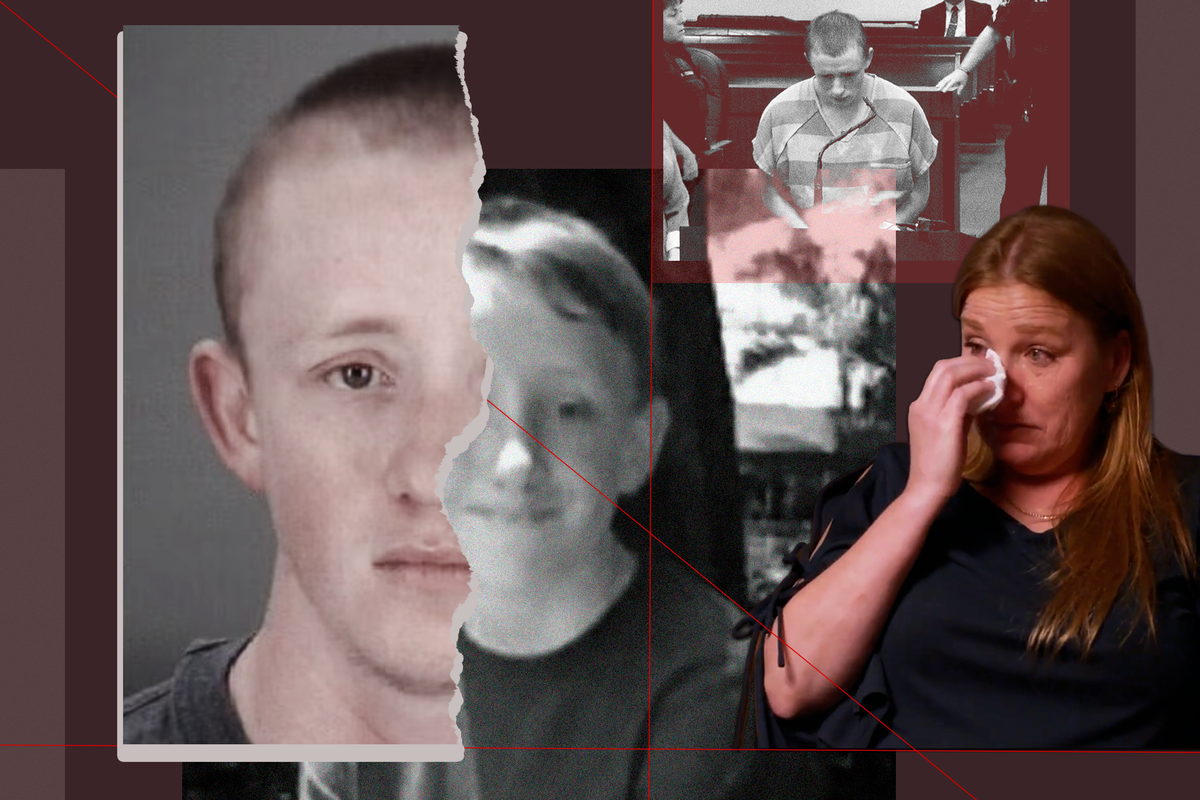
A mother knows the exact weight of her child. She knows the specific pitch of a feverish cry and the way their eyes shift when they’re hiding a broken vase. But what happens when that intuition suggests something darker than a lie about a broken dish? What happens when the "off" feeling in your gut points toward a soul-shattering confession?
Most people think of criminal profiling as something reserved for the FBI or seasoned detectives. They imagine dark rooms and maps pinned with red string. In reality, the most effective profiler in the world is often the person who sat at the breakfast table with the suspect for twenty years. When we look at cases where a son confesses a heinous act to his mother, the story isn't just about the crime itself. It’s about the agonizing period of "knowing without knowing" that precedes the admission.
The Silence Before the Storm
Intuition isn't magic. It's actually a form of rapid-fire pattern recognition. Your brain stores thousands of micro-behaviors about the people you love. When a son stops making eye contact or starts pacing the floor at 3:00 AM, a mother’s brain flags those as "out of bounds" data points. In the case of the mother who knew something was wrong before her son confessed to murder, she wasn't seeing a monster. She was seeing the absence of the person she raised.
Psychologists often refer to this as "thin-slicing." We make incredibly accurate judgments based on very small windows of experience. For a parent, this thin-slicing is constant. You notice the change in appetite. You hear the tremor in a voice that's usually steady. In many high-profile violent crimes, the families later admit they felt a "shift" weeks or months prior. They didn't have a name for it yet, but the atmosphere in the home had turned cold.
Why Confessions Happen at Home
It seems counterintuitive. If you've committed the ultimate sin, why tell the one person whose opinion matters most? Why break the heart of the person who gave you life?
The answer lies in the unique psychological safety of the parent-child bond. For a suspect, the weight of a secret is a physical burden. The human psyche isn't built to hold the knowledge of a killing in isolation. Eventually, the pressure needs an outlet. They go to their mother because she represents the last vestige of unconditional acceptance. Even in the face of the unthinkable, there’s a desperate hope that "Mom will know what to do."
We see this pattern repeatedly in criminal history. Take the case of Herbert Mullin or even the complex dynamics in the Kaczynski family. While David Kaczynski was the one to turn in his brother Ted (the Unabomber), the realization began with family members noticing a deviation from the person they knew. The home is the only place where the mask truly slips.
Navigating the Impossible Choice
When that confession finally comes, a mother is thrust into a nightmare with no "right" exit. You're suddenly balancing two identities: the protector of your child and a member of a moral society.
Most people claim they’d immediately call the police. It sounds easy when you’re watching a true-crime documentary on your couch. It’s vastly different when the person crying on your kitchen floor is someone you taught to tie their shoes. There’s a period of shock that can look like complicity to an outsider, but it’s actually the brain's refusal to integrate two conflicting realities.
- The Denial Phase: "He’s joking. He’s high. He’s just looking for attention."
- The Rationalization Phase: "It must have been self-defense. Someone pushed him."
- The Shattering: The realization that the victim had a mother, too.
The Biological Reality of Parental Blindness
There's a reason we struggle to see the worst in our offspring. Oxytocin, the hormone responsible for bonding, actually dampens the "threat assessment" part of our brain when dealing with loved ones. It’s a biological survival mechanism. If we saw our children as objectively as we see strangers, the species probably wouldn't survive the toddler years.
This "parental blindness" isn't a character flaw. It’s a neurological reality. When a mother finally breaks through that chemical fog and recognizes her son is a danger, it represents a massive triumph of logic over instinct. It's an act of incredible bravery that often gets overlooked by a public eager to blame the parents for the child's actions.
Dealing with the Aftermath of the Truth
Once the confession is public and the handcuffs are on, the mother's trauma is just beginning. Society loves to hunt for the "bad mother." We want to find the moment she failed so we can reassure ourselves that our own children would never do such a thing. We look for the "broken home" or the "neglectful upbringing."
But the reality is far more terrifying. Sometimes, there is no "why." Sometimes, the wiring is just wrong. The mother has to live with the guilt of "not seeing it sooner," even if there was nothing to see. She becomes a secondary victim of the crime, losing her child to the justice system and her reputation to the court of public opinion.
What to Do If Your Gut Is Screaming
If you’re in a position where you feel something is deeply wrong with a family member’s mental state or behavior, don't wait for a confession. Intuition is a lead, not a conviction.
- Document the changes. Don't just rely on a "feeling." Note the dates when behaviors changed. Is it sleep? Is it aggression? Is it a new obsession?
- Externalize the secret. Talk to a professional—a therapist or a lawyer—who is bound by confidentiality. The "off" feeling grows in the dark. Bringing it into the light helps you see if the shadows are actually dangerous.
- Prioritize safety. If you suspect violence is possible, your role as a "protector" must extend to yourself and the community, not just the suspect.
The hardest part of being a parent isn't the sleepless nights with a newborn. It's the moment you realize your child is an adult capable of choices you can't fix. Trust your gut. It’s been calibrated over a lifetime to keep you safe.