The air in Edinburgh usually carries a specific weight in the early hours. It is a mix of North Sea salt, the damp breath of ancient sandstone, and the predictable, comforting hum of a city waking up to its own history. In the neighborhood of Morningside, this rhythm is a religion. It is a place of Victorian villas, high-achieving schools, and the kind of quiet streets where the most disruptive sound is usually a delivery van or a neighbor’s lawnmower.
Then came the morning when the rhythm broke.
It started with a flash of steel and a scream that didn’t belong in the Tuesday sunshine. We often think of tragedy as something that happens elsewhere—in the distant peripheries of our lives or on flickering television screens. We don't expect it to manifest at the end of a suburban driveway, gripped in the hands of a man who has slipped through the cracks of a world we thought was safe.
The Anatomy of a Shuttered Street
On an ordinary morning, the walk to school is a series of small, cherished rituals. You check for lunchboxes. You argue about untied laces. You notice the way the light hits the Pentland Hills in the distance. But for the parents and children near the Hermitage of Braid, the ritual was violently interrupted.
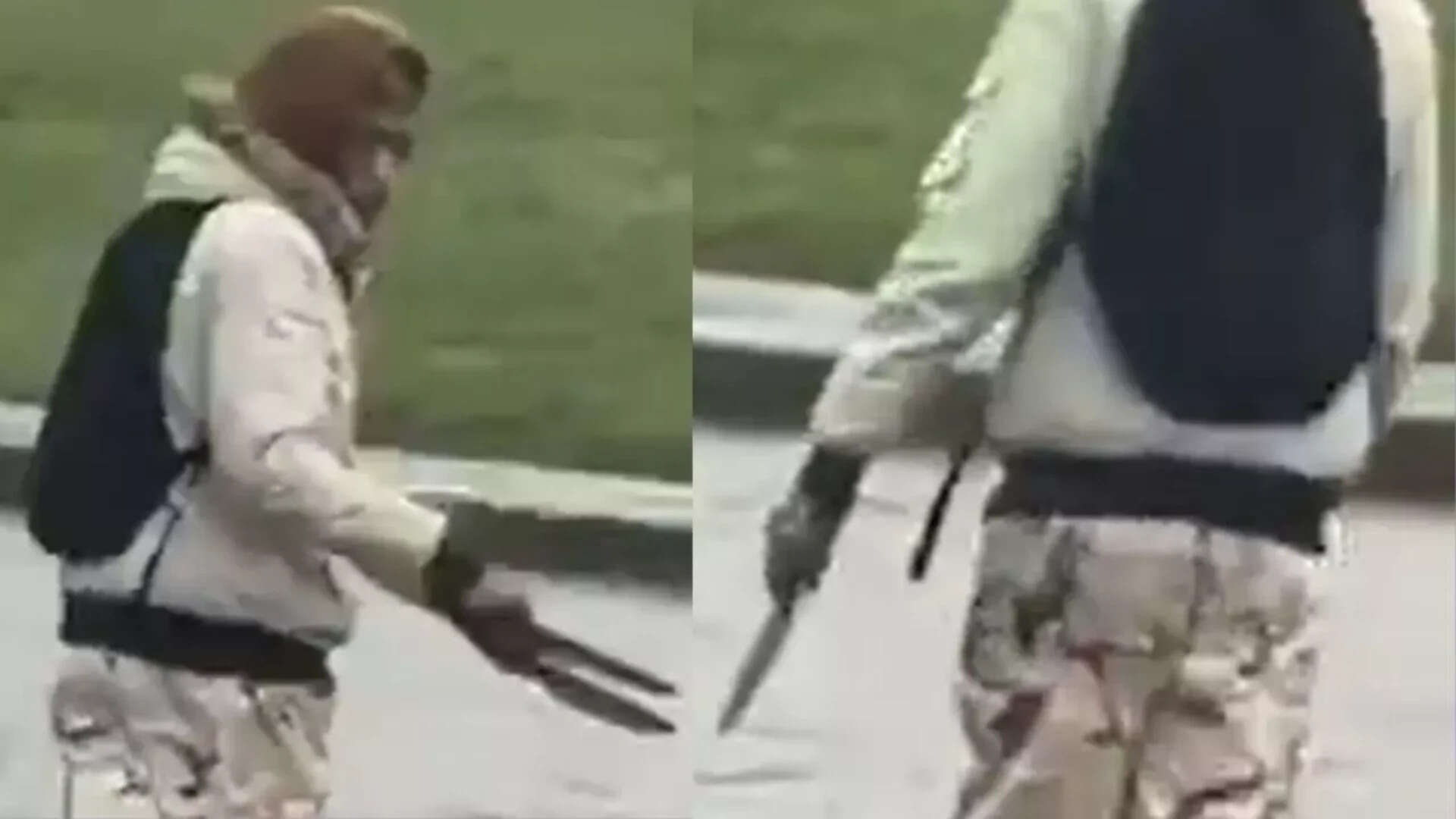
The reports were jagged and terrifying. A man, reportedly armed with knives already stained with blood, was moving through the streets. This wasn't a choreographed movie scene. This was raw, chaotic, and terrifyingly close.
Two people were injured. In the clinical language of a police report, "injured" can mean many things. It can mean a scratch, or it can mean a life changed forever by a moment of inexplicable violence. In this case, the wounds were physical, but the psychic trauma rippled outward, touching every person who had to lock their front door and wonder if the glass was thick enough.
Consider the immediate, instinctive pivot of a community under threat. St Peter’s RC Primary and other local institutions didn't just close their doors; they became fortresses. Imagine being a teacher in that moment. You are trained to foster curiosity and explain the world, but suddenly your primary job is to hide the world. You have to look into the eyes of thirty children and tell them that everything is fine while you are clicking the deadbolt into place.
The Invisible Stakes of a Lockdown
When a school goes into lockdown, the silence is heavy. It isn't the silence of a library; it is the silence of held breath.
There is a specific, cold fear that settles in the gut of a parent when the "Emergency Notification" light flickers on their phone. You aren't thinking about statistics or the rarity of such events. You are thinking about the exact desk where your child sits. You are thinking about the route you took that morning and whether you saw him—the man with the knives. Did you pass him? Did you look him in the eye?
The police response was swift, a blue-and-white blur against the grey stone of the Southside. They cordoned off the streets, turning a neighborhood into a crime scene. Officers draped in high-visibility vests stood where children usually played hopscotch. This is the visual dissonance of modern life: the mundane and the monstrous occupying the same square inch of pavement.
But the story isn't just about the man or the knives. It’s about the fragility of the peace we take for granted. We build our lives on the assumption of a social contract—that we can walk to the bakery, send our kids to school, and return home without encountering a nightmare. When that contract is torn, even for a few hours, the healing takes much longer than the stitches in a hospital ward.
The Shadow in the Green Spaces
The Hermitage of Braid and Blackford Hill are the lungs of South Edinburgh. They are places of sanctuary, where dogs chase tennis balls and joggers find their stride. To have that sanctuary violated by such a visceral display of violence feels like a personal affront to every resident.
Metaphorically, it is as if the forest itself turned hostile.
We find ourselves asking the same questions every time the peace is shattered. How did he get there? What led a human being to stand in the light of day with blood on his hands? While the investigation will eventually provide a timeline and perhaps a motive, those facts often feel hollow. They don't fill the hole left by the loss of security.
Police eventually made an arrest. The "threat" was neutralized, as the official statements like to say. But you can't neutralize a memory. You can't un-ring the bell of a school lockdown.
The Weight of the Aftermath
In the days following the attack, the streets of Morningside began to return to their usual patterns. The cordons were lifted. The blood was washed from the pavement. The schools reopened their gates, and the sound of children playing once again drifted over the stone walls.
Yet, there is a subtle change. You see it in the way neighbors linger a little longer at their gates to talk. You see it in the way parents hold their children’s hands just a bit tighter during the morning commute. We are reminded that safety is not a permanent state; it is an active, ongoing effort of community and vigilance.
We live in a world where the unexpected can arrive with the morning post. We are vulnerable, and perhaps acknowledging that vulnerability is the only way to truly appreciate the quiet mornings that go exactly as planned.
The man with the knives is gone from the street, but he remains a shadow in the collective mind of the city. He is a reminder of the thin line between a Tuesday morning and a tragedy. As the sun sets over the Braid Hills, the light turns a deep, bruised purple. The birds in Morningside are singing again, but the song sounds different now. It sounds like a prayer for the ordinary.
The doors are unlocked, but the bolts are oiled, just in case.