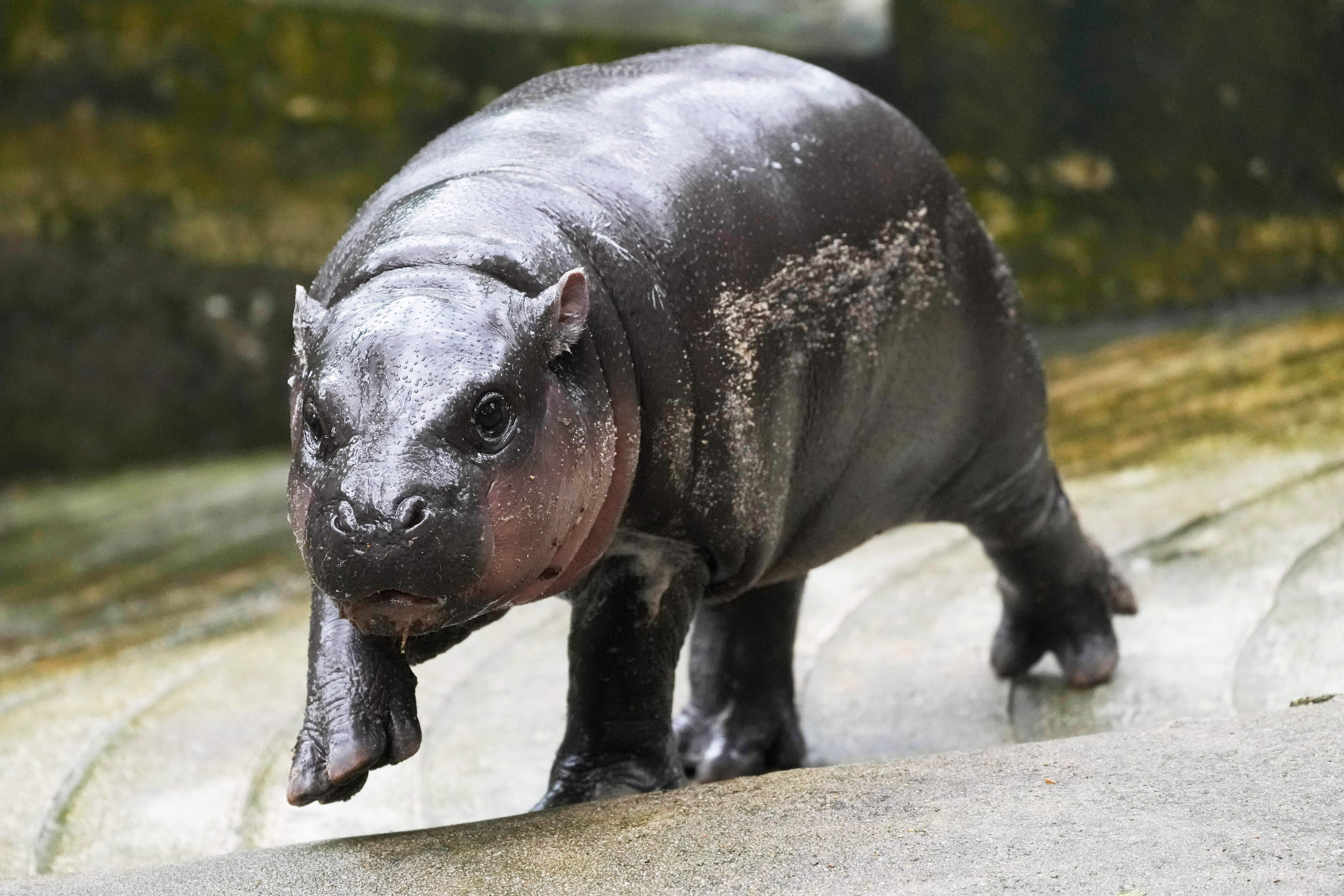
The internet’s obsession with a baby pygmy hippo was never about conservation. It was about consumption. When a man allegedly hopped the fence at Khao Kheow Open Zoo to get closer to Moo Deng, the collective internet gasped in performative horror. They called for higher fences, more guards, and harsher sentences. They are wrong.
This isn’t a story about a security lapse. It’s a story about the inevitable byproduct of turning a wild animal into a digital meme. When you strip a creature of its biological reality and repackage it as a "chonky" dopamine hit for millions of doom-scrollers, you invite the exact boundary-breaking behavior we just witnessed. The intruder didn't just break a law; he followed the logical conclusion of the "cute-aggregation" economy.
The Myth of the Sacred Barrier
Standard reporting treats zoo enclosures as impenetrable sanctums. In reality, they are psychological contracts. Most zoo infrastructure—especially in older or open-concept facilities—relies on the visitor’s willingness to remain an observer. I have worked with facility managers who admit that if a human truly wants to bypass a standard glass or rail barrier, they will do it before a guard can blink.
The problem isn’t the height of the wall. It’s the erosion of the "distance" between the viewer and the viewed.
When a video of Moo Deng goes viral, the viewer feels a false sense of intimacy. Psychologists call this a parasocial relationship, usually reserved for YouTubers or celebrities. But when applied to a hippo, it becomes a dangerous delusion. The intruder likely didn't see himself as a criminal; he saw himself as a "fan" claiming his rightful access to the content he’s been consuming daily.
The High Cost of Viral Conservation
Zoos are currently trapped in a "Moo Deng Paradox." They need the viral fame to drive ticket sales and funding for actual conservation work. However, that same fame creates a hyper-stimulated environment that is fundamentally incompatible with animal welfare.
- The Attention Tax: Thousands of people screaming at a nocturnal-leaning species causes cortisol spikes that no amount of "enrichment" can fix.
- The Main Character Syndrome: In a world where every moment is a potential TikTok, the animal is no longer a biological entity. It’s a prop.
- The Copycat Effect: By focusing the narrative on the "arrest" rather than the systemic issue of animal commodification, we ensure the next person will try it for the "clout."
If you think a five-meter wall is the solution, you don't understand human nature. We’ve seen this in Yellowstone with tourists trying to "pet" bison and in Harambe’s tragedy. The barrier that failed wasn't made of steel. It was the barrier of respect that usually separates the domestic from the wild.
Stop Blaming the Guard at the Gate
Every time a breach happens, the first head to roll is the security lead. This is lazy. I’ve seen organizations spend millions on biometric access and thermal cameras while ignoring the fact that their marketing department is actively encouraging the behavior that leads to breaches.
You cannot post "Moo Deng’s Daily Mood" videos every three hours and then act surprised when a human tries to interact with the "brand."
Let’s be brutally honest about the biology people are ignoring:
- Pygmy hippos are not "dogs." They are highly territorial, unpredictable, and possess a bite force that can snap bone like dry kindling.
- Moo Deng’s "cuteness" is a human projection. To her, a man in her enclosure is a predatory threat or a territorial rival.
- The "viral" nature of the animal makes it a target for people with severe mental health issues or those seeking infamy.
The Solution Nobody Wants to Hear
If we actually cared about the hippo, we would stop filming her.
We would return to a model of "boring" conservation where animals exist for their own sake, not for our engagement metrics. But we won't do that. The zoo needs the money. The public needs the distraction.
Instead of building higher fences, zoos should implement a "Social Media Tax." If an animal goes viral, a portion of the revenue should go toward immediate, aggressive physical barriers that treat the public as the threat they have proven to be. We need to stop pretending that "education" is happening at these enclosures. It’s a concert, and the animal is a rockstar who never signed a contract.
We don't need "better" security. We need a fundamental shift in how we perceive our right to access nature. Until we stop treating animals as interactive digital assets, people will keep jumping fences. And next time, the hippo might be the one who ends the "content" permanently.
The man was arrested, but the culture that sent him over the fence is still being fed one "like" at a time.
Get off the livestream and let the animal be an animal.