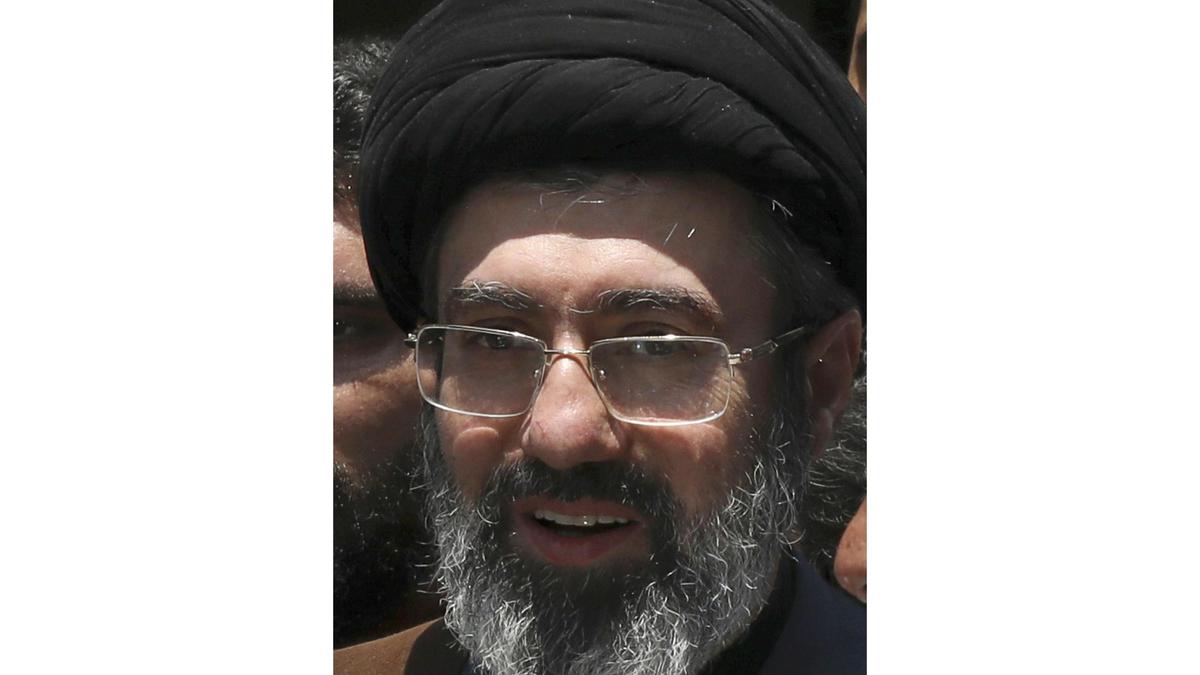
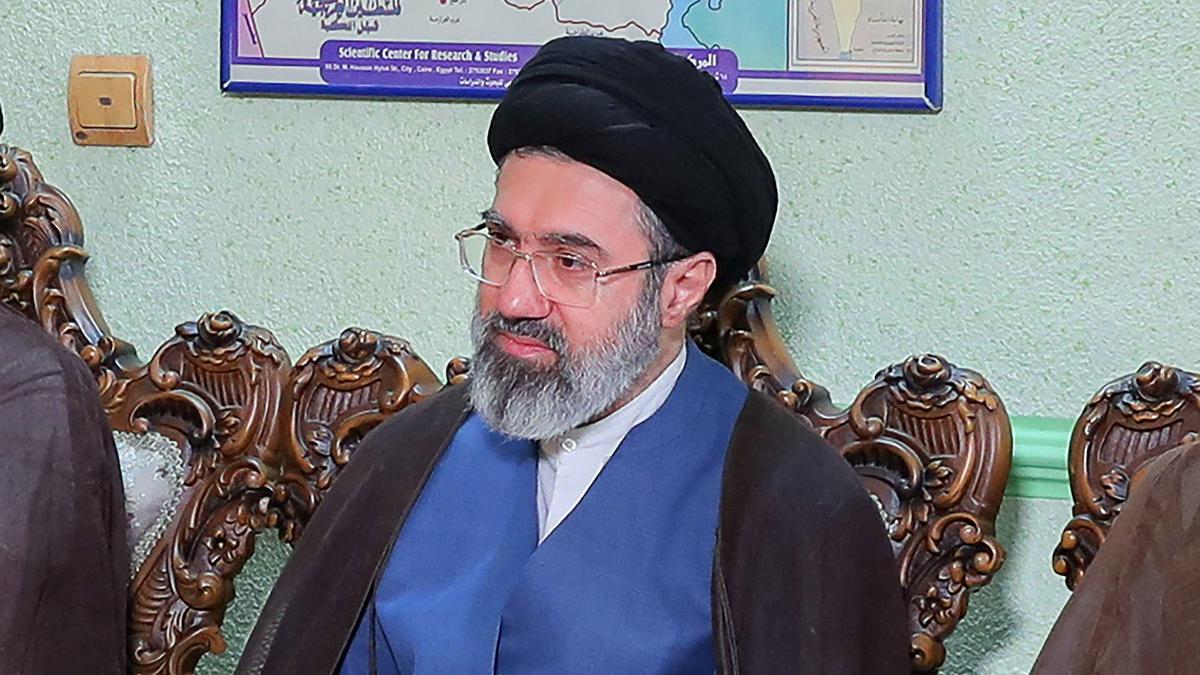
The shadow finally stepped into the light. For decades, Mojtaba Khamenei was the man everyone whispered about but no one actually saw on a ballot. That changed with the official transition. The announcement that he's succeeding his father, Ali Khamenei, as the Supreme Leader of the Islamic Republic isn't just a family promotion. It’s a total overhaul of the Iranian power structure.
If you’ve been following Middle Eastern politics, you know this wasn't supposed to happen this way. The Islamic Republic was built on the idea of rejecting hereditary monarchy. That was the whole point of the 1979 Revolution. By installing the son of the previous leader, the regime has essentially admitted that the "republic" part of its name is a secondary concern compared to survival.
The death of the republican myth
Iran’s political system is a weird, clunky hybrid. You have a presidency and a parliament, which gives a thin veneer of democracy. But the real power sits with the Office of the Supreme Leader. For years, the Assembly of Experts—the body responsible for choosing the leader—insisted they would pick the most qualified cleric. They didn't. They picked the son.
This move tells us two things. First, the inner circle doesn't trust anyone outside the immediate family to maintain the status quo. Second, the influence of the Islamic Revolutionary Guard Corps (IRGC) is now absolute. Mojtaba has spent years building deep, unbreakable ties with the Guard’s intelligence apparatus. He isn't just a cleric; he’s their guy.
The optics are terrible for a regime that spent forty years mocking the Shah for his "Peacock Throne." By choosing Mojtaba, the leadership has signaled that loyalty to the bloodline outweighs the revolutionary principles they used to preach. It’s a desperate play for stability in a country that’s seen nothing but protests and economic decay for years.
Why the IRGC pushed for the son
You can't talk about Mojtaba without talking about the IRGC. They aren't just a military branch. They’re a massive conglomerate that controls everything from construction firms to telecommunications. They need a Supreme Leader who won't rock the boat or, heaven forbid, try to make peace with the West in a way that threatens their business interests.
Mojtaba has been the gatekeeper for his father for at least a decade. If you wanted a meeting with the Supreme Leader, you went through Mojtaba. If you wanted a major policy shift, Mojtaba had to sign off. He’s been running a "shadow government" while his father’s health declined. The IRGC likes him because he’s a known quantity. He’s "their" prince.
This transition effectively merges the clerical establishment with the military elite. It’s a hardline consolidation. Don't expect any "thaw" in relations with the outside world. This is a fortress mentality.
The street won't take this lightly
The Iranian people are tired. They’ve dealt with the "Woman, Life, Freedom" protests, a tanking rial, and a government that seems more interested in regional proxy wars than fixing the electricity grid. Seeing a hereditary succession is a slap in the face to every person who has marched for change.
The regime is betting that Mojtaba’s reputation for ruthlessness will keep people off the streets. He was famously linked to the crackdown on the 2009 Green Movement. People remember that. He’s not a charismatic populist. He’s a backroom operator who knows how to use the security forces to silence dissent.
But there’s a limit to how much fear can do. When you remove the hope of even a small political opening, you back people into a corner. We aren't looking at a peaceful new era. We're looking at a pressurized cooker where the lid has been welded shut.
A regional shift in the works
Tehran’s neighbors are watching this with a mix of dread and pragmatism. For Israel and Saudi Arabia, Mojtaba represents a continuation of the "Axis of Resistance." There’s zero evidence he’ll scale back support for Hezbollah, the Houthis, or militias in Iraq. In fact, he might double down to prove his "revolutionary" credentials early on.
Washington has basically lost its leverage. The old guard of "pragmatists" within Iran—people like former President Rouhani—have been completely sidelined. There is no one left to talk to. Mojtaba’s Iran is likely to be more insular, more paranoid, and more reliant on its alliance with Russia and China.
What happens now
The transition period is always the most dangerous time for a regime. Keep an eye on the following signals to see if Mojtaba can actually hold the chair.
- The Assembly of Experts' public stance: Watch for any dissenting voices among the senior clergy. Even a small crack in the religious establishment could embolden protesters.
- The exchange rate: The market usually knows before the pundits do. If the rial goes into a freefall, it means the merchant class has lost faith in the transition.
- Internal IRGC purges: Mojtaba will likely move to replace any generals who aren't 100% loyal to him personally.
- Regional aggression: A common tactic for new leaders is to provoke a foreign crisis to distract from domestic instability.
If you’re waiting for a moderate Iran to emerge, you’ll be waiting a long time. Mojtaba Khamenei isn't a reformer. He’s a survivalist. His primary goal is to ensure the system survives another forty years, even if he has to burn the "republic" to the ground to do it. The dynasty is here. The only question is how long the Iranian public will let it stand.
Start paying closer attention to the state-run media outlets like IRNA and Fars News. The language they use to describe Mojtaba in the coming weeks will tell you exactly how they plan to sell this "monarchy" to a skeptical public. Look for the shift from "Hojatoleslam" to "Ayatollah"—the religious promotion he needs to justify his new title.