The international media is currently obsessed with a script that feels more like a Shakespearean drama than actual statecraft. The headlines scream about the rise of Mojtaba Khamenei as an "unacceptable" heir, spurred on by comments from a returning Trump administration. They paint a picture of a binary choice: a hereditary clerical monarchy or a total collapse of the Iranian state.
They are wrong.
By focusing on the personality of Mojtaba, analysts are missing the structural reality of how power actually functions in Tehran. This isn't about one man's "acceptability" to Washington. It’s about the institutional hardening of the Islamic Revolutionary Guard Corps (IRGC) and the fact that the office of the Supreme Leader is being redesigned in real-time to serve as a figurehead for a military junta.
The Fallacy of the "Unacceptable" Heir
When Western leaders label a foreign successor "unacceptable," they operate under the delusion that their disapproval carries weight within the internal vetting processes of a hostile theocracy. In reality, external condemnation is the ultimate localized endorsement.
The "lazy consensus" suggests that Mojtaba Khamenei is a weak candidate because he lacks the religious credentials of his father or the late Ebrahim Raisi. Critics point to his mid-level clerical standing as a disqualifier. This ignores the last forty years of Iranian history. Ali Khamenei himself was elevated to the position despite not being a Marja (a grand ayatollah) at the time of his appointment. The constitution was simply amended to fit the political necessity.
The obsession with Mojtaba’s "acceptability" ignores the "Deep State" mechanics of the Assembly of Experts. This body doesn't look for a charismatic visionary; they look for a guarantor of the status quo. If Mojtaba is the choice, it is because he is the ultimate insider who can bridge the gap between the aging clerical elite and the hyper-nationalist IRGC commanders who actually hold the keys to the armories.
The IRGC is Not an Instrument—It is the State
Most reports on the "day 10" of the current escalations treat the IRGC as a tool of the Supreme Leader. This is an outdated map of the terrain.
I have watched analysts for decades try to separate the "political" wing of the Iranian government from its "military" wing. It’s a distinction that doesn't exist. The IRGC manages an estimated 30% to 50% of the Iranian economy. They own the construction firms, the telecommunications hubs, and the black-market oil routes.
- The Economic Moat: Any successor, whether it is Mojtaba or a dark horse candidate, must sign off on the continued enrichment of the Guard.
- The Proxy Paradox: The "offensive" against Israel is not just a theological crusade; it is a stress test for the IRGC’s regional supply chains.
When Trump or any other Western figure weighs in on the succession, they are talking to a ghost. The next Supreme Leader will be the first "Manager-in-Chief" of a military-industrial complex that has outgrown the need for a charismatic holy man.
Stop Asking if the Regime Will Fall
The most common question in "People Also Ask" sections and cable news panels is: "Is this the beginning of the end for the Islamic Republic?"
It’s the wrong question. It assumes that regimes die when they become unpopular. History shows us that regimes die when they lose the will to shoot. The current Iranian leadership has shown zero hesitation in that department.
The real question is: "How does the regime survive the transition to a post-clerical identity?"
We are witnessing the slow-motion transformation of Iran from a theocracy into a praetorian state. The religious symbols remain, but the underlying logic is purely securitized. By fixating on Mojtaba's personal flaws or his "acceptability" to the West, we ignore the fact that the system is successfully insulating itself against popular domestic uprisings by integrating the military into every facet of civilian life.
The Offensive is a Distraction
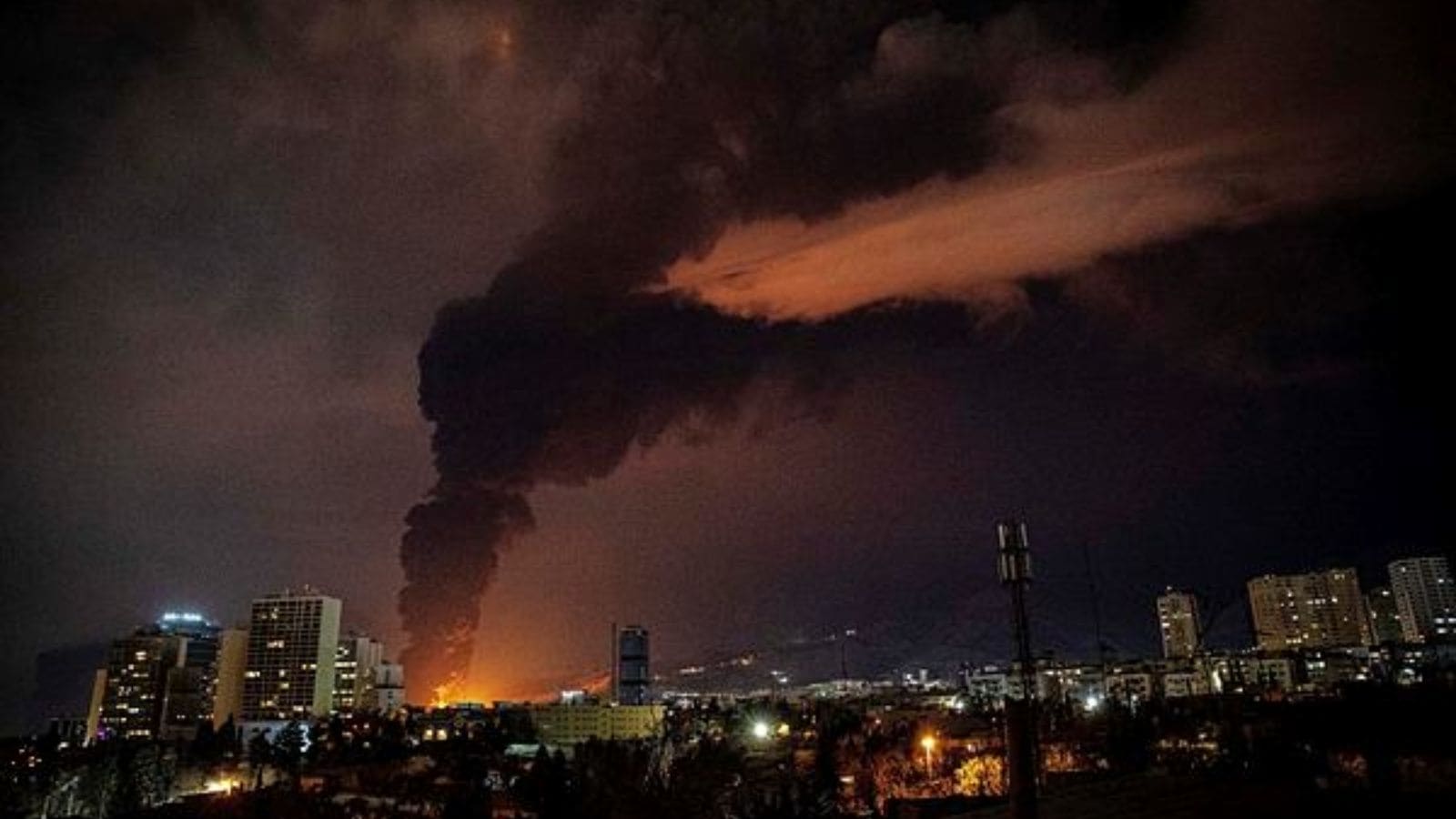
The reported "ramping up" of offensives against Israel is frequently framed as a sign of strength or a desperate lunge by a cornered beast. Neither is entirely accurate.
These escalations serve a specific internal function: Cohesion through conflict. During a succession crisis—which is exactly what Iran is in, despite the official denials—nothing keeps the various factions of the IRGC and the traditional military (Artesh) aligned like an external existential threat. The attacks are not designed to win a war in the traditional sense; they are designed to prevent an internal coup.
If you are waiting for a "moderate" to emerge from the shadows to save the day, you haven't been paying attention. The "moderate" faction was systematically dismantled during the 2009 and 2022 protests. The remaining elite are either the hardliners or the harder-liners.
The Trump Factor
The Trump administration's "Maximum Pressure" campaign is often credited with weakening the Iranian economy. It did. But it also had a secondary effect that the current narrative misses.
Economic sanctions did not destroy the IRGC. They destroyed the Iranian middle class.
The very people who could have been a democratic vanguard were the ones most impoverished by the collapse of the Rial. Meanwhile, the IRGC—which controls the smuggling routes—actually grew its relative power within the Iranian ecosystem. By labeling Mojtaba "unacceptable," Trump is playing into the hands of the regime’s propaganda machine, which paints any opposition to the Khamenei family as an imperialist plot.
The Western consensus that Mojtaba is the "worst-case scenario" is equally flawed. A weak, unpopular hereditary leader might actually be the most manageable outcome for a West that wants to see the regime's internal contradictions collapse. A more competent, populist IRGC-backed candidate could be a far more formidable adversary.
The Succession is Already Over
We are treating the succession as a future event. It is happening now.
Every strategic decision—from the drone swarms launched at Israeli cities to the internal purging of the "moderate" pragmatists—is a component of the transition. The Supreme Leader's health is a state secret, but the regime’s behavior is an open book.
- The IRGC is securing its assets.
- The judicial system is eliminating internal rivals.
- The diplomatic corps is doubling down on the Russia-China axis.
If Mojtaba Khamenei is named, it won't be a coronation. It will be a merger. A merger between the dwindling legitimacy of the 1979 Revolution and the raw, kinetic power of the 21st-century Iranian security state.
Stop looking for a "moderate" savior. Stop believing that a Western veto can prevent the inevitable. The Iranian regime is not a house of cards waiting for a stiff breeze. It is a fortress that has spent forty years reinforcing its walls.
The "unacceptable" choice is already here, and he isn't asking for permission.