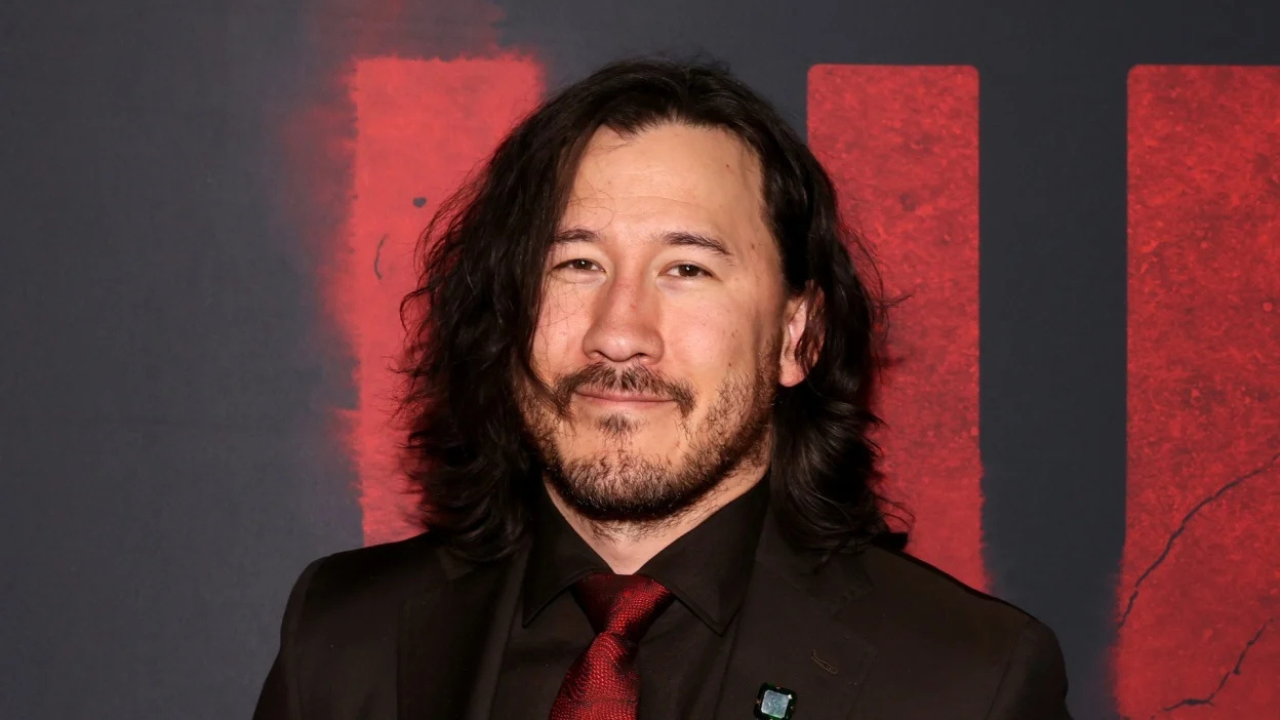
The festival circuit loves a redemption arc. Every year, critics gather in the South of France to crown a new savior of cinema, projecting high-art reinvention onto actors who are simply running standard career maintenance. The latest collective delusion out of Cannes surrounds Paper Tiger and its lead, Miles Teller. The trades are breathless. They are calling it a radical departure, a shocking revelation, and the birth of a brand-new Teller.
They are entirely wrong. Don't forget to check out our previous post on this related article.
What the consensus misses is that Paper Tiger is not a departure at all. It is a symptom of a deeper, systemic exhaustion within modern filmmaking. For fifteen years, the industry has tried to figure out what to do with Teller’s specific brand of hyper-masculine, friction-heavy energy. Instead of breaking new ground, this latest project merely recalibrates the exact same archetype he has played since Whiplash.
Hollywood is running out of traditional leading men who can carry a mid-budget drama on sheer, unvarnished intensity. The industry is so desperate to sustain the illusion of the gritty, compromised anti-hero that it mistakes a change of wardrobe for a change of depth. If you want more about the history of this, The Hollywood Reporter offers an excellent breakdown.
The Fallacy of the Radical Departure
To understand why the praise for Paper Tiger is built on quicksand, look at the mechanics of the performance. The current critical consensus argues that Teller is showing a vulnerability previously unseen in his work.
Look closer. The performance relies on the exact same psychological architecture as his roles in Bleed for This, Top Gun: Maverick, and The Offer. The blueprint is always the same: a stubborn, highly skilled individual operating under extreme pressure, masking internal turmoil with a prickly, defensive exterior.
In Paper Tiger, the character simply directs that aggression inward rather than outward. That is not a reinvention. That is a basic acting adjustment.
I have spent two decades sitting in development meetings where executives mistake a character’s misery for an actor’s range. If a character cries, screams at a mirror, or sits in a dimly lit room staring into the middle distance, the industry treats it as a dramatic breakthrough. It is the easiest trick in the book. True range requires an actor to dismantle their core screen persona entirely. Teller does not dismantle his persona; he doubles down on it.
The Economics of the Alpha Archetype
The film industry faces a massive talent deficit. The superhero boom of the last two decades hollowed out the mid-tier star system. Actors were cast for their ability to fit into a pre-existing costume, not their ability to hold a frame in a close-up. Consequently, we have a generation of actors who excel at green-screen choreography but falter when asked to deliver five pages of heavy dialogue.
Teller is one of the few remaining actors under forty who carries old-school, analog star power. He possesses a specific, physical gravitas that cannot be manufactured by a personal trainer or a CGI department.
Because that commodity is incredibly rare, the industry cannot afford to let him change. Financiers do not back a Miles Teller movie because they want to see him play a sensitive, effeminate intellectual. They back a Miles Teller movie because they want the threat of violence. They want the jawline tension. They want the chip on the shoulder.
Paper Tiger exists because indie financiers need a recognizable anchor to pre-sell foreign rights. The film’s gritty aesthetic is not an artistic choice; it is a marketing strategy designed to make traditional masculine tropes palatable to an upscale, festival-going audience. It wraps a conventional star vehicle in the prestige packaging of European art house cinema.
Dismantling the Performance Architecture
Let's break down the actual craft on display, separating the performance from the PR narrative.
Standard film criticism operates on emotion. Professional evaluation operates on mechanics. When you analyze the physical choices in Paper Tiger, the illusion of a new direction evaporates completely.
- Vocal Cadence: Teller uses the same flat, rhythmic, blue-collar delivery he utilized in Only the Brave. He drops the pitch of his voice to convey gravity, a standard technique to simulate maturity.
- Physical Posture: The character is written as defeated, yet Teller’s physical presence remains rigidly athletic. The tension in his shoulders belongs to a man who just left a boxing gym, not a man crushed by the weight of existential despair.
- Emotional Transference: The film relies heavily on reaction shots. When a director cuts to a tight close-up of an actor looking sullen, the audience projects their own meaning onto the blank canvas. This is basic Kuleshov Effect filmmaking, not transformative acting.
Compare this to genuine cinematic pivots. When Colin Farrell transitioned from Hollywood action lead to Martin McDonagh’s muse in In Bruges, he completely altered his physical language, his vocal pitch, and his willingness to look pathetic. He surrendered his vanity entirely.
Teller never surrenders his vanity. Even at his character’s lowest point in Paper Tiger, he retains the curated coolness of a movie star. The movie wants you to think it is examining weakness, but it is actually romanticizing it.
The Cost of the Safe Bet
There is a dark side to this cycle. By celebrating these safe, incremental adjustments as revolutionary art, critics actively discourage genuine risk-taking.
When an actor receives a standing ovation at Cannes for playing a slightly sadder version of their usual self, they receive a clear message: Do not change. The industry rewards consistency while pretending to reward bravery.
This creates a stagnation loop. Directors who want to make genuinely challenging films are forced to cast from the same small pool of bankable names, squeezing their complex characters into the narrow boxes those stars are comfortable occupying. The scripts get rewritten to accommodate the actor's established persona, the edge gets rounded off, and the final product becomes another predictable exercise in prestige melodrama.
We are told that Paper Tiger represents a high-water mark for American independent film this year. If a standard-issue star vehicle with a somber color palette is the best we can do, the creative tank is completely empty.
Stop grading these performances on a curve. Stop mistaking a scruffy beard and a downbeat soundtrack for a profound artistic evolution. Hollywood does not need another movie about a brooding man finding his soul through suffering, and it certainly does not need to pretend that an established star doing his job is a miracle. The industry is dying for actual originality, but as long as we keep buying the repackaged old stuff, that is exactly what they will keep selling us.