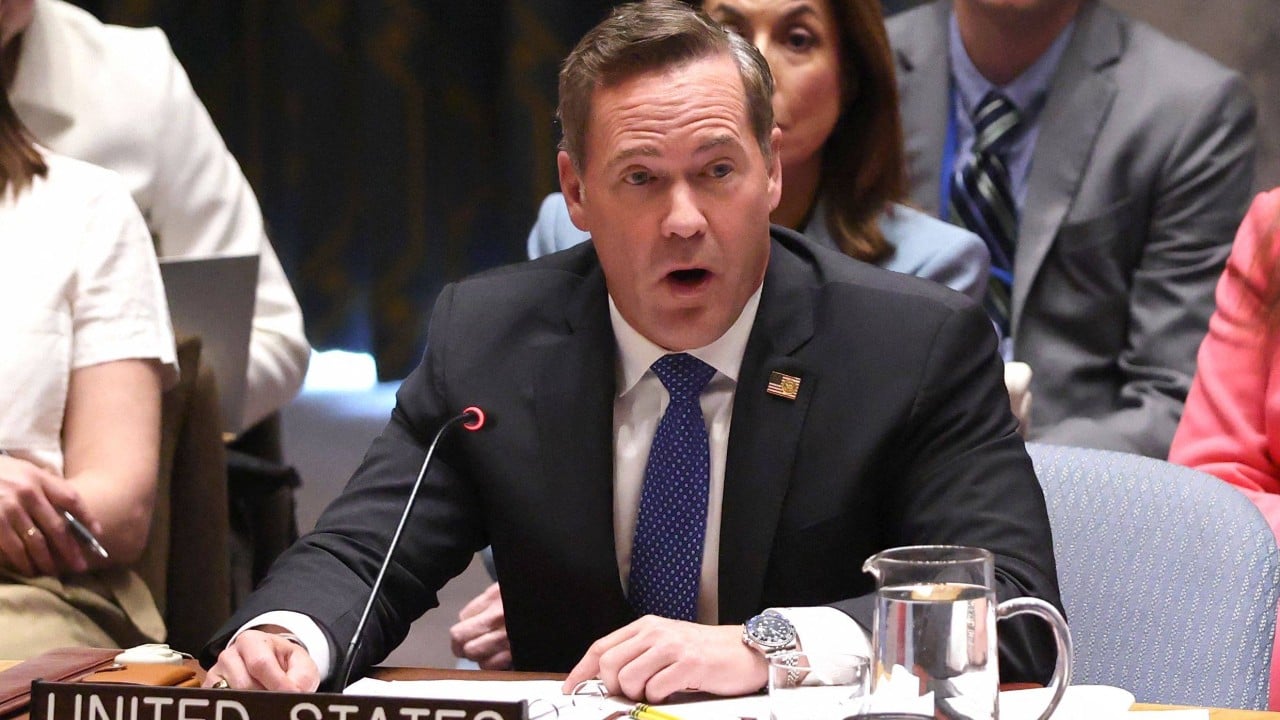
The United States is preparing to fundamentally reset its relationship with the United Nations, moving from a role as its primary benefactor to its most aggressive auditor. Mike Waltz, the incoming National Security Advisor, has signaled a shift that views international funding not as an obligation of global leadership, but as a transaction that must yield direct benefits to American interests. This "America First" doctrine aims to dismantle decades of automatic spending, replacing it with a rigorous, performance-based model that could leave several UN agencies facing an immediate existential crisis.
For years, the UN has operated under a predictable rhythm of American largesse. The U.S. currently accounts for roughly 22 percent of the UN’s core budget and nearly 27 percent of its peacekeeping costs. Waltz, a combat veteran and staunch critic of multilateral bureaucracy, views these figures as a strategic vulnerability rather than a badge of honor. He isn't just looking to trim the fat; he is looking to rewrite the contract.
The Mechanics of the Funding Freeze
The primary weapon in the new administration's arsenal is the power of the purse, specifically targeted at voluntary contributions. While "assessed contributions" are technically treaty obligations, the U.S. has a long history of withholding funds to force internal reforms. Waltz has indicated that the era of the blank check is over.
The strategy involves a two-pronged attack on the UN's financial structure. First, the administration plans to freeze funding for agencies that are perceived as harboring anti-American sentiment or failing to meet transparency standards. Second, it will push for a shift from mandatory assessments to a "pay-as-you-go" system for specific programs. This effectively turns the UN into a cafeteria where the U.S. only pays for the items it wants to consume.
This isn't just about saving money. It is about influence. By threatening the financial lifeline of specific programs, the U.S. gains a level of leverage that diplomatic speeches can never achieve. If an agency wants American dollars, it must align its mission with American priorities.
Peacekeeping Under the Microscope
Peacekeeping operations represent the largest single expense for the UN, and they are squarely in the crosshairs. Waltz has been vocal about the inefficiency of long-standing missions that seem to have no exit strategy. In places like South Sudan and the Democratic Republic of Congo, billions have been spent over decades with questionable results on the ground.
The American argument is straightforward. If a mission cannot define a clear path to success or a definitive end date, it should not receive American funding. This puts pressure on the UN Security Council to authorize more aggressive, time-limited mandates. However, the risk is a security vacuum. If the U.S. pulls back its 27 percent share, other nations are unlikely to fill the gap. The result could be a rapid withdrawal of blue helmets from volatile regions, potentially sparking the very conflicts the missions were designed to prevent.
The business side of this is equally stark. UN peacekeeping relies on a complex supply chain involving logistics, aviation, and medical services. A sudden contraction in funding would hit contractors and troop-contributing countries—often developing nations that rely on UN reimbursements to fund their own domestic militaries.
The Human Rights Council and the Question of Membership
One of the most contentious areas of the Waltz-led overhaul involves the UN Human Rights Council (UNHRC). Critics in Washington have long pointed out the irony of a human rights body that includes members with abysmal domestic records. Waltz views the council not as a forum for progress, but as a platform for adversaries to shield themselves from scrutiny while attacking the U.S. and its allies.
Withdrawal is a distinct possibility, but the more likely path is a total defunding of the U.S. portion of the council’s budget. This mirrors the previous administration’s moves, but with a more permanent intent. The goal is to delegitimize the body until it undergoes structural changes that bar human rights abusers from holding seats.
The counter-argument from the diplomatic corps is that leaving the table only cedes more ground to competitors. When the U.S. retreats, others step in to fill the void, often rewriting the rules of international human rights to suit their own authoritarian agendas. Waltz, however, seems to believe that no table is better than a rigged one.
WHO and the Ghost of the Pandemic
The World Health Organization (WHO) remains a flashpoint. The fallout from the COVID-19 pandemic and the perceived influence of foreign adversaries over the organization’s early response have made it a prime target for budget cuts. The U.S. is currently the largest donor to the WHO, providing hundreds of millions annually.
Waltz’s approach to global health is focused on bilateral partnerships rather than multilateral bureaucracies. The administration believes that the U.S. can achieve better outcomes by dealing directly with nations or through regional blocs where it has more control over how funds are spent. This shift would fundamentally alter the WHO’s ability to coordinate global responses to future outbreaks.
The risk here is a fragmented global health landscape. Without a centralized body to share data and coordinate vaccine distribution, the world could find itself less prepared for the next pathogen. For the incoming administration, that risk is outweighed by the need to stop funding an organization they believe is fundamentally compromised.
The Push for Voluntary Funding
The ultimate goal of the Waltz strategy is to move the entire UN toward a voluntary funding model. Currently, the UN’s core operations are funded by assessments based on a country's wealth. Waltz argues that this system is outdated and unfair, as it forces the U.S. to pay for programs it actively opposes.
Under a voluntary model, every UN program would essentially have to pitch itself to the U.S. State Department every year. This would create a competitive environment where only the most effective and politically aligned programs survive. While this sounds efficient on paper, it creates massive instability for long-term projects like climate monitoring or refugee assistance, which require multi-year planning and predictable cash flows.
UN officials argue that a voluntary system would lead to the "Balkanization" of international aid. Programs that are popular with donors would be flush with cash, while critical but "unsexy" work—like administrative oversight or legal standards—would starve.
The Ripple Effect on Global Diplomacy
The U.S. shift isn't happening in a vacuum. Other nations are watching closely. If the U.S. successfully reduces its burden without losing its veto power on the Security Council, other major powers might follow suit. Conversely, if the U.S. loses influence because of its financial retreat, it may find itself increasingly isolated on the world stage.
There is also the matter of the UN headquarters itself. While there is no immediate plan to move the UN out of New York, the rhetoric surrounding the organization’s value often touches on the costs associated with hosting it. For Waltz and his allies, the UN’s presence on American soil is a privilege the organization has failed to earn through its performance.
The diplomatic community in New York is already in a state of high anxiety. The prospect of a National Security Advisor who views the UN with such skepticism suggests that the coming years will be defined by confrontation rather than cooperation. This isn't just about a budget; it's about a fundamental disagreement on the value of the international order established after 1945.
Reforming the Internal Bureaucracy
Beyond the high-profile agencies, the Waltz plan targets the UN’s internal administrative costs. The organization has long been criticized for its "golden parachutes," high salaries, and lack of accountability. Previous attempts at reform have often been bogged down by the UN’s own complex rules.
Waltz intends to use the threat of a total funding cutoff to force through changes that have been stalled for decades. This includes streamlining the civil service, eliminating redundant agencies, and implementing independent audits that are not controlled by the UN itself.
The challenge is that the UN is a collective of 193 member states. Changing the rules requires more than just American will; it requires a majority or, in some cases, a consensus. By taking such a hardline stance, the U.S. risks alienating the very allies it needs to pass these reforms.
The Strategy of Disruption
The appointment of Mike Waltz signals that the U.S. is no longer interested in the slow, incremental reform of the UN. Instead, the administration is opting for a strategy of disruption. By creating a financial crisis, they believe they can force the organization to modernize and refocus on its core missions.
This is a high-stakes gamble. If the UN breaks under the pressure, the U.S. could find itself without the international tools it needs to manage global crises. However, from the perspective of the "America First" movement, the current system is already broken. They see no point in continuing to fund a machine that they believe often works against American interests.
The coming months will see a series of budget battles in the Senate, where Waltz’s vision will be translated into legislative action. The focus will be on specific line items: the UN Relief and Works Agency (UNRWA), climate change initiatives, and various human rights bodies. Each cut will be a message to the international community that the U.S. is serious about its new direction.
The Cost of the New Strategy
Cutting the UN budget provides immediate political wins at home. It appeals to a base that is skeptical of international entanglements and eager to see tax dollars spent domestically. However, the long-term costs are harder to quantify. The UN provides a framework for everything from international postal standards to civil aviation rules. If the core of the organization is weakened, these invisible threads of global commerce could begin to fray.
Furthermore, the U.S. uses the UN as a burden-sharing mechanism. When the UN takes the lead on a humanitarian crisis or a peacekeeping mission, it means American troops and American resources aren't the only ones on the line. By pulling back, the U.S. might ironically find itself forced to intervene more often on a bilateral basis, which can be far more expensive and politically taxing than working through a multilateral framework.
The "Waltz Doctrine" at the UN is essentially an attempt to apply private-sector bankruptcy restructuring to a global diplomatic body. It assumes that the threat of liquidation will force the stakeholders to accept terms they have previously rejected.
The UN has survived previous U.S. administrations that were hostile to its mission, but it has never faced a critic with the specific combination of legislative knowledge and executive power that Waltz brings to the table. The financial siege has begun, and the organization that emerges on the other side will likely be smaller, more cautious, and significantly more attuned to the demands of its largest, and now most demanding, donor.
The era of American diplomacy through donation has ended; the era of diplomacy through audit has arrived. Prepare for a leaner, more transactional United Nations, or a world where the organization ceases to be the center of global governance.
Demand a line-item veto on global stability and see if the world can afford the price of American withdrawal.