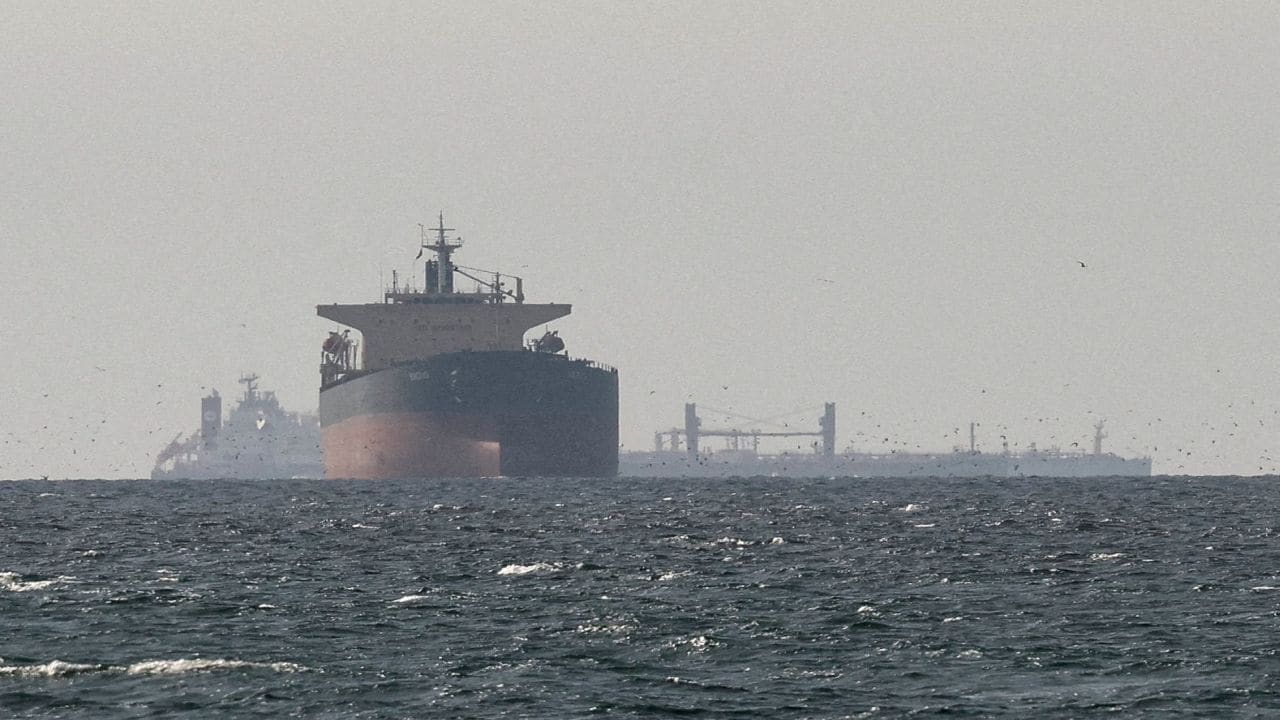
The seizure or kinetic targeting of commercial vessels in the Strait of Hormuz is rarely an end in itself; it is a calculated deployment of asymmetric leverage designed to reset the terms of international negotiation. When Iran engages in maritime interference, it is not merely complicating diplomatic efforts—it is executing a specific doctrine of "calibrated escalation" intended to force a choice between economic stability and political concessions. The friction created in these waters serves as a physical manifestation of a deadlock in the Joint Comprehensive Plan of Action (JCPOA) framework, signaling that if Iranian oil cannot flow freely due to sanctions, the global energy supply chain will incur a proportional risk premium.
The Triad of Maritime Escalation
To understand the strategic logic behind these attacks, one must deconstruct the operational objectives into three distinct pillars of influence.
1. The Economic Risk Premium as Diplomatic Currency
Shipping lanes are the nervous system of global trade, and the Strait of Hormuz is its most vulnerable ganglion. Approximately 20% of the world’s liquid petroleum gas and oil consumption passes through this 21-mile-wide chokepoint. By initiating an attack, Iran introduces a Volatility Tax on the global economy. This tax manifests through:
- Hull and Machinery (H&M) Insurance Spikes: War risk premiums can increase tenfold following a single kinetic event, forcing shipping conglomerates to lobby their home governments for a de-escalation of tensions.
- Supply Chain Latency: Rerouting vessels or implementing "slow steaming" to wait for naval escorts disrupts just-in-time delivery models for refineries in East Asia and Europe.
- Brent Crude Speculation: The mere perception of a threat adds a geopolitical "fear premium" to oil prices, which Iran uses to demonstrate that Western sanctions have a global cost function.
2. Domestic Legitimacy and Hardline Consolidation
In the internal theater of Iranian politics, maritime assertiveness serves to validate the IRGC’s (Islamic Revolutionary Guard Corps) doctrine of "Active Resistance." These actions provide a tangible counter-narrative to the perceived humiliation of economic sanctions. By demonstrating the ability to project power against Western-linked assets, the leadership reinforces its position among the domestic security apparatus, ensuring that any return to the negotiating table is perceived as an act of strength rather than a capitulation to external pressure.
3. The "Tit-for-Tat" Reciprocity Framework
Most maritime incidents in the region are not isolated; they are reactive. Analysis of historical data shows a direct correlation between the seizure of Iranian tankers (or the freezing of Iranian assets) and subsequent "interdictions" in the Strait. This creates a Negative Feedback Loop where Western enforcement of sanctions triggers a kinetic response, which then creates a "complication" for diplomats who are simultaneously trying to decouple nuclear non-proliferation from regional security issues.
Operational Mechanics: Why The Strait of Hormuz is Defensively Compromised
The geography of the Strait provides a structural advantage to a littoral power using unconventional means. The navigable channels are narrow, forcing deep-draft tankers into predictable transit lanes.
The Cost-Asymmetry Ratio
The primary challenge for Western naval forces (such as those in the International Maritime Security Construct) is the disparity in the cost of engagement. Iran utilizes Swarm Tactics and Loitering Munitions—low-cost assets that require high-cost defensive responses.
- Asset Disparity: A $20,000 drone or a fast-attack craft costing $50,000 can effectively disable a $150 million commercial tanker or force a $2 billion destroyer to expend a $2 million interceptor missile.
- Saturation Limits: In a narrow corridor, the sheer volume of small-craft traffic makes it impossible for automated sensory arrays to distinguish between a legitimate fishing vessel and a disguised kinetic platform until the terminal phase of an attack.
This creates a Saturation Bottleneck. Even with superior technology, the defender must be right 100% of the time, while the aggressor only needs to succeed once to trigger a global headlines-driven market reaction.
The Diplomatic Friction Point: Decoupling vs. Linkage
The fundamental failure of recent diplomatic efforts lies in the disagreement over "Linkage." The United States and its E3 allies (UK, France, Germany) have historically attempted to isolate the nuclear file from Iran’s regional activities. Iran, however, uses maritime attacks to force Issue Linkage.
The Deadlock of Preconditions
When a ship is attacked, the immediate Western response is often the imposition of further targeted sanctions or the deployment of additional naval assets. From a game-theory perspective, this creates a Stalemate Equilibrium:
- Iran attacks to gain leverage for sanctions relief.
- The West increases sanctions/military presence to punish the attack.
- The Risk Profile increases, making the political cost of "concessions" higher for Western leaders who cannot be seen rewarding "piracy."
This sequence ensures that the diplomatic "on-ramp" is constantly being destroyed by the very actions intended to force its opening. The attack is a signal that the "status quo" of sanctions is more painful to Iran than the "risk of escalation" is to the West—until a kinetic event proves otherwise.
Quantifying the Strategic Impact on Global Energy Security
The vulnerability of the Strait of Hormuz is often discussed in binary terms—either it is open or it is closed. However, the reality is a spectrum of Managed Friction. Iran does not seek to close the Strait permanently, as doing so would invite a total military response and cripple its own limited exports. Instead, it seeks to modulate the level of "insecurity."
The Elasticity of Transit Risk
The effectiveness of using ship attacks as a diplomatic tool depends on the global oil market's elasticity.
- High Supply Environments: When global reserves are high and demand is low, a single tanker attack may barely move the needle on Brent Crude.
- Low Supply/High Demand: In periods of energy scarcity, a single drone strike becomes a "force multiplier" for Iranian diplomatic demands, as the economic consequence of a full-scale disruption becomes existential for energy-importing nations.
The current geopolitical climate, characterized by the displacement of Russian energy and high inflation in the West, has made the "Hormuz Variable" more potent than it has been in a decade.
Tactical Miscalculations and the Risk of "Unintended Escalation"
While the doctrine of calibrated escalation is designed to stay below the threshold of full-scale war, it relies on a flawed assumption: the ability to control the opponent's perception of "proportionality."
The "Black Swan" Kinetic Event
The primary risk is not a planned war, but a tactical error during a "low-level" harassment operation. A missile that strikes a crew's quarters instead of the hull, or a stray mine that hits a high-tonnage passenger vessel, would shift the conflict from a "maritime dispute" to a "casus belli." This is the Threshold Paradox: Iran must make the attacks threatening enough to gain leverage, but if they are too effective, they trigger the very military intervention that ends their leverage.
Strategic Intelligence Gaps
There is a persistent hypothesis that the IRGC acts with a degree of autonomy that can occasionally outpace the diplomatic timeline of Tehran’s foreign ministry. This internal "decoupling" means that even as diplomats are drafting language for a return to talks, the kinetic arm of the state may be executing an operation that renders those drafts politically toxic in Washington or Brussels.
The Structural Realignment of Regional Alliances
The instability in the Strait has accelerated a shift in regional security architecture. The Abraham Accords and the subsequent normalization of ties between Israel and several Gulf states are not merely about trade; they are a response to the "Hormuz Threat."
- Integrated Air and Sea Defense: The move toward a shared "security umbrella" among regional players aims to mitigate the IRGC’s asymmetric advantage.
- Infrastructure Bypass: The development of pipelines like the Habshan–Fujairah line in the UAE or Saudi Arabia’s East-West Pipeline is a direct attempt to lower the "Strategic Value" of the Strait. However, these pipelines currently lack the capacity to fully replace the maritime volume, leaving the "Hormuz Lever" intact for the foreseeable future.
Strategic Play: The Path to De-escalation
To break the cycle of maritime attrition, a shift from Punitive Deterrence to Incentive Alignment is required. The current strategy of "maximum pressure" met by "active resistance" has reached a point of diminishing returns.
The next logical move for the international community is to establish a Maritime Hot-Line—a direct de-confliction channel between the operational commanders in the Gulf and the IRGC. This would not be a diplomatic concession, but a tool for "Strategic Clarity" to prevent a tactical error from triggering a global energy crisis. Simultaneously, the JCPOA negotiations must acknowledge that maritime security is no longer a peripheral issue; it is the primary theater where the pressure of sanctions is being redirected.
The Western powers must choose between a "Comprehensive Security Framework" that includes maritime conduct or a "Nuclear-Only" focus that will continue to be sabotaged by the kinetic realities of the Strait. Until the economic "Cost Function" of the sanctions is addressed, the Strait of Hormuz will remain a laboratory for asymmetric warfare, where every commercial vessel is a potential bargaining chip in a high-stakes geopolitical poker game.
The most effective counter-measure is not more destroyers, but the systematic reduction of the "Fear Premium" through diversified energy transit and a clearly defined, non-negotiable "Red Line" regarding civilian casualties—backed by a credible, multi-national kinetic response that targets the infrastructure used to launch these attacks rather than just the assets involved. This creates a "Certainty of Response" that overrides the "Calibrated Escalation" model currently favored by Tehran.