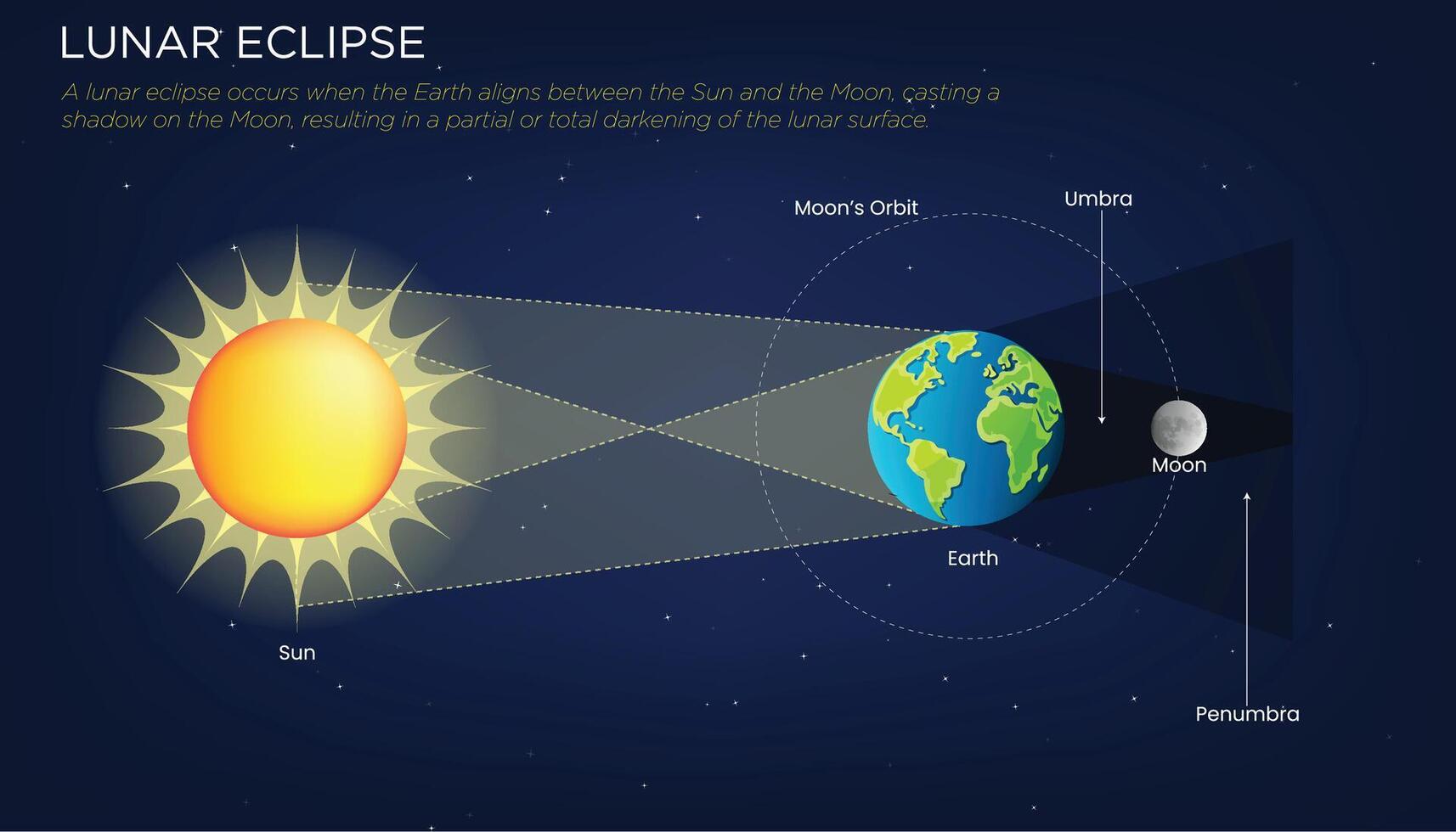
The timing of Eid Al Fitr hinges on a binary astronomical event: the birth of the new moon and its subsequent visibility to the naked eye. While basic reporting focuses on specific dates, the underlying reality is governed by a rigorous interplay of celestial mechanics and local atmospheric conditions. For 2026, calculations indicate that the moon will be born on March 18 at approximately 21:22 UTC. Because this birth occurs after sunset in the Gulf region, the first opportunity for physical sighting falls on the evening of March 19.
This creates a distinct deterministic path for the Sultanate of Oman. The astronomical lag—the time between the moon's birth and the sunset observation window—dictates whether the month of Ramadan will span 29 or 30 days.
The Three Determinants of Lunar Sighting
The transition from Ramadan to Shawwal is not a matter of subjective opinion but a result of three measurable variables that define the "sighting probability" at any given geographic coordinate.
1. The Elongation Factor
Elongation is the angular separation between the sun and the moon as seen from Earth. For the human eye to distinguish the thin sliver of a waxing crescent, the elongation must typically exceed the Danjon Limit, generally accepted as $7^\circ$ to $8^\circ$. If the angle is smaller, the crescent is physically too thin to reflect enough sunlight to overcome the atmospheric glare. On March 19, the elongation in Muscat will reach approximately $11^\circ$ to $12^\circ$, placing it comfortably within the range of theoretical visibility.
2. The Lag Time Variable
Lag time represents the duration the moon remains above the horizon after the sun has set. This period is critical because it allows the sky to darken sufficiently for the faint lunar light to become visible. A lag time of less than 20 minutes makes a sighting nearly impossible without high-powered telescopic assistance. In Oman on March 19, the moon is expected to set roughly 50 to 55 minutes after the sun, providing a robust window for official observation committees.
3. Altitude and Azimuth
The moon’s height above the horizon at sunset—its altitude—determines the thickness of the atmosphere the light must penetrate. Lower altitudes result in "extinction," where the atmosphere scatters the light so severely that the object disappears. On the evening of March 19, the moon will maintain an altitude of roughly $10^\circ$ at sunset. This height, combined with an azimuth (horizontal position) slightly to the left of where the sun disappeared, provides a clear spatial target for observers.
Structural Divergence Between Calculation and Sighting
The rift in lunar calendars often stems from a lack of clarity regarding "possibility" versus "actualization." Oman maintains a stringent protocol that prioritizes the Sunnah of physical sighting while utilizing astronomical data to filter out false reports. This creates a two-tier verification system:
- The Negative Filter: If calculations show the moon has not been born or has set before the sun, any claim of a sighting is discarded as a physical impossibility.
- The Positive Verification: If calculations show the moon is above the horizon, field teams use coordinates provided by the Ministry of Endowments and Religious Affairs (MERA) to attempt a visual confirmation.
Because the data for March 19 shows the moon will be well above the horizon with sufficient elongation, the probability of a successful sighting is high. This points to Friday, March 20, as the first day of Eid Al Fitr.
The Impact of Atmospheric Turbidity
Data-driven predictions often fail to account for "Aerosol Optical Depth" (AOD). In the Gulf, dust, humidity, and pollutants can artificially raise the horizon or create a haze that obscures a $1%$ illuminated crescent.
$I = I_0 e^{-m\tau}$
The equation above represents the Beer-Lambert Law, where $I$ is the observed intensity of the moon. Even if the astronomical geometry is perfect, a high value for $\tau$ (optical depth) can nullify a sighting. This is why Oman’s reliance on a network of observers across different latitudes—from Musandam to Dhofar—is a strategic necessity. If the northern atmosphere is compromised by humidity, the clearer skies of the interior or the south act as a redundancy.
Geopolitical and Economic Synchronization
The determination of Eid Al Fitr is not merely a religious milestone but a massive logistical trigger for the Omani economy. The announcement initiates a sequence of events across the public and private sectors:
- Labor Market Halts: The official holiday period usually spans from the 29th of Ramadan through the 3rd of Shawwal. A confirmed sighting on March 19 results in a holiday start on March 20.
- Liquidity Spikes: Historical data shows a 15-25% increase in cash withdrawals and digital transactions in the 72 hours preceding the sighting, as households finalize "Eidiya" (gift-giving) and feast preparations.
- Transport Flux: National carriers and road networks experience peak loads. A fixed astronomical expectation allows the Royal Oman Police (ROP) and transport authorities to pre-allocate resources for the mass migration of residents from Muscat to their home wilayats.
The Margin of Error in Traditional Sighting
Despite the precision of modern ephemeris data, the "Human Variable" introduces a degree of uncertainty. The Omani moon-sighting committee employs high-altitude cameras and telescopes to augment human vision. However, if thick cloud cover persists across all observation points on March 19, the Sultanate will follow the jurisprudential rule of completing 30 days of Ramadan. This would shift Eid to Saturday, March 21.
While the astronomy suggests a March 20 start, the operational reality depends on the lack of a "Total Atmospheric Obstruction" event. Analysts should treat March 20 as the 95% probability baseline, with March 21 as the 5% contingency.
Governments and regional businesses should calibrate their logistics for a March 20 start, ensuring that payroll processing and supply chain deliveries for perishable goods are completed no later than March 18 to avoid the total cessation of commercial activity. Organizations must maintain a "Day 30" contingency plan for staffing, but primary resource allocation should be directed toward a three-day holiday cycle beginning Friday.
Would you like me to generate a specific timeline of the expected public sector holiday dates based on the current Omani labor laws for 2026?