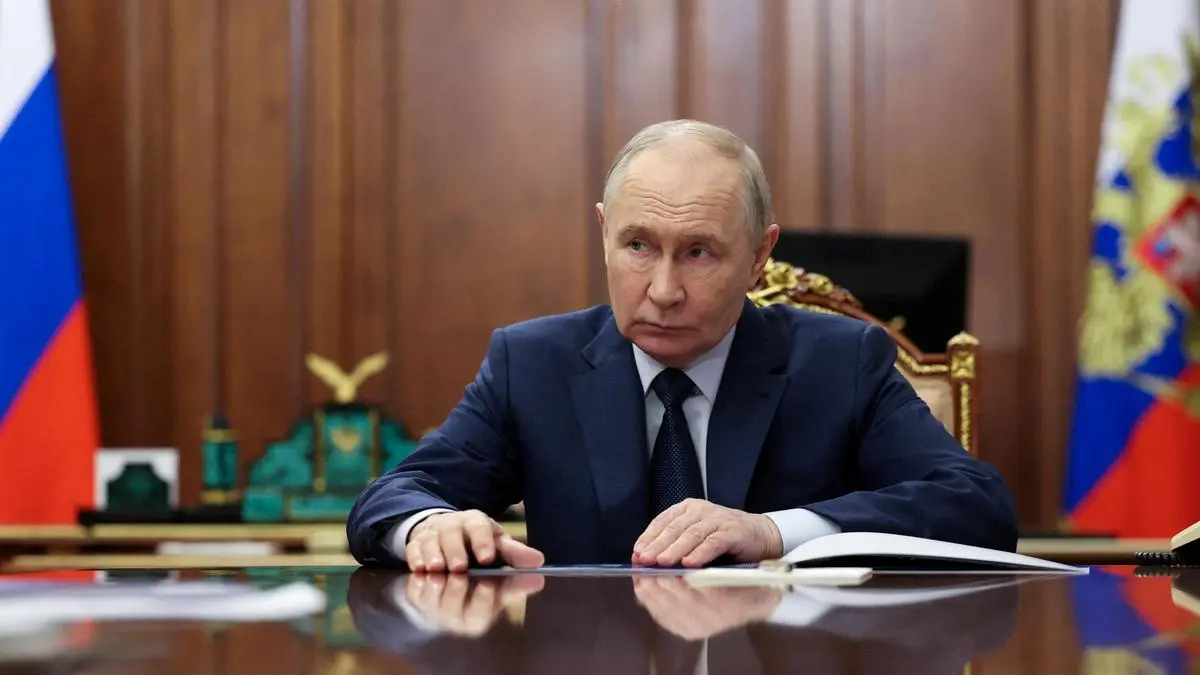
Vladimir Putin’s confirmed attendance at the BRICS summit in India marks a definitive shift from symbolic defiance to the operational restoration of Russian diplomatic mobility. This is not a routine diplomatic visit; it is a calculated stress test of the Western-led isolation framework and a validation of India’s "strategic autonomy" doctrine. The presence of the Russian head of state in New Delhi creates a friction point between International Criminal Court (ICC) mandates and the sovereign priorities of the Global South, effectively devaluing the currency of Western sanctions through the physical presence of their primary target in a major democratic capital.
[Image of the BRICS member nations map]
The Triple Constraints of Russian Diplomacy
The Kremlin’s decision to commit to a physical appearance involves a complex calculus of risk and utility. To understand the gravity of this move, one must analyze the three specific constraints Russia is attempting to bypass:
- Legal Encumbrance: While India is not a signatory to the Rome Statute and therefore lacks a treaty-based obligation to honor ICC arrest warrants, the logistical transit of a Russian delegation involves overflight risks and refueling dependencies. By securing a safe passage to New Delhi, Russia proves that the ICC's "circle of exclusion" has a hard boundary at the borders of the non-aligned world.
- Information Asymmetry: Virtual participation in previous summits—such as the 2023 Johannesburg meeting—signaled a leader under siege. Physical presence restores the optics of parity with other global powers, specifically China and India. It forces Western media to report on the handshake rather than the absence.
- The Multi-Vector Bottleneck: Russia’s pivot to the East is often criticized as a slide into vassalage under Beijing. Strengthening the Moscow-New Delhi axis provides Russia with the necessary leverage to avoid a mono-polar dependence on the Chinese economy.
India’s Strategic Refusal to Choose
India’s role as the host is dictated by the "Multi-Alignment" framework, a policy that rejects the binary of Cold War-style blocks. New Delhi views the BRICS summit as a platform to reform global governance rather than an anti-Western insurgency. However, the optics of hosting Putin provide India with significant bargaining chips in its dealings with Washington.
The Indian government operates on the principle that its relationship with Russia is an "essential constant" for its defense architecture and energy security. The S-400 missile defense deal and the massive uptick in discounted crude oil imports are not merely transactions; they are structural dependencies that India will not liquidate to satisfy G7 directives. By hosting Putin, Prime Minister Modi signals that India’s foreign policy is not subject to external veto power. This creates a precedent where a nation can maintain a "Comprehensive Global Strategic Partnership" with the United States while simultaneously welcoming the West's chief antagonist.
The BRICS Financial Architecture as a Sanction Bypass
The summit’s technical agenda focuses on the "Three Pillars of De-dollarization," a structural attempt to insulate the Russian and Indian economies from the SWIFT-based financial system.
- Pillar I: Local Currency Settlement Systems (LCSS). The objective is to eliminate the "Double Conversion Friction" where rubles must be converted to dollars and then to rupees. This reduces transaction costs by 3% to 5% and removes the US Treasury’s visibility into the trade flow.
- Pillar II: The BRICS Bridge. This involves a cross-border digital payment platform. Unlike SWIFT, which is a messaging system, this proposed framework uses distributed ledger technology to ensure that once a payment is initiated, it cannot be intercepted or frozen by a third-party jurisdiction.
- Pillar III: Reinsurance Independence. A significant portion of global trade is halted not by direct sanctions, but by the refusal of Western firms to insure vessels carrying Russian cargo. The summit aims to formalize a BRICS-wide insurance pool, creating a closed-loop logistical environment.
The Cost Function of Global Isolation
The Western strategy of "Maximum Pressure" relies on the assumption that the costs of associating with Russia will eventually outweigh the benefits. Putin’s trip to India proves that for much of the world, this cost-benefit analysis is trending in the opposite direction.
The "Risk of Secondary Sanctions" is the primary deterrent the US employs. However, when an economy the size of India’s ignores these threats, the deterrent loses its edge. If the US were to sanction Indian banks for facilitating Putin’s visit or the associated trade deals, the resulting disruption to the global supply chain—specifically in pharmaceuticals and IT services—would cause a domestic inflationary spike in the West. This creates a "Mutually Assured Economic Destruction" scenario that effectively grants India, and by extension Russia, a degree of immunity.
Structural Realignment of the Defense Sector
A critical, though often understated, component of the visit is the maintenance of the Indian military's operational readiness. Approximately 60% to 70% of India’s defense hardware is of Soviet or Russian origin. The "Maintenance, Repair, and Overhaul" (MRO) lifecycle of these assets requires a constant flow of parts and technical expertise from Moscow.
The summit provides a high-level clearinghouse for resolving the "Rupee-Ruble Debt Trap." Russia currently holds billions in Indian rupees that it cannot easily spend or convert. A strategic outcome of this face-to-face meeting will likely be a "Directed Investment Protocol," where these trapped funds are channeled back into Indian infrastructure or joint defense ventures, such as the BrahMos missile program. This converts a financial liability into a long-term geopolitical asset.
The Erosion of the G7 Hegemony
The BRICS+ expansion (incorporating nations like Iran, Egypt, and the UAE) has changed the aggregate GDP of the bloc, now rivaling that of the G7 in terms of Purchasing Power Parity (PPP). Putin’s presence at the summit functions as a visual representation of this shift.
The Western narrative depicts the world as "The West vs. The Rest." The New Delhi summit reframes this as "The Unified West vs. The Diverse Global South." By participating, Putin is not just visiting an ally; he is taking a seat at the table of the world's most significant growth engine. This undermines the "Global Pariah" label. A pariah does not attend summits with the world's fastest-growing major economy.
Operational Logistics and Security Protocols
The security requirements for a Russian presidential visit during an active conflict are unprecedented. The "Kremlin Security Perimeter" in New Delhi will involve a layered approach:
- Signals Intelligence (SIGINT): Russia will likely deploy independent communication nodes to avoid local or Western interception of presidential traffic.
- Kinetic Deterrence: The arrival of the Il-96-300PU (the "Flying Kremlin") requires specialized airspace management to mitigate the risk of electronic warfare or physical interference.
- Diplomatic Immunity Hardening: India will provide "Sovereign Guest" status, which technically and legally supersedes any international claims, providing the physical security of the Russian delegation within the Indian capital's "Lutyens' Zone."
The Emerging "Neutrality Market"
The New Delhi summit demonstrates the birth of a "Neutrality Market," where middle powers like India, Brazil, and South Africa trade their non-aligned status for concessions from both sides. Russia offers cheap energy and military hardware; the West offers technology transfers and market access.
This creates a "Competitive Neutrality" environment. The more Russia courts India, the more the US feels compelled to offer "sweetener" deals, such as the GE F414 jet engine co-production agreement. Putin is aware that his presence increases India's value to the West, which paradoxically makes India a more stable partner for Russia.
The Strategic Play for 2026 and Beyond
The confirmation of Putin's attendance is the final nail in the coffin of the "Total Isolation" strategy. For global investors and strategists, the takeaway is clear: the global financial and diplomatic system is bifurcating.
The primary move for multinational entities is to prepare for a "Parallel Operating Environment." This means establishing redundant supply chains and financial pathways that do not intersect with US-controlled nodes. The New Delhi summit is the blueprint for this new architecture.
Western observers should expect a communique that emphasizes "Sovereign Equality" and "Multipolarity"—coded language for the rejection of unilateral sanctions. The strategic recommendation for Western policy houses is to pivot from "Isolate and Punish" to "Incentivize and Compete," as the former has reached its functional limit in the face of Indian defiance and Russian resilience. The battleground is no longer the exclusion of Russia, but the influence over the "Non-Aligned" powers who now hold the balance of global power.