The humidity in the Malaysian rainforest doesn't just sit on your skin; it breathes with you. It carries the scent of damp earth and the ancient, musk-heavy aroma of an elephant herd moving through the underbrush. To stand in the presence of a three-ton bull elephant is to feel a primal vibration in your chest—a reminder that we share this planet with living monuments.
But thousands of miles away, in the concrete sprawl of Japanese cities, that vibration is silent.
For decades, Malaysia has gifted its national treasures to Japan as symbols of diplomatic friendship. These were more than mere animals; they were ambassadors of the wild, sent to spark wonder in children who might never see a jungle. Now, the tide is turning. A growing movement within Malaysia is calling for these giants to come home, sparking a quiet but fierce debate about what we owe to the creatures we claim to love.
The Cold Weight of Concrete
Picture a young elephant named Anpan. In this hypothetical but representative scenario, she is born in the lush, emerald canopy of Pahang. She spends her early years learning the intricate language of rumbles and trunk-touches from her matriarch. Then, she is crated, shipped, and unloaded into a world of grey.
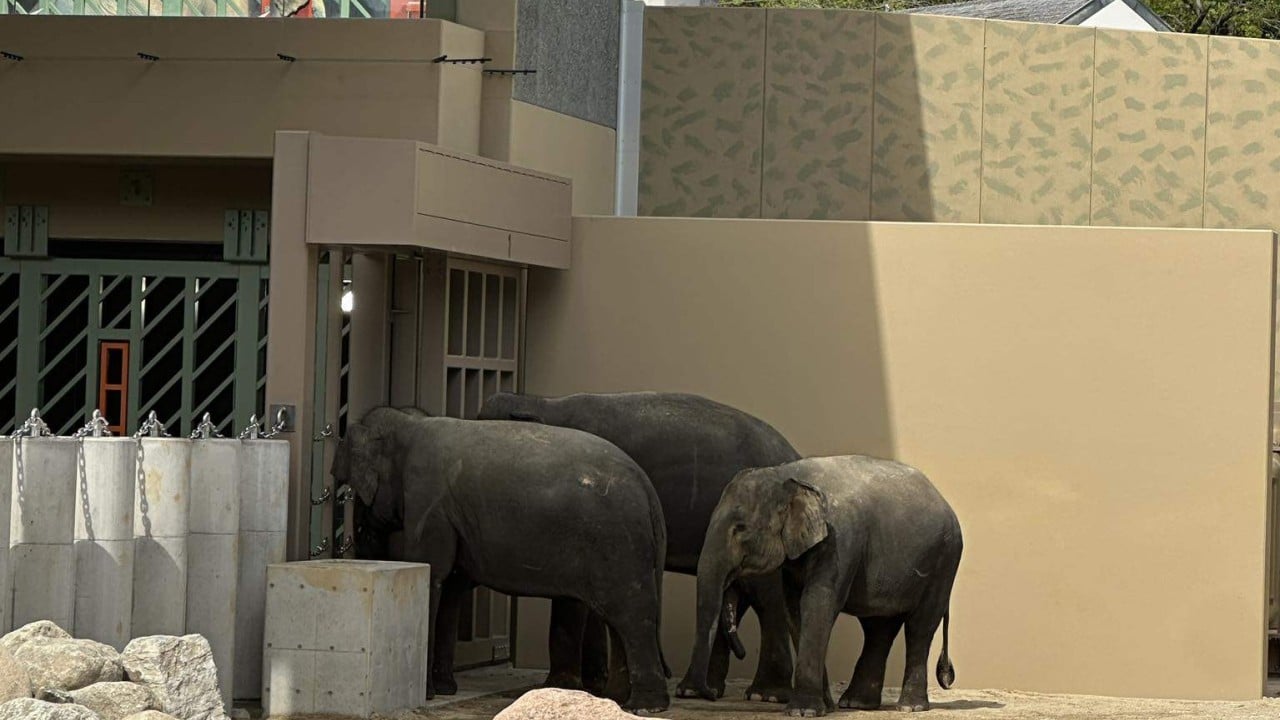
In Japan, the winters are biting. The ground beneath her feet is no longer soft loam and fallen leaves, but hard, unforgiving concrete. While Japanese zookeepers are often noted for their meticulous care and deep affection for their charges, the environment itself is a biological mismatch.
Elephants are nomadic by design. Their bodies are built to walk up to thirty miles a day, churning through vegetation and maintaining joint health through constant movement. When confined to a small enclosure in a temperate climate, the physical toll manifests in cracked footpads and arthritis. But the psychological toll is even heavier.
A Shift in the Global Conscience
The world has changed since the first "diplomatic elephants" arrived in Japan. We used to view zoos as living libraries where the collection was the priority. Today, the lens has shifted toward welfare and conservation.
Recent reports from animal advocacy groups have highlighted a stark reality: many elephants in Japanese zoos live in solitary confinement or in groups too small to satisfy their complex social needs. In the wild, an elephant is never truly alone. Their social structures are as intricate as any human village. Depriving them of this is, in the eyes of many biologists, a form of sensory deprivation.
Malaysia’s push for the return of these animals isn't an act of hostility. It is an admission of a shared mistake. The Malaysian government, spurred by domestic conservationists, is beginning to argue that the best way for Japan to honor these animals is to let them retire where the air is warm and the dirt is red.
The Climate Conflict
Japan is facing a crisis that transcends the walls of the zoo. As the global climate shifts, the archipelago is experiencing more extreme weather events—from sweltering heatwaves that turn concrete enclosures into ovens to record-breaking snowfalls.
Tropical animals are remarkably resilient, but they aren't indestructible. Maintaining a "micro-jungle" in the middle of Tokyo or Osaka is an energy-intensive uphill battle. It requires massive heating systems and indoor facilities that, while functional, keep the animals away from the sun and fresh air for months at a time.
Consider the logistical absurdity: we burn fossil fuels to keep a tropical giant warm in a cold climate, contributing to the very carbon emissions that are destroying the giant’s original home.
The Sanctuary Solution
The argument for bringing the elephants back isn't just about "releasing" them. You cannot simply take a zoo-bred elephant and drop it into the deep jungle; it wouldn't know how to forage or defend itself against wild bulls.
The vision involves the creation and expansion of world-class sanctuaries within Malaysia. These are large, protected areas where retired "ambassadors" can live out their days with grass under their feet and a sky that doesn't end at a steel fence. In these spaces, they can be monitored by veterinarians while rediscovering the rhythms of a natural life.
This transition represents a new kind of diplomacy. Instead of gifting a physical animal, Malaysia is offering Japan the chance to invest in genuine conservation. Imagine a Japanese schoolchild connecting via a live feed to a sanctuary in Borneo, watching the elephant their city once hosted now splashing in a muddy river. That is a more powerful lesson in ecology than seeing a bored animal pace behind a moat.
The Cost of Saying Goodbye
There is a human side to this that we often ignore. The zookeepers in Japan—men and women who have spent twenty years scrubbing enclosures and hand-feeding these elephants—are often the ones most heartbroken by the prospect of their departure.
They know the elephants' moods. They know which one likes watermelons and which one is afraid of thunder. To them, these aren't "specimens"; they are family. The resistance to returning elephants often stems from this deep, localized love.
But love, in its highest form, requires letting go.
It requires acknowledging that our desire to be near something beautiful should not override that creature’s right to its own nature. The "unseen stakes" here aren't just about the health of the elephants; they are about our own moral evolution. Are we a species that hoards beauty, or one that protects it from a distance?
A New Definition of Friendship
The diplomatic ties between Malaysia and Japan are strong, built on decades of trade and mutual respect. Refining the "elephant diplomacy" policy wouldn't weaken these bonds; it would modernize them.
By facilitating the return of these animals, Japan has the opportunity to lead the world in zoo reform. They can show that true prestige comes from recognizing when a tradition has outlived its ethical shelf life.
The logistical hurdles are immense. Transporting an adult elephant across the ocean is a feat of engineering and nerves. It requires specialized crates, 747 cargo planes, and a team of experts to ensure the animal doesn't succumb to stress during the journey. It is expensive. It is risky.
But what is the alternative?
Another twenty years of a solitary life on concrete? Another generation of children learning that it is okay to keep a nomad in a box?
The Echo in the Trees
If you walk through the Kuala Gandah Elephant Conservation Centre in Malaysia, you hear a sound that you never hear in a city zoo. It’s the sound of an elephant "trumpeting" not in distress, but in communication with a herd a mile away. It is a loud, brassy, triumphant noise that cuts through the thick jungle air.
It is the sound of belonging.
The movement to bring Malaysia’s elephants home is gaining momentum because it feels like a corrected heartbeat. It’s a realization that the map of the world is not just for humans to draw and redraw. The giants have their own geography. They have a memory of the sun that no heat lamp can replicate.
As the sun sets over the Malaysian canopy, the shadows of the trees stretch out like long, reaching trunks. Somewhere in Japan, an elephant is standing on a concrete floor, waiting for the door to the indoor pen to open.
The door is ready to be opened. We just have to be brave enough to walk them through it.