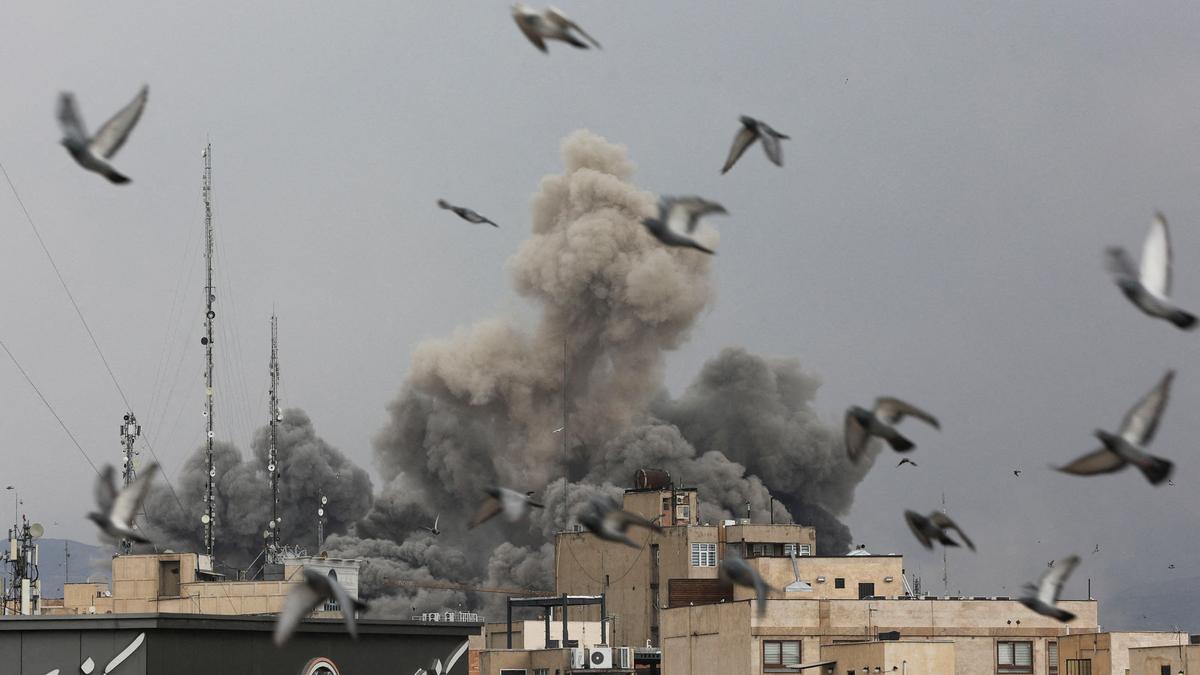
The assertion that a high-intensity military engagement with Iran could be sustained beyond a four-to-five-week window rests on a fundamental calculation of logistical throughput and the rapid depletion of precision-guided munitions. Modern warfare is no longer a contest of sheer willpower but an industrial competition defined by the "kill chain" efficiency—the speed at which a command structure can find, fix, and finish a target. To evaluate the sustainability of such a conflict, one must move past political rhetoric and examine the three structural pillars of protracted engagement: kinetic depth, economic insulation, and the technical durability of regional infrastructure.
The Kinetic Depth Constraint
Military sustainability is frequently misidentified as a measure of personnel or "boredom." In reality, the primary bottleneck in a conflict with a peer or near-peer adversary like Iran is the inventory of sophisticated ordnance. High-intensity operations involve a massive initial expenditure of standoff weapons to suppress enemy air defenses (SEAD).
The U.S. military operates on a "Day 0" readiness model, but the transition to a "Day 30" posture reveals significant friction. Iran’s defensive strategy utilizes deep-buried facilities and mobile missile batteries, requiring a high ratio of munitions per confirmed kill.
- Inventory Depletion Rates: The rate at which Tomahawk Land Attack Missiles (TLAMs) and Joint Direct Attack Munitions (JDAMs) are expended often outpaces domestic production capabilities by a factor of 10 to 1.
- The Re-arm Gap: Once initial theater stocks are exhausted, the logistical "tail" stretching from the continental United States to the Persian Gulf introduces a multi-week lag in replenishment.
- Target Saturation: Iran’s use of "thousand-drone" swarms and decentralized command structures forces the aggressor to expend high-cost interceptors against low-cost targets, an economic inversion that favors the defender in a prolonged timeline.
The Geography of Energy Chokepoints
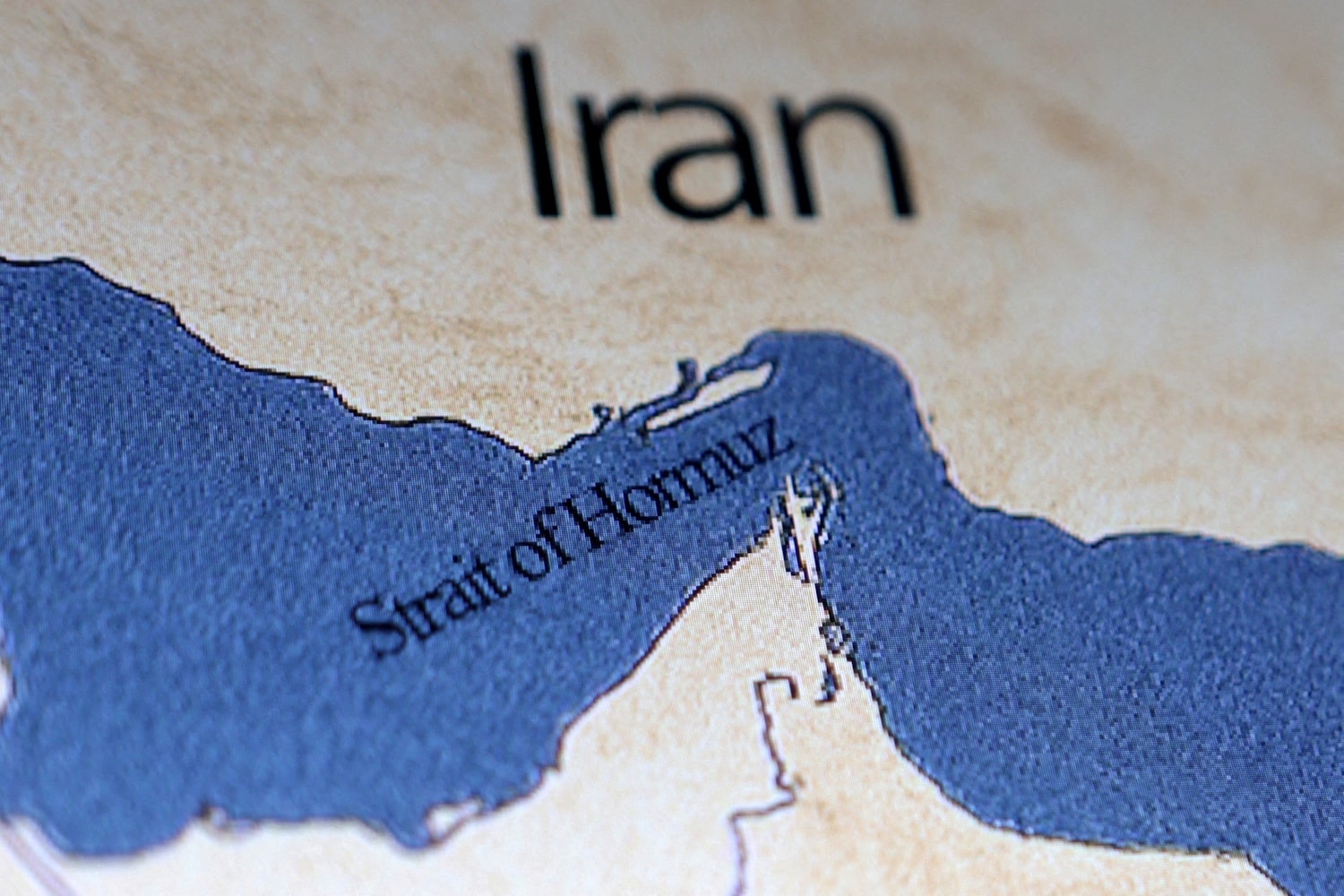
The claim of being "ahead of schedule" in a military context usually refers to the degradation of the adversary's command and control. However, strategic success in this region is tethered to the Strait of Hormuz. Approximately 20% of the world’s petroleum liquids pass through this 21-mile-wide waterway.
A conflict that extends into the second month moves beyond a "surgical strike" and enters the territory of global economic shock. The sustainability of the war is therefore not just a military question but a function of the global market's tolerance for maritime risk.
- Insurance Risk Premiums: Even if the U.S. Navy maintains "freedom of navigation," the mere presence of anti-ship cruise missiles (ASCMs) along the Iranian coastline drives hull insurance rates to prohibitive levels.
- The Tanker War 2.0: Iran’s capability to deploy "smart" naval mines creates a persistent denial-of-access threat. Clearing these mines is a slow, methodical process that cannot be accelerated by political decree.
- Global Supply Chain Contraction: Unlike the insurgencies of the early 2000s, a state-level conflict in the Gulf threatens the manufacturing hubs of East Asia and Europe simultaneously. This creates external political pressure to truncate operations before military objectives are fully realized.
The Technical Durability of Distributed Proxies
The strategic error in assuming a quick resolution lies in the failure to account for "Proxy Resilience." Iran does not fight as a singular nation-state; it operates a distributed network (the "Axis of Resistance"). When the central node (Tehran) is pressured, the peripheral nodes (Hezbollah, Houthis, various militias) increase kinetic activity to force a multi-front dilemma.
This decentralized model ensures that even if conventional Iranian forces are degraded "ahead of schedule," the threat to regional assets remains high. The cost function of defending every embassy, base, and commercial vessel across the Middle East is exponentially higher than the cost of the asymmetrical attacks launched against them.
The Fallacy of Scheduled Victory
"Ahead of schedule" is a term borrowed from construction or project management, implying a linear progression toward a finished product. Military conflict is non-linear. The transition from a conventional air campaign to a long-term containment phase involves a shift in the type of resources required.
The first 30 days focus on "Hard Power"—the destruction of visible assets. The following months require "Persistence Power"—the ability to maintain a high-readiness posture under the constant threat of attrition. The primary risk here is not "boredom," but systemic fatigue.
- Personnel Rotation: Continuous high-alert status for carrier strike groups and air wings leads to a degradation of maintenance cycles.
- Electronic Warfare (EW) Saturation: A prolonged conflict allows the adversary to collect data on signals intelligence and adjust their EW signatures, making initial technological advantages less effective over time.
- Domestic Political Capital: As the economic costs of energy instability mount, the "unified front" required to sustain a war effort typically fractures, regardless of the tactical gains made on the ground.
The strategic imperative for any leadership considering this path is not to measure success by the speed of initial strikes, but by the capacity to absorb the inevitable counter-shocks to the global energy market and the domestic industrial base. If the munitions industrial base cannot pivot to a wartime footing within the first 14 days, the "sustainability" of the conflict beyond five weeks becomes a mathematical impossibility.
The most effective strategic play is to decouple the "timeline of destruction" from the "timeline of stabilization." Leaders must prioritize the rapid hardening of regional energy infrastructure and the pre-positioning of massive quantities of low-cost interceptors to counter asymmetric swarms. Without these two defensive anchors, offensive speed is a hollow metric that masks a deeper structural vulnerability. Success is not defined by how quickly the first bomb is dropped, but by the ability to sustain the ten-thousandth.