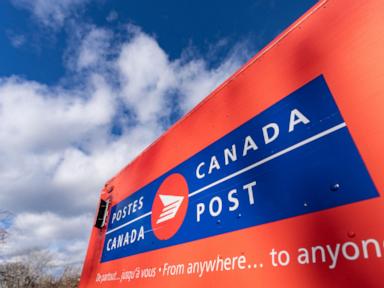
The metal flap clangs. It is a sharp, percussive sound that has defined the rhythm of Canadian neighborhoods for over a century. For Margaret, a seventy-eight-year-old living in a drafty brick semi-detached in Toronto, that sound is more than just noise. It is a signal. It means the world has remembered her address. It means a handwritten card from her sister in Victoria or a printed photograph of her grandson’s first hockey game has successfully navigated three thousand miles to land in a small wooden box attached to her front porch.
But the percussion is fading.
Canada Post is currently engaged in a slow, systemic retreat from the front door. The transition from door-to-door delivery to centralized community mailboxes isn't just a logistical pivot or a line item in a federal budget. It is a fundamental rewriting of the social contract between a crown corporation and the citizens it serves. While the shift is framed as a necessary evolution in a digital age, for millions of Canadians, it feels like the evaporation of a ghost.
The Arithmetic of Attrition
The math is cold. It doesn't care about Margaret’s knees or the ice-slicked driveway she will eventually have to navigate to reach a silver kiosk at the end of the block. In the early 2000s, the average Canadian household received dozens of letters a month. Today, that number has plummeted. We live in an era of "pixel over paper." Bills are paid via banking apps. Birthday wishes are relegated to Facebook walls. The physical letter has become a luxury, an anomaly, or a nuisance.
Canada Post faces a deficit that looks like a widening chasm. To maintain a fleet of thousands of vehicles and an army of letter carriers who walk upwards of fifteen kilometers a day, the corporation needs volume. Without it, the cost of delivering a single envelope to a front door becomes unsustainable.
Think of it as a massive, national plumbing system. If the water stops flowing but the pipes still need to be polished every morning, the system eventually breaks. By moving delivery to community mailboxes, Canada Post can save hundreds of millions of dollars annually. One stop for sixty houses instead of sixty stops for sixty houses. The logic is impenetrable. It is also heartbreaking.
The Invisible Stakes of the Sidewalk
The letter carrier was once the unofficial sentry of the suburbs. They knew who was away on vacation because the flyers piled up. They knew who was struggling because the mail wasn't collected. In many rural and elderly communities, the mail carrier is the only human being a resident might see in a twenty-four-hour cycle.
When you remove the walk to the door, you remove the pulse check.
The "community" in community mailboxes is often a misnomer. These clusters of metal lockers are rarely social hubs. They are transactional waypoints. You pull over in your car, keep the engine running to fight the Canadian winter, fumble with a key, and drive away. For the able-bodied, it is a minor inconvenience. For the disabled, the elderly, or those living in high-density urban environments where "the end of the block" is a grueling trek, it is a barrier to the world.
Critics of the move point to a glaring irony: while letter mail is dying, the parcel business is exploding. We have never ordered more things. Our porches are littered with cardboard boxes from global giants, yet the very service built to navigate our streets is the one backing away from our doorsteps. Canada Post is trying to compete in a package-heavy world with a skeleton designed for envelopes.
A Nation of Distances
Canada is not a small place. Our identity is forged in the defiance of geography. The postal service was the original internet, the thread that stitched a sprawling, impossible landscape into a country. From the frozen reaches of Nunavut to the foggy harbors of Newfoundland, the promise was simple: if you have a door, we will find it.
When that promise is retracted, the distance between us feels larger.
We are told this is progress. We are told that the savings will be "reinvested" into a more "robust" digital infrastructure. But you cannot digitize a sense of belonging. You cannot download the feeling of a heavy envelope in your hand.
The transition is happening in phases, a quiet rollout that avoids the explosive headlines of a sudden shutdown. It happens neighborhood by neighborhood. First, the notice arrives in the mail—ironically, at your door—informing you that your service is changing. Then, the concrete pad is poured at a nearby intersection. Finally, the keys arrive.
The Weight of the Key
Holding the key to a community mailbox feels different than reaching into a basket behind your front door. It feels external. It signifies that you are now responsible for the final leg of the journey. The "last mile" of logistics has been shifted from the corporation to the citizen.
The debate often centers on "efficiency," a word that has become a hollow mantra in modern business. Efficiency is the enemy of empathy. It is efficient to have everyone walk to a central point. It is empathetic to recognize that not everyone can walk.
As the sun sets over a quiet street in a Montreal suburb, the old green relay boxes—once the staging points for carriers—stand like rusted sentinels of a passing era. The new silver kiosks glint under the streetlights. They are clean. They are secure. They are undeniably efficient.
But as Margaret looks out her window at the empty porch where the carrier used to stop, the silence is heavy. The clang of the metal flap is gone. In its place is a long, cold walk to the corner, a journey that feels a lot longer than a few hundred meters. It is the distance between being served and being serviced. It is the quiet retreat of a neighborly world, replaced by a locker in the wind.