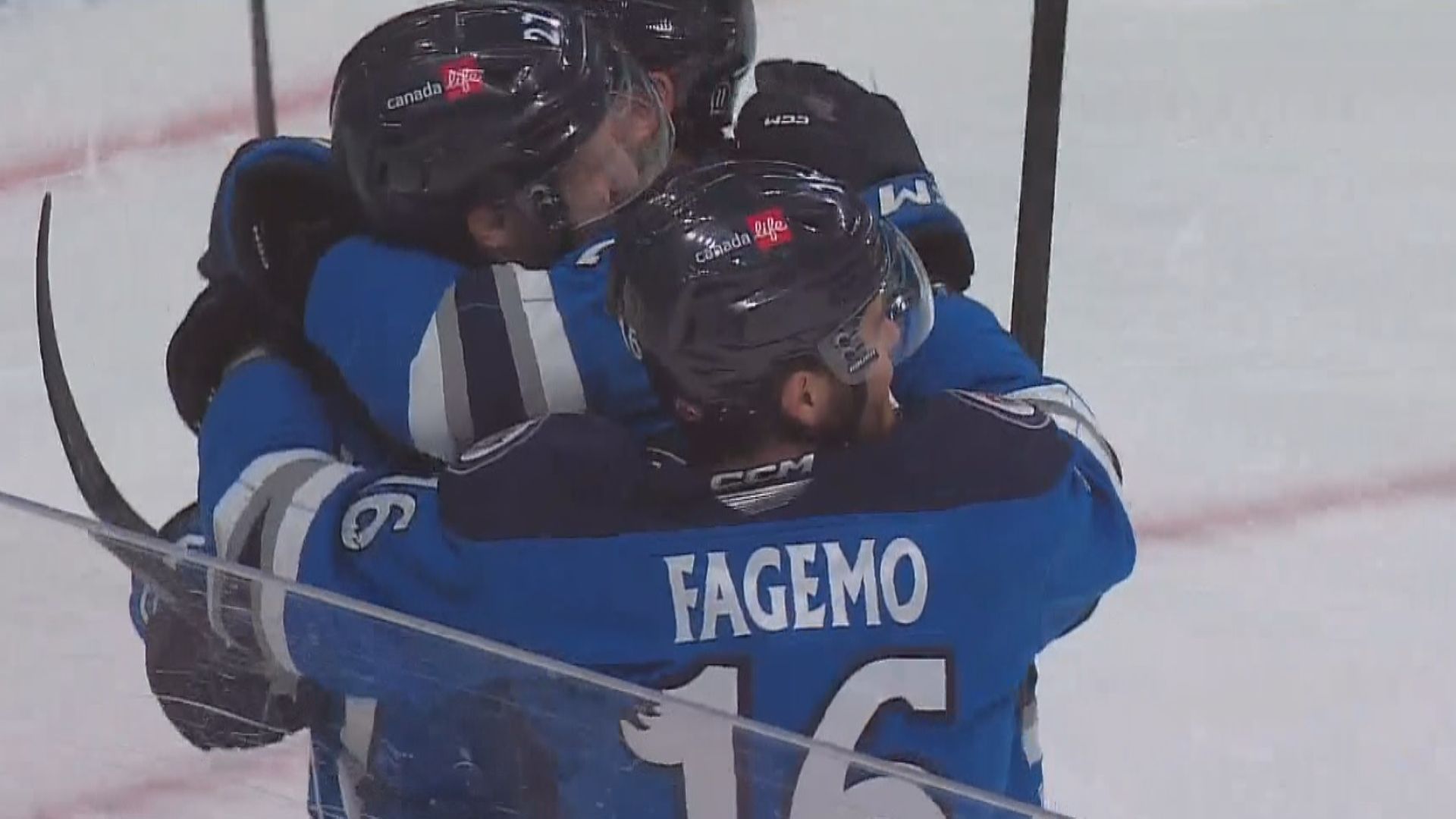
The scoreboard says the Manitoba Moose won. The highlights show a dramatic, last-minute goal that sent the crowd into a frenzy and forced a deciding game. The local press is already busy spinning a narrative of "grit," "resilience," and "clutch performance."
They are wrong.
What we witnessed wasn't a tactical masterclass or a shift in momentum. It was a statistical anomaly masking a systemic failure. If you are celebrating this win as a sign that the Moose have "figured it out," you aren't paying attention to the ice. You’re staring at the flashing lights and ignoring the structural rot.
The Myth of the Clutch Goal
Mainstream sports media loves a hero arc. They want to tell you that the Moose "found a way to win" when it mattered most. This is a fundamental misunderstanding of high-level hockey.
Winning a game in the final sixty seconds of regulation is rarely a sign of superiority. In the American Hockey League—a developmental environment where mistakes are the primary currency—a last-minute goal is usually the result of a defensive breakdown or a fortunate bounce, not a sustainable offensive strategy.
By relying on late-game heroics, the Moose are playing a high-stakes game of Russian Roulette. You cannot build a playoff run on the back of desperation. Desperation is what happens when your transition game has failed for the previous fifty-nine minutes.
The Neutral Zone Chokepoint
Let’s look at what actually happened before the "miracle" finish. For two and a half periods, the Moose struggled with zone entries. They were hemmed in by a structured forecheck that exploited their inability to move the puck through the middle of the ice.
The "lazy consensus" suggests that the opponent simply "parked the bus" to protect a lead. That is a convenient excuse for a team that couldn’t generate high-danger scoring chances when the game was level.
I have spent years watching AHL systems evolve. I’ve seen teams ride a hot goaltender and a lucky bounce all the way to a series win, only to get absolutely dismantled in the next round by a team with a functional breakout. The Moose are currently that "lucky" team. Their reliance on individual effort over structural puck support is a recipe for an early exit, regardless of how many deciding games they force.
The Cost of Short-Term Survival
When a coach sees a win like this, they often double down on the line combinations that "got the job done." This is a trap.
- Overplaying the Top Six: The heavy lifting in the final minutes usually falls on the same six players. In a condensed playoff schedule, this creates a fatigue deficit that compounds with every game.
- Ignoring the Process: If you win playing bad hockey, you have no incentive to fix the flaws. The Moose are currently ignoring their failure to suppress shots from the slot because the final score was in their favor.
- Psychological Fragility: Relying on the "last-minute push" creates a dangerous habit. Players start to believe they can coast through the second period because they have the "clutch gene."
Possession Data vs. Perception
If we look at the underlying numbers—the metrics that actually predict future success—the picture gets even bleaker.
The Moose were out-possessed for significant stretches of the game. Their Expected Goals For (xGF) was significantly lower than their opponent's for the majority of the second period. In any other scenario, this would be labeled a "theft" by the goaltender or a lucky escape. But because it happened in the playoffs, it’s being branded as "character."
Character doesn't fix a 40% faceoff win rate. Character doesn't stop a cross-crease pass on a 2-on-1 break that happened because your defenseman pinched at the wrong time.
The High-Performance Fallacy
There is a concept in elite sports called the "Winner’s Bias." It suggests that because a specific outcome was achieved, every action leading up to that outcome was correct.
Imagine a scenario where a trader bets their entire portfolio on a single penny stock and wins. Does that make them a genius investor? No. It makes them a lucky gambler who is now even more likely to blow their next account because they think they’ve mastered the market.
The Manitoba Moose just went all-in on a penny stock. They got the payout. Now, they are heading into a deciding game believing their "strategy" works.
The opponent isn't scared of a team that needs a last-minute miracle to survive. They are licking their chops because they know that if they tighten up their gap control for just sixty more seconds, the Moose have no Plan B.
Stop Asking if They Can Win
The question isn't whether the Moose can win the next game. In a one-game sample size, anything can happen. A puck can hit a skate and go in. A referee can miss a blatant trip.
The real question is: Is this a team capable of winning a championship?
Based on the evidence from this "victory," the answer is a resounding no. Championship teams dictate the pace of the game. They don't wait for the clock to hit 1:00 to start playing with urgency. They don't rely on the "chaos factor" of a pulled goalie to mask the fact that they couldn't establish a cycle in the offensive zone for forty minutes.
If you want to understand the truth about this series, ignore the scoreboard. Watch the puck support. Watch the defensive rotations. If the Moose don't radically change their approach to zone exits, the deciding game won't be a celebration—it will be an autopsy.
The "victory" in the first round wasn't a step forward. It was a stay of execution.
Stop falling for the drama. Start looking at the data. The Moose are skating on thin ice, and the cracks are wider than anyone wants to admit.
Winning ugly is fine for a Tuesday night in November. In the playoffs, winning ugly is just a slower way to lose.