The camera lens is a relentless interrogator. It doesn't care about press releases or carefully curated Instagram grids. It waits for the one-second lapse, the involuntary twitch of a muscle, or the way a hand lingers—or fails to linger—on a partner's arm. We watch the Duke and Duchess of Sussex not because we are obsessed with the minutiae of royal protocol, but because they have become the ultimate mirror for our own ideas about modern love, sacrifice, and the heavy price of starting over.
When Harry and Meghan appear in public now, the air feels different than it did during the whirlwind of 2018. Back then, they were a closed circuit, a two-person army against the world, tactile to the point of controversy. Today, the signals are more nuanced. They are the signals of a long-term partnership that has moved past the honeymoon and into the trenches of high-stakes survival.
The Anatomy of a Lean
Observe the way a couple stands when they think the shutter hasn't snapped yet. There is a specific geometry to a marriage in the public eye. For years, the "Sussex Squeeze"—that interlacing of fingers and the constant physical tethering—was their hallmark. It was a defensive crouch. It said, I am here, and you are safe.
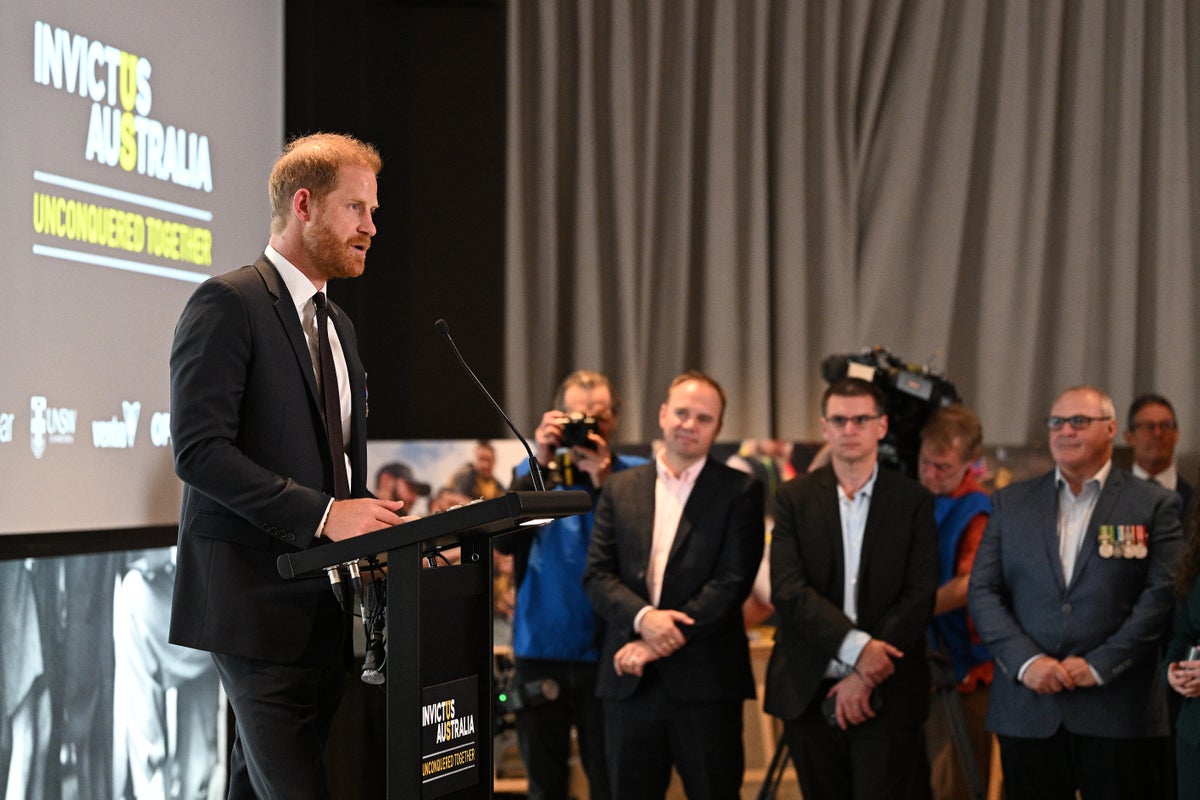
Recently, body language experts and casual observers alike have noted a shift. During a recent high-profile appearance, Harry’s posture told a story that the tabloids tried to turn into a tragedy. He stood with a certain protective distance, his shoulders squared, not always reaching for Meghan’s hand.
Is this the "telling gesture" that signals the end?
Hardly.
It is the evolution of autonomy. When a couple is under siege, they cling. When they begin to build a foundation, they find the breath to stand on their own two feet. This isn't the cooling of an affair; it’s the professionalization of a brand. They are moving from "The Fugitives" to "The Executives."
The Weight of the Invisible Crown
To understand Harry’s current state of mind, we have to look at the ghosts he carries. He isn't just a husband; he is a man who saw his mother’s private life disassembled like a clock by people who didn't know how to put it back together. Every flashbulb is a trigger. Every headline is a ghost.
Imagine, for a moment, being a man whose primary identity for thirty-five years was "The Spare." You trade that in for "The Protector." You move across an ocean. You lose your security detail, your family’s favor, and the only world you’ve ever known. The stakes for your marriage aren't just emotional; they are existential. If this relationship fails, the narrative of your life becomes a cautionary tale rather than a triumph.
That kind of pressure creates a unique atmospheric tension. When Harry looks "tense" in a photo, it isn't necessarily a reflection of his feelings toward Meghan. It is the exhaustion of a man who is constantly checking the perimeter. He is the one scanning the room for exits while Meghan handles the diplomacy.
The Choreography of the Red Carpet
Contrast this with Meghan. She is a creature of the stage—not in a pejorative sense, but in the sense that she understands the power of the image. She knows how to hold a pose that projects warmth even when the wind is biting.
There was a moment during an awards ceremony where she reached out to guide him, a palm flat against the small of his back. Critics called it "controlling." They missed the point entirely. In the lexicon of high-pressure social navigation, that touch is a steer. It’s the way a pilot nudges the yoke. It’s communication that happens beneath the frequency of human speech.
He leans in. She stabilizes.
This is the labor of a marriage that has become a business. They are no longer just two people in love; they are the co-CEOs of a multi-million dollar media entity. The "true state" of their marriage is likely found in the quiet spaces between these public performances—in the shared glances that say, Did we get the shot? Can we go home now?
The Myth of the Perfect Union
We have a toxic obsession with the idea that a healthy marriage is a static one. We want our icons to remain frozen in the first act of their story. We want the sparks, the hand-holding, the breathless whispers. When we see a husband looking weary or a wife looking focused rather than fawning, we scream "trouble."
But look at the data of human behavior. Long-term stability is rarely about constant proximity. It’s about the ability to navigate separate spaces while remaining tethered by a shared goal.
Consider a hypothetical couple, let's call them Sarah and Tom. In their first year, they are inseparable at parties. By year five, Sarah is in the kitchen talking politics while Tom is in the backyard manning the grill. They aren't drifting apart; they are confident enough in their bond to stop performing it for the neighbors.
Harry and Meghan are currently in their "backyard and kitchen" phase, except their backyard is a global stage and the neighbors are several billion people with internet connections.
The Price of the Pivot
The transition from "Royal Couple" to "American Content Creators" has been jagged. The gestures Harry makes—the adjusting of his tie, the way he occasionally looks off into the middle distance while Meghan speaks—reveal the friction of that transition.
He is a man of tradition who has broken every tradition.
He is a man of the military who is now a man of the memoir.
There is a profound loneliness in being the first person to do something. Even with a partner by your side, the internal processing of that loss of identity is a solitary journey. When we see Harry looking "detached," we are likely seeing the processing power of a brain trying to reconcile the boy who walked behind a coffin with the man who now walks through Montecito.
Meghan, conversely, is in her element. The American hustle is her native tongue. She is the translator for his new life. If there is tension, it’s the tension of two people speaking different cultural dialects while trying to write the same book.
The Silent Language of Survival
The "true state" of any marriage isn't revealed in a single gesture. It is revealed in the consistency of the support system.
When the cameras aren't clicking, when the legal battles over privacy and security are being fought in drab boardrooms, that is where the steel is tempered. We see the polished surface. We don't see the hours of strategizing, the shared frustration over a leaked story, or the quiet relief of a door closing at the end of the night.
The gestures we obsess over—a missed handhold, a stern expression, a protective arm—are just the punctuation marks. They aren't the story itself.
The story is about two people who burned down their old lives to see if they could build something better in the ashes. That kind of project doesn't leave much room for the performative sweetness of a storybook romance. It requires a grim, determined kind of loyalty.
It is the loyalty of two soldiers in a foxhole. They aren't looking at each other; they are looking out at the horizon, watching for the next movement in the grass.
In that context, Harry’s "telling gesture" isn't one of distance. It’s the posture of a man who has finally stopped looking for approval and started looking for a way to keep his family standing. It’s not a fairy tale anymore. It’s something much more interesting. It’s a reality.
The next time a photograph catches him looking tired or her looking resolute, don't look for the cracks. Look for the weight they are carrying together. The silence between them isn't an absence of love. It’s the sound of a long, complicated conversation that we are simply not invited to hear.